Test site The live site is still ahevents.net — sign-ups and log uploads there are the real ones. Please poke at everything here: nothing is permanent, and if it gets into a mess we can roll it back. Problems to Steely07 on the Aces High BBS.
- Details
- Written by: Spikes
- Category: Western European Theatre
- Hits: 21
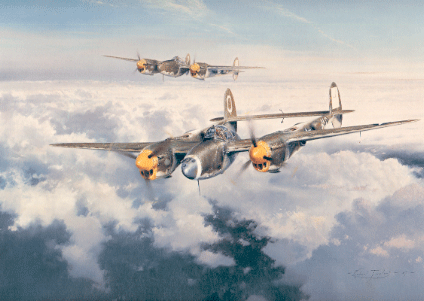
The 'Transportation Plan' was a strategic plan envisioned by Air Marshall Arthur Tedder of SHAEF and designed by Professor Solly Zuckermann, an advisor to the British Air Ministry during World War II. It targeted the German armed forces ability to move men and materiel by rail. It was adopted to suppport the invasion of Occupied France in June 1944 and carried out primarily by the bombers of the USAAF and RAF Bomber Command. The premise of the plan being that if the Allies destroyed the means of transport in Occupied France, then Germany would be unable to respond effectively to an invasion. The Allies hoped to hinder the movement of the German 15th Army into Normandy, and to suggest to the Germans that they were attempting to isolate the Pas De Calais region from an attack by General Patton's fictitious army group based in England which was part of the overall Fortitude deception plan to shift German attention away from the Normandy area. The strategy required the destruction of the French rail centres, including marshalling yards, repair shops and other related transport facilities.
There was much opposition to the plan from various sources. Air Chief Marshall Arthur Harris considered it another sideshow to the Combined Bomber Offensive against Germany, and General Carl Spaatz was convinced his Oil Plan was a better idea, and Spaatz even had support from some members of the Air Ministry, including Group Captain Sidney Osborne Bufton in the Directorate of Bomber Operations. The plan was, however, approved, and in March 1944 the order was issued to the Allied bomber chiefs to carry out the new strategy.
The Allied Supreme Commander, General Eisenhower wrote to General Marshall and President Roosevelt "I consider the Transport Plan as indispensable to the preparations to Overlord. There is no other way this tremendous Air Force can help us, during the preparatory period, to get ashore and stay there". By June 6th only two bridges across the Seine river remained intact, and three quarters of the railway system within 150 miles from the assault beaches had been rendered unserviceable. Consequently, the Germans lost the race to build up forces in the Normandy area after the invasion.
This FSO recreates the daylight efforts made by the USAAF's 8th Air Force and RAF Bomber Command against rail and transportation targets in the months prior to Overlord. Opposing them will be the Luftwaffe's western based JagdGruppen.
Country Percentages:
Axis 50%
Allied 50%
Field Assignments:
Axis Bishop
Allied Knight
CM Rook
OOB:
Axis 50%
Allied 50%
Field Assignments:
Axis Bishop
Allied Knight
CM Rook
OOB:
Axis (Luftwaffe):
Bf 109G-14 (max 48)
Bf 109G-6
Bf 109G-2 (max 12)
Bf 109G-2 (max 12)
Fw 190A-8 (max 48)
Fw 190A-5
Bf 110G-2 (max 36)
Fw 190A-5
Bf 110G-2 (max 36)
Allied (USAAF/RAF/RCAF):
P-51B (max 48)
P-47D-11
P-47D-25
P-47D-11
P-47D-25
P-38J
Spitfire IX (max 24)
Spitfire VIII (max 24)
Spitfire IX (max 24)
Spitfire VIII (max 24)
B-17G (min 20 players)
B-26B (min 20 players)
B-25C (min 12 players)
B-25C (min 12 players)
Special Rules and Ordnance Restrictions:
* The Axis have no attack objectives in this setup.
* All aircraft types must be used by a minimum of *12 players*.
* Allied fighters have all air-ground ordnance disabled.
* Formations are enabled.
* No Axis aircraft may go "feet dry" over England AT ANY TIME in the event.
Scoring:
Aircraft Pts
---------------
All bombers: 10 pts
All fighters: 2 pts
Ground Target Pts
--------------------------
1 pt = Gun
3 pts = Ammo Bunker
3 pts = Barracks
3 pts = Radar
25 pts = Vehicle Hangar
25 pts = Fighter Hangar
25 pts = Bomber Hangar
3 pts = Town Building
3 pts = Factory at strategic target
1 pt = Truck in convoy
2 pts = Train
Arena Settings:
- Battle of Britain terrain
Aircraft Pts
---------------
All bombers: 10 pts
All fighters: 2 pts
Ground Target Pts
--------------------------
1 pt = Gun
3 pts = Ammo Bunker
3 pts = Barracks
3 pts = Radar
25 pts = Vehicle Hangar
25 pts = Fighter Hangar
25 pts = Bomber Hangar
3 pts = Town Building
3 pts = Factory at strategic target
1 pt = Truck in convoy
2 pts = Train
Arena Settings:
- Battle of Britain terrain
- Fuel burn 1.0
- Icons short (3k)
- 0.5 Ack
- Fighter and Bomber warning range 42,000 (about 8 miles)
- Tower range set to 42,000 (for display only to match the above setting)
- Haze/fog full visibility (17 miles)
- Radar off
- Enemy xollisions on
- Friendly collisions off
- Killshooter off
- Time: 15:00 ( 3PM ) Game Clock
- Formations: On
- Bomber calibration: Auto ( MA style )
- Wind: 0-2K NO WIND
2K-18K NE TO SW - Speed 5
18K-25K N TO S - Speed 10
25k+ N TO S - Speed 15
Designer's Notes:
- Icons short (3k)
- 0.5 Ack
- Fighter and Bomber warning range 42,000 (about 8 miles)
- Tower range set to 42,000 (for display only to match the above setting)
- Haze/fog full visibility (17 miles)
- Radar off
- Enemy xollisions on
- Friendly collisions off
- Killshooter off
- Time: 15:00 ( 3PM ) Game Clock
- Formations: On
- Bomber calibration: Auto ( MA style )
- Wind: 0-2K NO WIND
2K-18K NE TO SW - Speed 5
18K-25K N TO S - Speed 10
25k+ N TO S - Speed 15
Designer's Notes:
* The Bf 109G-14 is representative of "late build" Bf 109G-6 varients.
* The Spitfire VIII is a stand in for the Spitfire VII.
* The Allied fighters are representing escort fighters with no fighter-bomber duties.
Design by Warloc
- Details
- Written by: Will Hyman
- Category: Western European Theatre
- Hits: 19
Â
19 August, 1942Â
Â
1942 was a hard year of the war for the Allies. Great Britain could not boast a single victory in the field. British and Commonwealth troops in North Africa were being contained and driven back by the Africa Corps. In the Far East the Japanese were dismembering and occupying substantial parts of the former British Empire. The Americans were still feeling the after effects of their material losses at Pearl Harbor and struggling to maintain what was left of their Philippine Army and the Russians were being steadily pushed back as Hitler developed his thrust into the Caucusus. The immediate outlook was bleak.
Â
The most serious situation was on the Russian Front where immense armies were pitted against each other in a fight to the death. There seemed to be no way of stopping the German offensive. Stalin called loudly and often for an offensive in the West to reduce some of the pressure on his armies. At this stage of the war a Russian military collapse was considered a possibility with a consequent catastrophic effect on the whole Allied war effort.
Â
The Russian plea was strongly supported by the Americans, even though they themselves were unable to provide significant material support, or troops, for an offensive in the West. There was significant agitation by several senior American military and naval leaders, that, unless an offensive in the West was developed and executed within the short term, they would concentrate their efforts in the Pacific against the Japanese. The general public also agitated for offensive action to support the beleaguered Russians. Mass rallies held in both Trafalgar Square in London and Madison Square gardens in New York, during April 1942, called for "a second front now!"
Â
There was, therefore, unbearable pressure on Churchill and the British Chiefs of Staff to develop and execute an offensive operation on the Western front - an operation that would, it was hoped, either draw German divisions from the Russian front, or at least hold the existing divisions in France in place thus preventing additional reinforcements being sent to the East.It was against this menacing background that the Dieppe raid was planned and executed.Â
Â
Operation Jubilee took place on the morning of August 19, 1942. The forces attacked at five different points on a front roughly 16 kilometers long. Four simultaneous flank attacks were to go in just before dawn, followed half an hour later by the main attack on the town of Dieppe itself. Canadians were the force for the frontal attack on Dieppe, and also went in at gaps in the cliffs at Pourville, four kilometers to the west, and at Puys to the east. British commandos were assigned to destroy the coastal batteries at Berneval on the eastern flank, and at Varengeville in the west. While the Allied air forces were able to provide protection for the ships off Dieppe from the Luftwaffe (the German air force), the cost was high. The Royal Air Force lost 106 aircraft, the highest single-day total of the war. The Royal Canadian Air Force lost 13 aircraft.
Â
By early afternoon, August 19, 1942, Operation Jubilee was over and a retreat command had been ordered. Debate over the merit of the raid continues to the present day. Some believe that it was a useless slaughter, others maintain that is was necessary for the success of the invasion of the continent two years later on D-Day. Without question, the Raid on Dieppe was studied carefully in planning later attacks against the enemy-held coast of France. There were improvements in the technique, fire support and tactics, which reduced D-Day casualties to an unexpected minimum. The lessons learned at Dieppe were instrumental in saving countless lives on June 6, 1944.
Â
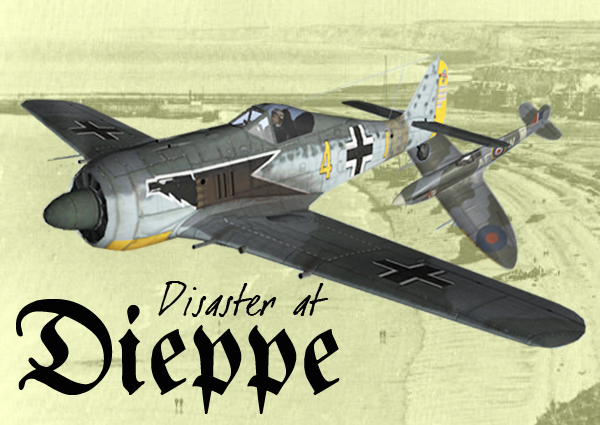
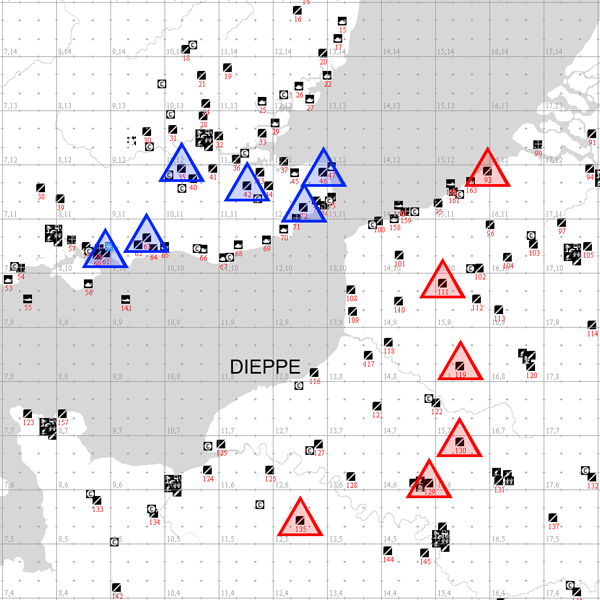
This FSO Setup will attempt to recreate the air battle that took place over Dieppe on the 19th of August 1942
Â
- Sides: 50% Allies / 50% AxisÂ
Â
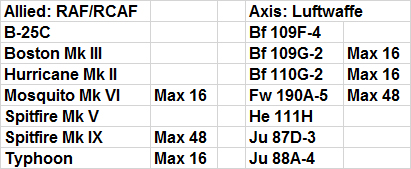
- Plane Set/Plane Set Rules
Â
Â
- Bf 109G-2 - 2x WGr21 Disabled
- Bf 110G-2 - 4x WGr21 Disabled, 2x WGr21 Disabled
- Fw 190A-5 - 2x WGr21 Disabled
- Mosquito Mk VI - 8x RP-3 60lb Rockets Disabled
- Typhoon - 8x RP-3 60lb Rockets Disabled, 1000lb Bombs Disabled, 4x RP-3 60lb Rockets and 2x44 gallon DTs Disabled.
- Only aircraft with minimums must be flown.
- Requirements Indicate # of Pilots.
- Formations are enabled but not required.
- Certain Aircraft will only be active from certain fields. Please refer to the Objectives and Orders.
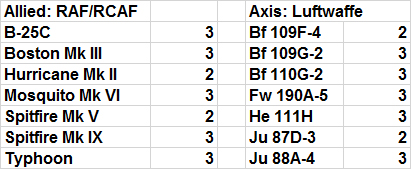
Aircraft Scoring
Â
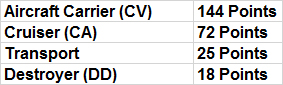
- Objects (Guns, Radar) destroyed at Ships will score points.
- Ships sunk with torpedo double point total.Â
Â

Â
Â
Â
ACE MISSIONS:
Â
Each side will have one mandatory Ace mission per frame. These frames will represent notable pilots of the time and theater. One pilot from each side will designated an "Ace" Pilot. They must fly the Aces listed aircraft. The Aces must be relayed to the Admin CM before launch. They will be scored as follows.Â
Â
Ace Pilot = 20 Points
Ace Pilot Kills = 20 Points
Â
So for example if an Ace Pilot is shot down they are worth 20 points to the other side. Likewise, every victory an Ace Pilot lands they will be rewarded 20 points.
Â
ALLIED ACES
Â
Â
FRAME 1 – Donald Kingaby - (Spitfire Mk IX) - Kingaby was a veteran of the Battle of Britain claiming 11 victories and several damaged aircraft including four 109s in one day on November 15th 1940. In 1941 during the beginning of the Channel lean, Kingaby would shoot down 12 more enemy aircraft and was dubbed the "109 specialist" by the English papers. In November of 1941 he was promoted to Pilot Officer and was rested from operations until spring of 1942 whereÂ
he would continue to perform missions over France. Kingaby would claim his 19th victory during the Dieppe battle, a Do 217. Kingaby would continue to serve on the Channel Front scoring his last kill on June 30th 1944. He would be taken out of front line action soon afterwards and ended the war with 21 victories. Kingaby moved from England to the US and passed away in May of 1990.
Â
FRAME 2 – Wilfred Duncan-Smith - (Spitfire Mk IX) - Duncan-Smith began his victory count on June 18th 1941 with the destruction of a Bf 109E. Duncan-Smith was with 603 Squadron when he became ill in late November 1941. When he returned he took the lead of 64 Squadron and the first unit in Fighter Command to recieve the Spitfire Mk IX. In August of 1942 promoted to Wing Commander of the North Weald Wing. Duncan-Smith would share a victory during the Dieppe battle but would also be shot down during the ordeal, having to be rescued from the English Channel. He was rested from operations but would return to action in 1943 at Malta the Sicily Invasion. Duncan Smith was credited with 17 enemy aircraft shot down in aerial combat. He was awarded the Distinguished Service Order and Bar and the DFC and two Bars in recognition of his bravery, he passed away in December of 1996.
Â
FRAME 3 – Tony Gaze - (Spitfire Mk IX) - Gaze was an Australian who joined the RAF in 1940 and began flying combat missions with 610 Squadron in March, 1941. Gaze claimed his first kill in June 1941 against a Bf 109. He claimed 1 kill during the Dieppe battle and was awarded his second DFC. The following year in 1943 Gaze was shot down near Dieppe and was forced to evade capture and flee to Spain with help of the French Resistance. Gaze would go onto the be the first Australian to shoot down and Me 262 on February 14th, 1945 and would share a Ar 234 on 12 April 1945. He would end the war flying the Gloster Meteor accruing 13.5 victories during World War 2. He would go onto to be a race car driver, he passed away in Australia in 2013.
Â
AXIS ACES
Â
FRAME 1 – Egon Mayer (Fw 190A-5) - Egon Mayer had been a Western Front veteran since the Invasion of France, claiming his first victory on 13th Jun 1940. He often flew as the wingman of Helmut Wick during the Battle of Britain where he would claim 3 more victories before being shot down into the channel. JG 2 was withdrawn from the battle and Mayer would not return to the Channel Front until 1941 where in July he would claim his 19th and 20th victory and be awarded the Knights Cross of the Iron Cross. During the Dieppe Battle on August 19th, while flying the Fw 190 Mayer would claim his 49th and 50th victory which also happened to be his birthday. Mayers victory tally was at 102 when he was killed in action on March 2nd 1944 by USAAF Thunderbolts.
Â
FRAME 2 – Josef "Sepp" Wurmheller (Fw 190A-5) - Wurmheller saw his first action 30 days after World War 2 began during the Phony War Period claiming a Fairey Battle near Saarbrucken. He would also claim four victories during the Battle of Britain where he would be shot down and hospitalized until March of 1941 afterwards he would shoot down two more Spitfires in May before being transferred East for the subsequent invasion of Russia. He would shoot down 9 more enemy aircraft there before being transferred back to the Channel front in July. Wurmhellers best day as fighter pilot came during the Dieppe Invasion where he would shoot down 6 Spitfires and 1 Blenhiem bomber. Wurmheller was killed in action on June 22nd 1944, his victories stood at 102. He was posthumously awarded the Knights Cross of the Iron Cross with Oak Leaves and Swords.
Â
FRAME 3 – Siegfried Schnell (Fw 190A-5) - Schnell shot down his first enemy aircraft on 14th May during the Invasion of France. He would accumulate 20 victories by November of 1940 and was awarded the Knights Cross. Schnell remained on the Channel Front and during a two day span on July 8th and 9th would shoot down 9 Spitfires bringing his total to 44 victories and the award of Oak Leaves to his Knights Cross. His total would reach 52 during the infamous Channel
Dash in February of 1942 and would shoot down 5 Spitfires during the Dieppe battle on August 19th 1942 bring his total to 71. He would eventually be killed on the Eastern Front on February 25th, 1944 near Leningrad. He was credited with 93 victories.
Â
SUGGESTED OR HISTORICAL AIRCRAFT SKINS -Â This is a list of suggested or historical skins, while some might not be historical to the time or theater, they were also considered to be the most appropriate.
ALLIED -Â
B-25C -Â 180BS by Fencer
Boston - Default
Hurricane Mk IIC - Default
Mosquito MK VI - Default, 305 Squadron by Cactus, 464 Squadron by Cactus.
Spitfire Mk V - 310 Squadron by 417Jocko, 401 Squadron by 417Jocko, 401 Squadron by Kev367th, 303 Squadron by Kazan
Spitfire Mk IX - Default, 133 Squadron by F77, 303 Squadron by Kazan, 403 Squadron by 417Jocko, 402 Squadron by 417Jocko
Typhoon - 56 Squadron by Greebo
AXIS
Â
BF 109F-4 - 1./Jg 26 by Devil5O5, 3./Jg 1 by Bubi, 9./Jg 2 By Devil5O5
Â
BF 109G-2 -Â II/Jg 11 by Fencer
FW 190A-5  - Default, 1./Jg 1 by Bubi, 9./Jg 2 by Devil5O5, I/Jg 1 by Krusty, III/Jg 26 by Archiaus, III/Jg 2 by Kweassa,Â
Stab./Jg 26 by Devil5O5
Â
BF 110G-2 -Â Â I/NJG 6 by MotleyCH
Â
JU 87D-3 - Default
Â
JU 88A-4 -Â Â Default, 3./Kg 54 by Greebo
Â
HE 111H - Default
Â
Arena Settings:
Â
- BoB40 Terrain
- Icon Range – Friendly 3k, Enemy 3k.
- No Radar
- Fighter and Bomber Warning Range - 63360 (12 miles)
- Tower Range – 63,360 (for display to match the above Fighter and Bomber Warning)
- External view for bombers (F3) - On
- Friendly Collisions - Off
- Enemy Collisions - On
- Kill Shooter - Off
- Fuel - 1.0
- Ack - 0.4
- Formations - Enabled
- Bombsite calibration - Main Arena Standard
- Visibility - 17 miles
- Object Downtime – full (200)
- Winds - None
- Game Clock:
Â
           Frame 1: 05:00Â
           Frame 2: 12:00Â
           Frame 3: 17:00Â
Â
Specific Rules:
Â
You can contact all the squads on your side here.
Â
http://ahevents.org/fso_email/mail_address.html
Â
Please note the updated rules.
Â
http://ahevents.org/fso-related/fso-rules.html
Â
Original Design by Baumer 2009
Updated by Nefarious 2016
- Details
- Written by: Spikes
- Category: Western European Theatre
- Hits: 15
 Â
Â
By the middle of September 1944, Oberkommando Der Wehrmacht (OKW) under orders of Hitler had drawn up plans for a German counter-offensive in the Ardennes Forest. German forces were to smash through the Ardennes until they reached the Meuse River, then turn towards Antwerp and Brussels, splitting the Allied forces in half. In Hitler?s eyes this would force the Western Allies to sue for peace, possibly leaving them free to fight the Soviets in the East.
Allied misconceptions of the Ardennes played right into German hands and the Allies began to use the Ardennes areas as a rest area for veteran units and newly formed units yet to see combat. The build-up to the last major German ground offensive had drained the German Army (Wehrmacht Heer) of all its reserves and transporting this force of nearly 30 divisions would delay the offensive from late November to mid December.
At 5:30AM On December 16th the attack began and by 08:00 the German Sixth SS Panzer Army, Fifth Panzer Army and the Seventh Army attacked into the Ardennes. In the North Sepp Dietrich?s Sixth SS Panzer Army met stiff resistance from the US 2nd and 99th Infantry Divisions. In the Center section of the attack, Hasso von Manteuffel led the Fifth Panzer Army against the US 28th and 106th Infantry Divisions, forcing the surrender of two regiments of the 106th. Further South they crossed the River Our but Allied resistance slowed the German advance and by December 19th the US 101st Airborne Division had reached Bastogne. The defense of Bastogne forced the German advance around the city, surrounding it by the 21st.
The next day, General McAuliffe, Commander of the 101st Airborne encircled in Bastogne gave his famous response to a German Messenger asking for the Allied surrender, his response: NUTS! On the 23rd the weather allowed for Allied Aircraft to strike convoys and armored columns in the German rear areas and supplies were dropped on Bastogne. Further West the furthest point of Axis advance would stall only 10 miles from the Meuse River. Two days later on the 26th, Pattons 3rd Army would break the encirclement and end the siege.
January 1st the Germans would desperately launch one more offensive against the Allies that included Operation Baseplate, an attack on Allied Airfields in the Low Countries and Operation Nordwind an attack on Eisenhower?s 7th Army. By the 21st of January The fighting was so fierce that the Allies were forced to pull back behind the Moder River. The German offensive ended on the 25th and by January 28th American soldiers occupied the same lines they occupied on December 16th. It was an exhaustively long and bitterly cold struggle in the Ardennes, but Hitler?s last gamble in the West was lost and the Battle of the Bulge was over.
----
Battlefield Objectives: The Battle of the Bulge In this event we will use combined operations like never before in FSO. Standard FSO objectives will be used which may or may not coincide with the Battlefield Objectives. These Battlefield objectives can be captured and recaptured by the two opposing sides throughout the course of this FSO. The number of bases in each sides possession only at the end of frame 3 will be added into the final score.Â
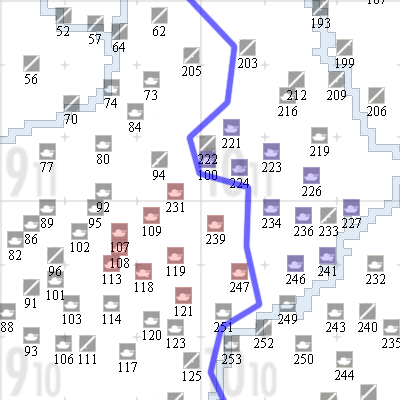
Ardennes GV Base Map
- Both sides will start with 10 Vehicle Bases in the Ardennes Region.
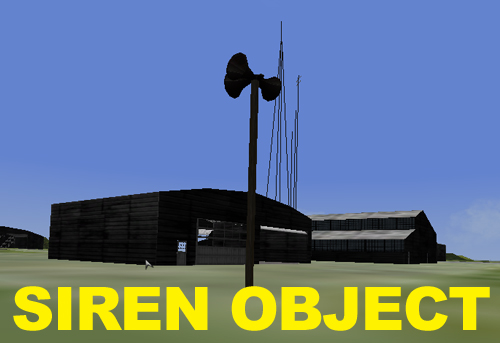
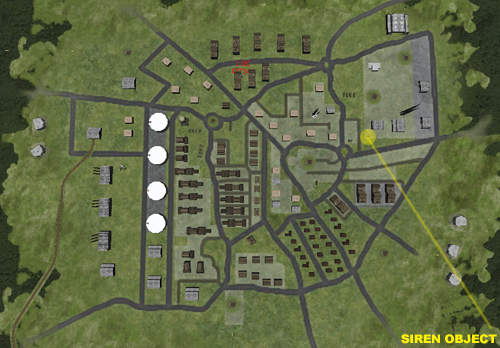
- The Allies will start with Bastogne and St Vith which are Custom Towns for the map. These Custom Towns require every single Town Object to be down for capture. Including the the Siren Object.
 Â
Â
- Only the highlighted fields in this map may be captured.
- Only the highlighted fields in this map will have GV's enabled.
- The highlighted fields in this map may not be attacked prior to T+60.
- There are custom rivers on the map. These Rivers can only be crossed by Bridge. The In-game Clipboard map shows these rivers using a thin blue line. The bridges are located in numerous locations along the rivers. These bridges can not be destroyed.
Captureable/GV Enabled Fields Listed below:
ALLIED GV BASES:
V107
V108
V109
V113 (Bastogne)
V118
V119
V121
V231 (St Vith)
V239
V247
ALLIED VEHICLES:
Jeep
M-3
M-8
M-16
Sherman Firefly VC (Disabled T+90)
AXIS GV BASES:
V100
V221
V223
V224
V226
V227
V234
V236
V241
V246
AXIS VEHICLES:
Panzer IVH
SdKfz 251
Tiger I (Disabled T+90)
Whirbelwind (Disabled T+90)
USE OF AIRCRAFT/VEHICLES:
- Every player will start in an Aircraft.
- Ground Vehicles will only be enabled after T+60.
- Firefly, Tiger and Whirbelwind will be disabled at T+90.
ALLIED AIRCRAFT:
A-20G (Min 24 Aircraft)
B-26B (Min 24 Aircraft or 8 Formations)
P-38J (Min 48 Aircraft)
P-38L
P-47D-25 (Min 48 Aircraft)
P-47D-40
P-51D
ALLIED AIRFIELDS:
A3
A9
A10
A13
A15
A17
A35
A34
A38
A50
Ar 234 (Max 24 Aircraft or 8 Formations)
Bf 109 G-14
Bf 109 K-4 (Max 48 Aircraft)
Fw 190 A-8
Fw 190 D-9 (Max 48 Aircraft)
Fw 190 F-8
Me 262 (Max 24 Aircraft)
AXIS AIRFIELDS:
A142
A144
A148
A152
A163
A166
A169
A183
A194
A198
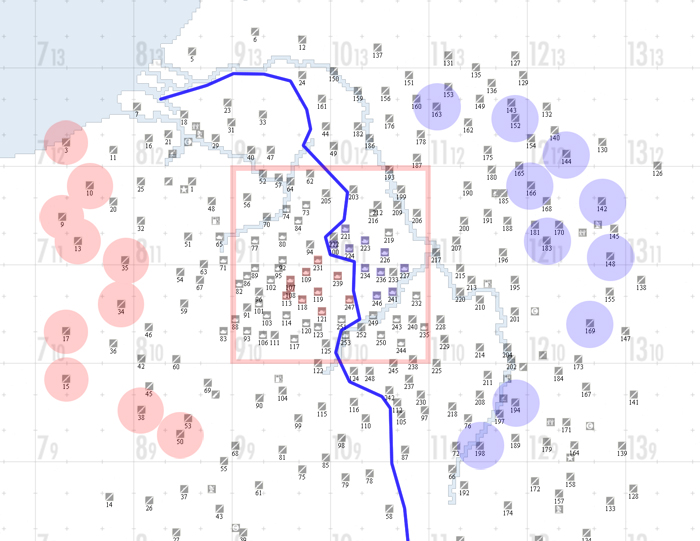
Airfield and GV Map
Â
SCORING:
- Jet Aircraft + 05 Points
- 2 Engine Aircraft + 03 Points
- 1 Engine Aircraft + 02 Points
- Heavy Vehicle* + 02 Points
- Vehicle + 01 Point
- Aircraft landed before T+120 + 02 Points
*Heavy Vehicles are Fully Tracked Armor (Panzer, Sherman, Tiger, WW)
GROUND OBJECTS
POINTS/OBJECTS (Only objects in primary FSO objectives scored)
- 00.1 Gun
- 00.1 Mannable Gun
- 03.1 Ammo Bunker
- 03.1 Fuel Bunker
- 03.1 Barracks
- 03.0 Radar
- 27.8 Vehicle Hangar
- 27.8 Fighter Hangar
- 27.8 Bomber Hangar
- 03.1 Town Building
- 03.1 Object at strategic target
- 00.8 Truck in convoy
- 01.6 Train
BATTLEFIELD OBJECTIVES SCORING: (Ground Objects at Ardennes bases not scored)
- Bastogne: 500 Points
- St Vith: 500 Points
- Vehicles Base: 100 Points
CUSTOM CITY MAP (BASTOGNE V113 and ST VITH V231)
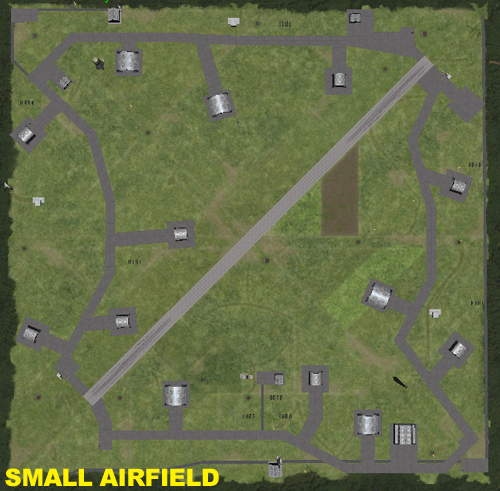
CUSTOM SMALL AIRFIELD MAP
 Â
Â
SETTINGS:
Terrain - Ardennes08
Icon Range - Short (2400)
Radar - Off
Fighter and Bomber Warning Range - 26400 (5 miles)
Vehicle Warning Range - 10560 (2 miles)
Tower Range - 26400 (for display to match the above Fighter and Bomber Warning)
External view for bombers (F3)Â - On
Friendly Collisions - Off
Enemy Collisions - On
Kill Shooter - Off
Fuel - 1.0
Ack - 0.4
Time - 11:00 AM
Formations - Enabled
Bombsite calibration - Normal (MA mode)
Weather - Heavy Clouds, Thick Overcast, No Wind
Object Downtime - 20 Minutes
CICs, Please take the time to contact your squads assigned to your side and ask what their choice of rides would be.
You can contact all the squads on your side here.
http://ahevents.org/fso/email_addresses.html
Please note the updated rules.
http://ahevents.org/fso-related/fso-rules.html
Design by Nefarious
- Details
- Written by: Steven Jackson
- Category: Western European Theatre
- Hits: 20
Der Zweite Blitz: 1945
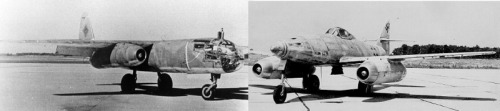
A Plausible "What If" FSO Design
by Stoney
(Not How It Actually Happened)
June, 1945...
The problems for the Allies started early in America's involvement in the war. Succumbing to the pressures of Stalin, President Roosevelt departed from the advice of Churchill and supported an invasion of France at the earliest opportunity. In early 1942, the date was set, and plans and preparations were begun for invasion of France in the fall of 1943. What were unforeseen at the time were the losses suffered by the U.S. Navy at Midway and later in the Solomons. Mostly due to perceived poor leadership through the losses of 1942, Roosevelt lost the presidential election of 1942. President Joseph Kennedy was sworn in in January 1943, and promised a decidedly different strategy to win the war. Gone was the "Germany first, Japan second" strategy espoused by Roosevelt. Stating that the Japanese menace was the primary threat to the country, President Kennedy began to concentrate U.S. power towards the Pacific. After the Japanese invaded Australia with massed landings of troops at Darwin in late 1942 and early 1943, many of the resources intended for the invasion of France were diverted to the Pacific. Roosevelt?s plans for Lend Lease were scrapped, with all available assets focused on winning the war in the Pacific.
Meanwhile on the Eastern Front, with the Nazi's southern and western flanks secure, the Germans were able to consolidate their positions in the Urals, and fought the Russians to a stalemate.
Late 1944...In England, things began to look very grim. The Eight Air Force bombing campaign was stopped due to massive losses caused by the resurgent Luftwaffe. Daily battles were fought in the air over the English Channel with heavy losses for both sides. While the defense of Britain was never in doubt, offensive options for the Allies in Western Europe narrowed quickly. As the American campaign in the Pacific culminated, new American B-29's were being readied to be flown from bases in Ireland, Scotland, and Iceland. New long-range fighters that were designed to fight in the Pacific were trickling in to the European theater.
Hitler saw that the American juggernaut was soon to achieve victory against Japan, but sensed an opportunity to capitalize upon Allied war-weariness and possibly achieve a separate peace with Britain and the U.S. that left its European conquests intact. With President Kennedy stepping up political pressure against Britain, Hitler felt the time was ripe to begin a strategic air offensive that would force the Allies hand. His tool, an increasingly experienced Luftwaffe, flying the latest technologies from German industry.
The second Battle of Britain was about to begin...
Frame 1: 11 July, 2008
Frame 2: 18 July, 2008
Frame 3: 25 July, 2008
Scoring:
Objective based scoring will be used. 50% of each frame's score will be for air-to-air kills, with the remaining 50% being divided between 4 air-to-ground objectives each frame. Each air-to-ground objective will be worth a total of 12.5 points. Objective scores will be based on victory criteria that will be published in each frames objectives.
Air-to-Air
Air-to-air score will be worth 50 potential points each frame. The total number of aircraft that lift for each side will be tallied and added together using their respective point totals. That number is the total aircraft potential for each side. All single engined piston fighters will be worth 1 point. All Me-262's will be worth 2 points. Ar-234's will be worth 2.5 points. This scoring means that the Allies could potentially achieve greater than 50 points for total air-to-air kills. For example, if 100 German aircraft lift, 60 German aircraft are shot down, and 20 of those kills were Me-262's, it would equal 80 points. To reach the percentage score, the total points scored will be divided by total aircraft lifted. So, in this case, the allies would divide 80 by 100, for a percentage score of 80%. Then, .8 would be multiplied by 50 to reach a final air-to-air point total for the Allies of 40. If we use the same example, but 50 of those aircraft are Me-262's that are shot down, the Allies would score 110 points, which when divided by 100 would equal 110%. That percentage times 50 would give the Allies 55 air-to-air points.
Air-to-Ground
Air-to-ground score will be worth 50 potential points each frame. Each of the 4 target objectives will be worth 12.5 points to either side. The Allies and Germans will be awarded points based on victory conditions listed in each frame?s objectives. Target objectives will consist of strategic targets only. Each objective will have its own victory conditions that will define who receives points, and for what destruction criteria. Both sides will have an equal potential to score the same points for each objective.
Plane Set:
German
Me-262 (64 maximum)
Ar-234 (64 maximum, formations enabled)
Bf-109K4
Fw-190D9
Ta-152 (64 maximum)
Allied
Tempest (64 maximum)
Spit 14 (64 maximum)
P-51D
P-47N (64 maximum)
Spit 16
Special Rules:
Manual calibration will be used for bombers
Arena Settings:
--BoB Map
--Fuel Burn 1.0
--Icons Short
--.3 Ack
--Fighter and Bomber Warning Range 52,800 (10 miles)
--Tower Range 52,800 (10 Miles, To Match Warning Range)
--Visibility 17 Miles
--Wind speed will vary with altitude
--Radar Off
--Enemy Collisions On
--Friendly Collisions Off
--Killshooter Off
--Takeoff time per frame descriptions above
Contact all the squads on your side at:
http://events.hitechcreations.com/squadops/assignments_fri.php
Updated FSO Rules at:
- Details
- Written by: Spikes
- Category: Western European Theatre
- Hits: 18
May 1943
In January 1943, the Casablanca conference ended with a call for the unconditional surrender of the Axis countries. Strategies to achieve this were established and implemented. The Combined Bomber offensive was developed as a way to bring immediate and intense pressure upon Nazi Germany. The offensives objective was "the progressive destruction and dislocation of the German military, industrial and economic system, and the undermining of the morale of the German people to the point where their capacity for armed defense is fatally weakened." Â
Four months later...
It is now May 1943, the air war over Occupied France and Nazi Germany is starting to boil over. The 8th Air Force's daring daylight raids are suffering numerous casualties largely due to the lack of available long range escort fighters.  Although the 8th Air Force's newly acquired P47 squadrons - the 4th, 56th and 78th fighter groups - help with the lack of long range escorts, they are still insufficient to escort the large number of Allied bombers which are making runs deeper and deeper into enemy territory.
Since the RAF is using the majority of its heavy bombers during night operations, it is not unusual to see large formations of Allied fighters escorting the RAF's deadly Typhoons and Mosquito dive bombers during the day. The RAF dive bombers focus on slowing down the Axis railroad and convoy supply lines. Of course, to insure these raids are successful cooperation between the USAAF and the RAF is absolutely critical; but with faulty radios and malfunctioning equipment, this is sometimes easier said than done.
Even with the new long range escort fighters, growing cooperation between the RAF and USAAF, and the feeling that the air war may slowly be turning in the allies favor, the allied air units still must overcome their greatest obstacle: fending off and defeating the deadly German Luftwaffe.
The Allies are sending a variety of aerial attacks into occupied France and Germany - ranging anywhere from escorted high-altitude heavy bomber raids, large fighter sweeps, and dangerous low level attacks. This causes the Luftwaffe to scramble into action without knowing what they may encounter. This would become the norm for the Luftwaffe in the west for the next two years.
In this FSO, we will try to recreate the fierce air war over Occupied France and Nazi Germany when the Allied 8th Air Force and RAF faces the German Luftwaffe in May of 1943.
It is now May 1943, the air war over Occupied France and Nazi Germany is starting to boil over. The 8th Air Force's daring daylight raids are suffering numerous casualties largely due to the lack of available long range escort fighters.  Although the 8th Air Force's newly acquired P47 squadrons - the 4th, 56th and 78th fighter groups - help with the lack of long range escorts, they are still insufficient to escort the large number of Allied bombers which are making runs deeper and deeper into enemy territory.
Since the RAF is using the majority of its heavy bombers during night operations, it is not unusual to see large formations of Allied fighters escorting the RAF's deadly Typhoons and Mosquito dive bombers during the day. The RAF dive bombers focus on slowing down the Axis railroad and convoy supply lines. Of course, to insure these raids are successful cooperation between the USAAF and the RAF is absolutely critical; but with faulty radios and malfunctioning equipment, this is sometimes easier said than done.
Even with the new long range escort fighters, growing cooperation between the RAF and USAAF, and the feeling that the air war may slowly be turning in the allies favor, the allied air units still must overcome their greatest obstacle: fending off and defeating the deadly German Luftwaffe.
The Allies are sending a variety of aerial attacks into occupied France and Germany - ranging anywhere from escorted high-altitude heavy bomber raids, large fighter sweeps, and dangerous low level attacks. This causes the Luftwaffe to scramble into action without knowing what they may encounter. This would become the norm for the Luftwaffe in the west for the next two years.
In this FSO, we will try to recreate the fierce air war over Occupied France and Nazi Germany when the Allied 8th Air Force and RAF faces the German Luftwaffe in May of 1943.
Plane Set/Plane Set Rules
Allied:
Â
- Boston Mk III*Â Â Â Â Â Â Â (12 Pilot Minimum)
- B-17G*Â Â Â Â Â Â Â Â Â Â (08 Pilot Minimum)
- B-24J*Â Â Â Â Â Â Â Â Â Â Â (08 Pilot Minimum)
- B-25C*Â Â Â Â Â Â Â Â Â Â (12 Pilot Minimum)
- B-26C*Â Â Â Â Â Â Â Â Â Â (12 Pilot Minimum)
- Mosquito Mk VI*Â Â (32 Pilot Minimum)
- P-47D-11Â Â Â Â Â Â Â Â (48 Pilot Maximum)
- Spitfire Mk VÂ Â Â Â Â Â (48 Pilot Minimum)
- Spitfire Mk IXÂ Â Â Â Â Â (48 Pilot Minimum)
- Typhoon Mk IÂ Â Â Â Â (48 Pilot Maximum)
*Allies must only fly 4 of 6 asterisked aircraft in any combination at the set requirements.
*All other Allied aircraft must be flown within the set limits.
*B-25C may only arm Glass Nose with Bomb Sight.
*Formations Required
Axis:
- Bf109G-2Â Â Â Â Â Â Â Â (48 Pilot Minimum)
- Bf109G-6Â Â Â Â Â Â Â (48 Pilot Minimum)
- Bf110G-2Â Â Â Â Â Â Â (24 Pilot Minimum)
- Fw190A-5Â Â Â Â Â Â (48 Pilot Maximum)
*Axis must fly all aircraft within the set limits.
Sides: 55% Allies / 45% AxisÂ
Â
Scoring:
Aircraft:
Ground Targets:
Aircraft:
- 4 Engine Aircraft    + 10 Points
- 2 Engine Aircraft    + 05 Points
- 1 Engine Aircraft    + 02 Points
- Every Landed Pilot before T+120 + 02 Points
- Allied Recce Aircraft  + 30 Points (Only 1)
Ground Targets:
- Small Field: 195
- Medium Field: 266
- Large Field: 384
- VBase: 149
- Ammo Factory: 275
- Fuel Factory: 246
- Radar Factory: 275
- AAA Factory: 250
- Troop Factory: 200
- City: 372
- Headquarters: 544
- Truck: 0.781
- Train: 1.562
- Allied Recce Targets: 20
 Â
 Â
Arena Settings:
Specific Rules:
- Terrain - BoB04
- Icon Range - Short
- Radar - Off
- Fighter and Bomber Warning Range - 79,200 about 15 miles
- Tower Range - 79,200 (for display to match the above setting)
- Visibility - 17 miles
- Clouds: See Weather Report in Objectives
- External view for bombers (F3) - On
- Friendly Collisions - Off
- Enemy Collisions - On
- Kill Shooter - Off
- Fuel - 1.0
- Ack - 0.3
- Time - 11:00 AM
- Formations - On
- Bombsite calibration - Normal (MA mode)
Specific Rules:
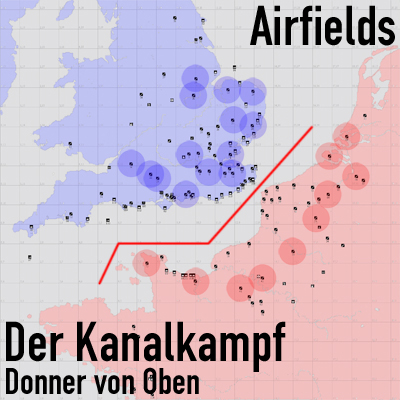
- Axis may not cross the "engagement line" until an Axis Base Warning flashes!
- Axis may not enter English Airspace or go "Feet Dry" over England at all!
  CICs, Please take the time to contact your squads assigned to your side and ask what their choice of rides would be.
You can contact all the squads on your side here.
http://ahevents.org/fso_email/mail_address.html
Design by Husky01 and Nefarious with help from Guppy35