- Details
- Written by: Phast12
- Category: Western European Theatre
- Hits: 20

This FSO takes place in 1943 over the English Channel.
By 1943 Hitler was defending the entire European western coast, with no clear knowledge of where an Allied invasion might land. His tactic was to defend the entire length and rely on reinforcements to quickly respond to any landings. In France the Germans deployed two Army Groups. Army Group B was deployed to protect the coastline while the Fifteenth Army covering the Pas de Calais region and the Seventh Army in Normandy
The Allies begin Operation Bodyguard in preparation for the allied invasion at Normandy. A large focus of operations into Axis held territory was to reinforce the German belief that the landing was to take place at the Calais. Operation Bodyguard succeeded and the Normandy landings took the Germans by surprise. The subsequent deception suggesting that the Normandy landings were a diversion led Germany to delay sending reinforcements from the Pas de Calais (Strait of Dover) region for nearly seven weeks. The additional time it took for Germany to send the reinforcements allowed for the Allies to build a solid beachhead at Normandy.
Country Percentages:
Axis 50%
Allied 50%
Allied Plane Set:
P-47D-11
P-38G
Spitfire IX
Mosquito Mk VI (Must Carry Bombs)
Axis Plane Set:
Fw190A-5
Bf109G-2
Bf109G-6
Bf110C-4b
Bf110G-2 (Must Carry Fuselage Bomb Package)
CM Notes:
• Alt Cap of 16k for Planes carrying bombs or rockets
• Orders will include Min/Max plane numbers and disabled ordinance if any apply
• If you are a bomber or attack aircraft you MUST have bombs/ordinance out before T+60 and any attack after T+60 must be a follow-up attack where an aircraft has rearmed.
• Some form of bomb/rocket attack must be made against each designated target(s) (minimum of 12 pilots for each target).
• All Aircraft must land successfully at ANY FRIENDLY FIELD before T+120 or you will be scored as KIA.
• Pilots may refuel and rearm at ANY FRIENDLY FIELD.
SCORING
Single Engine plane = 1
Multi Engine plane = 2
Fighter Hanger = 25
Bomber Hanger = 25
Vehicle Hanger = 25
Ships = 25
Ammo Bunker = 3
Fuel Bunker = 3
Barracks = 3
Radar = 3
Gun = 0
Town Building = 1
SETTINGS
- Map = Bob40
- Icon Range – Friendly 3k, Enemy 3k.
- No Radar
- Fighter and Bomber Warning Range - 79200 (15 miles)
- Tower Range – 79,200 (for display to match the above Fighter and Bomber Warning)
- External view for bombers (F3) - On
- Friendly Collisions - Off
- Enemy Collisions - On
- Kill Shooter - Off
- Fuel - 1.0
- Ack - 0.3
- Formations - Disabled
- Bombsite calibration - Main Arena Standard
- Object Downtime – full (200)
- Winds
26k and Up = -127 Downwind / N-S 127
- Time:
FRAME 1 - 0800
FRAME 2 - 1000
FRAME 3 - 1200
Disable access to all FLEETS / TASK GROUPS
- Details
- Written by: Zach Wood
- Category: Western European Theatre
- Hits: 22
April FSO 2017/Oct.2018
Leaning into France, Summer 1941
Designer: BFOOT1
Introduction:
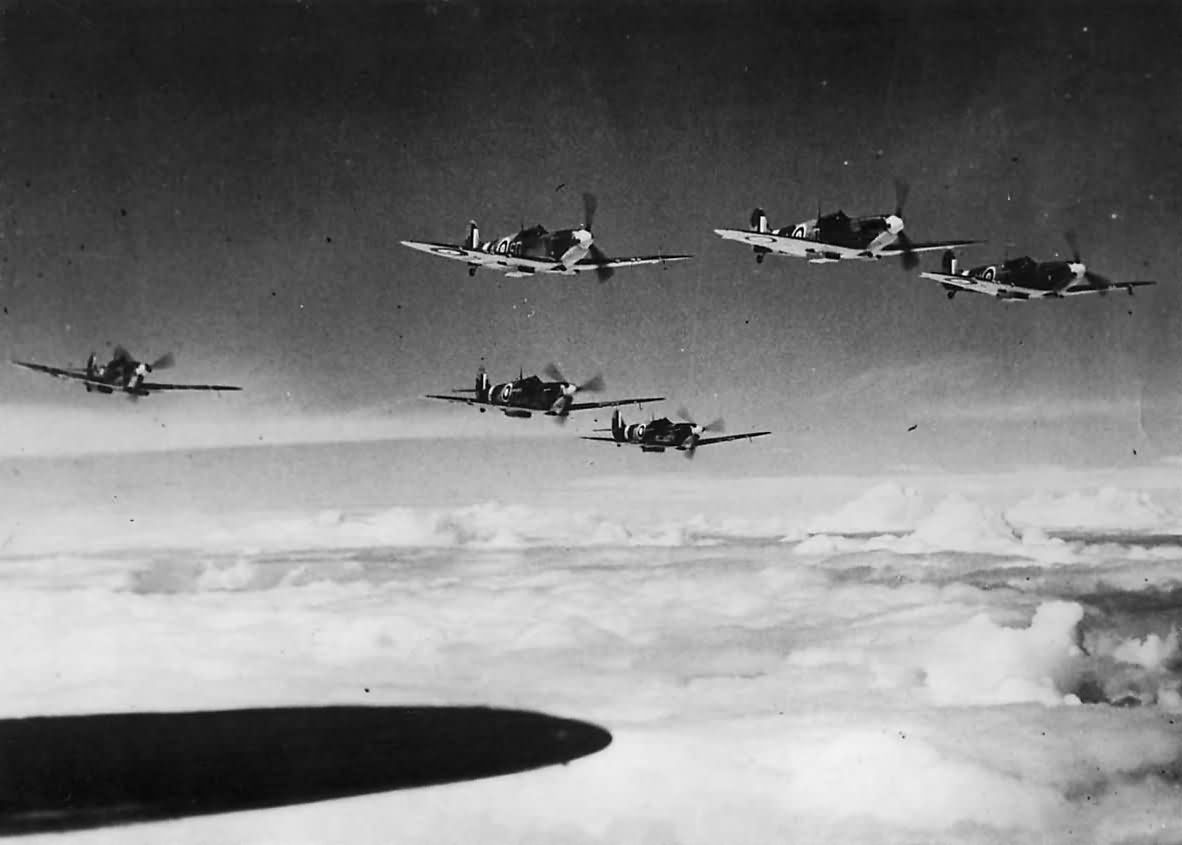
The Circus Operations that occurred during 1941 are considered by some to be the most brutal air operations of the war. No sooner had the defensive victory of the Battle of Britain been won, the ardent spirits in Fighter Command began looking for new laurels. Lord Trenchard had said it was time for Fighter Command to go on the offensive. He advocated for a system of sweeps across the channel over into France. The muse behind this was to gain air superiority over France by destroying the Luftwaffe on the ground, and in the air, and by having the Luftwaffe concentrate their forces in the Pas de Calais area. The RAF also hoped to destroy valuable military targets, as well as eventually be able to sneak into Germany.
Left guarding France from the RAF was the veteran units of JG2 and JG26. These two units alone did not make it easy for the RAF, and were distinguishable by their bright yellow noses. JG2 & JG26 were being led by some of the top guns in the Luftwaffe, Whilhelm Balthasar, Adolf Galland, Egon Mayer, & Gerhad SchÖpfel, just to name a few. The RAF on the other hand was being led by veteran pilots such as Douglas Bader, Howard Frizelle Burton, and Robert Stanford Tuck.
Side Split:
Allies: 52% Knight
Axis: 48% Bishop
Planeset:
Allies: Min/Max Available Airfields
Boston Mk.3 Min 16 A41, A40, A32
Hurricane MK.IIC Min of 6 A37, A43, A44
Spitfire MK. V Unlimited A44, A41, A37
Axis: Min/Max Available Airfields
Bf-109 E-4 Min of 12 A112, A102, A104
Bf-109 F-4 Unlimited A113, A111, A119
Bomber Ordnance: Max Load Formations
Boston Mk. 3 4x500Lb’s Enabled
Hurricane Mk.IIc 2x500lb’s N/A
Event Objective:
The purpose of this FSO is to focus on escort, and interception, just like the RAF and Luftwaffe did during this period. The RAF is tasked with escorting their bombers and protecting them, as well as destroying the Luftwaffe. The RAF will be given two targets to hit. The targets will cover the following area:
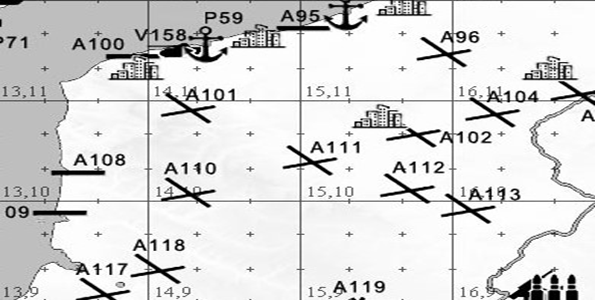
The targets will start toward the coast, and by Frame 3 the RAF will be attacking targets further inland.
Scoring: Points
Single Engine Fighter 2 points
Twin-Engined Fighter 5 points
Bomber 10 points
All Hangars 45 points
Radar: 15 points
All other field objectives 3 points
Guns/Town Buildings 1 Points
Pilot Survival Bonus 1 point
Arena Settings:
- BoB40 terrain
- Fuel burn 1.0
- Icons friendly 3k/enemy 3k
- 0.3 Ack
- Fighter and Bomber warning range 42,000 (about 8 miles)
- Tower range set to 42,000 (for display only to match the above setting)
- Haze/fog full visibility (17 miles)
- Dot Radar: On above 22K
- Sector Radar (Bar Dar): off
- Enemy collisions on
- Friendly collisions off
- Killshooter off
- Time: 13:00 ( 1PM ) Game Clock
- Formations: On
- Formation Autopilot: On
- Bomber calibration: MA Standard
- Wind: 0K-2K NO WIND
2K-18K W TO E - Speed 5
18K-22K NW TO SE - Speed 10
22K: Alt CAP Wind- 200 downdraft
-Revision 1.3
Edit: 10/1/2018
Removed the Spit Mk.1's, changed hangar point value to 45, Added the Radar to equal 15 points.
- Details
- Written by: Spikes
- Category: Western European Theatre
- Hits: 22
April FSO 2017
Leaning into France, Summer 1941
Designer: BFOOT1
Introduction:
The Circus Operations that occurred during 1941 are considered by some to be the most brutal air operations of the war. No sooner had the defensive victory of the Battle of Britain been won, the ardent spirits in Fighter Command began looking for new laurels. Lord Trenchard had said it was time for Fighter Command to go on the offensive. He advocated for a system of sweeps across the channel over into France. The muse behind this was to gain air superiority over France by destroying the Luftwaffe on the ground, and in the air, and by having the Luftwaffe concentrate their forces in the Pas de Calais area. The RAF also hoped to destroy valuable military targets, as well as eventually be able to sneak into Germany.
Left guarding France from the RAF was the veteran units of JG2 and JG26. These two units alone did not make it easy for the RAF, and were distinguishable by their bright yellow noses. JG2 & JG26 were being led by some of the top guns in the Luftwaffe, Whilhelm Balthasar, Adolf Galland, Egon Mayer, &GerhadSchÖpfel, just to name a few. The RAF on the other hand was being led by veteran pilots such as Douglas Bader, Howard Frizelle Burton, andRobert Stanford Tuck.
Side Split:
Allies: 52% Knight
Axis: 48 % Bishop
Planeset:
Allies: Min/Max Available Airfields
Boston Mk.3 Min 12 A41, A40, A32
Hurricane MK.IIC Min of 12 A37, A43, A44
Spitfire MK. V Max of 60 A44, A41, A37
Axis: Min/Max Available Airfields
Bf-109 E-4 Min of 12 A112, A102, A104
Bf-109 F-4 Max 60 A113, A111, A119
Bomber Ordnance: Max Load Formations
Boston Mk. 3 4x500Lb’s Enabled
Hurricane Mk.IIc 2x500lb’s N/A
Event Objective:
The purpose of this FSO is to focus on escort, and interception, just like the RAF and Luftwaffe did during this period. The RAF is tasked with escorting their bombers and protecting them, as well as destroying the Luftwaffe. The RAF will be given a list of three targets prior to each frame. Two of the three targets must have an attempt made to attack them by a credible force, before T+60. The targets will cover the following area:
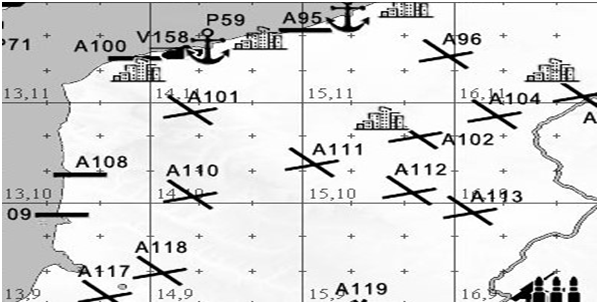
The targets will start toward the coast, and by Frame 3 the RAF will be attacking targets further inland.
Scoring: Points
Single Engine Fighter 2 points
Twin-engine Fighter 5 points
Bomber 10 points
All Hangars 30 points
All other field objectives 3 points
Guns 1 point
Arena Settings:
- BoB40 terrain
- Fuel burn 1.0
- Icons friendly 3k/enemy 3k
- 0.3 Ack
- Fighter and Bomber warning range 42,000 (about 8 miles)
- Tower range set to 42,000 (for display only to match the above setting)
- Haze/fog full visibility (17 miles)
- Dot Radar: OFF
- Sector Radar (Bar Dar): None.
- Enemy collisions on
- Friendly collisions off
- Killshooter off
- Time:
07:00
13:00 ( 1PM ) Game Clock
05:00
- Formations: On
- Formation Autopilot: On
- Bomber calibration: Automatic
- Wind: 0K-2K NO WIND
2K-15K W TO E - Speed 5
15K-20K NW TO SE - Speed 10
20K Downdraft
-Revision 1.3
- Details
- Written by: Spikes
- Category: Western European Theatre
- Hits: 19
OVER THE REICH: Germany 1944
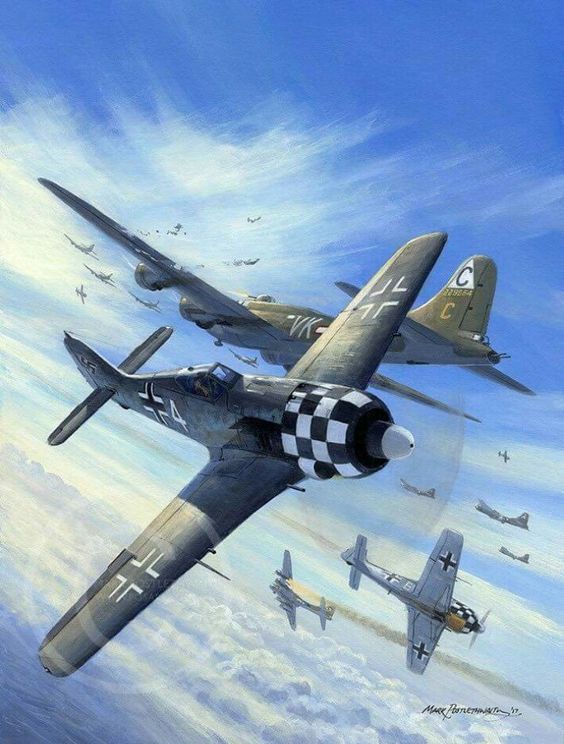
By the spring of 1944 the Allied bombing of Germany had become a round the clock undertaking. The strategy known as the Combined Bombing Offensive tasked the USAAF to strike targets by day and the RAF to attack by night. Prior to the strategic air forces coming under the direct command of General Eisenhower for D-Day the air fleets were committed to operation POINTBLANK. This operation directed the air forces to attack the German aircraft industry and to attrite the defending Luftwaffe fighter units. The aim was to ensure that the Luftwaffe would not play a role in the upcoming invasion.
Withing VIII Fighter Command the most important fighter by the beginning of 1944 was the P-47 Thunderbolt. With drop tanks the P-47s range was increased and with the return of P-38s to England the "heavies" could be escorted as far as Berlin. Destined to become the most important American fighter in the ETO the P-51 Mustang made its combat debut in December 1943. With long range and performance the pioneer Mustang groups heralded a new era in the Army Air Force fighter escort role.
On the German side the new Me 410 had joined the older Bf 110 in the heavy fighter mission. Since early in the war the heavy fighter concept had worked well for the Luftwaffe but long ranged escort fighters had begun to take a heavy toll on them. The Fw 190 equipped Sturmgruppe close attack formations signaled a shift in interception strategy. The Jagdflieger continued to have success but the losses amongst veteran fighter crews and leaders was becoming harder to replace as the campaign wore on. The Luftwaffe reinforced with units from Russia and elsewhere to bolster it's strength in the West. 1944 would be the decisive contest between 8th Army Air Force and the Defence of the Reich Jagdgeschwaders.
This FSO recreates the air battles over Germany in the spring of 1944 between the USAAF and the Luftwaffe.
Allied 50%
Allied Bishop
CM Rook
OOB:
Axis (Luftwaffe):
Fw 190A-5
Fw 190A-8 (max 20)
Me 410
P-38J
P-47D-11
B-17G (min 20 *players*)
* The Axis have no attack objectives in this setup.
* Bomber formations are MANDATORY.
* Allied fighters have air-ground ordnance and drop tanks disabled.
* The Fw 190A-8 has the 30mm option disabled.
* Allies have an air start at T+5.
* Max alt for bombers is 23,000 feet.
* ALL AIRCRAFT ARE TO BE LANDED AND THE PLAYERS TOWERED OUT BY FRAME END OR WILL BE CONSIDERED SHOT DOWN AND THE CREWS KIA.
------------
Bomber = 10 pts
Fighter = 5 pts
----------
Gun = 0.5 pts
Hangar = 25 pts
All Other = 3 pts
----------
Landing Bonus = 2 pts
Pilot Survival Bonus = 2 pts
- Fuel burn 1.0
- Icons friendly 3k/enemy 3k
- 0.5 Ack
- Fighter and Bomber warning range 42,000 (about 8 miles)
- Tower range set to 42,000 (for display only to match the above setting)
- Haze/fog full visibility (17 miles)
- Dot Radar: Off
- Sector Radar (Bar Dar): Axis only altitude 200 feet and up with 4 minute update
- Friendly collisions off
- Killshooter off
- Time: 15:00 ( 3PM ) Game Clock
- Formations: On
- Formation Autopilot: On
- Bomber calibration: Automatic
- Wind: 0K-18K NE TO SW - Speed 5
18K-24K N TO S - Speed 10
24K+ N TO S - Speed 15
Designer's Notes:
* The Fw 190A-8 in this setup represents the Fw 190A-7.
* The Bf 109G-14 in this setup represents the late model Bf 109G-6.
- Details
- Written by: Spikes
- Category: Western European Theatre
- Hits: 20
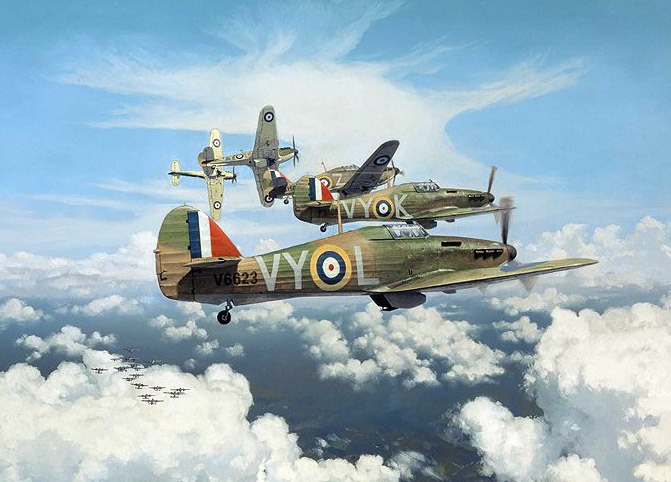
Hermann Goering launched Adlertag (Eagle Day) on August 13th with the objective to destroy Fighter Commands aircraft and infrastructure on the ground. Many coastal airfields were hit but the overall results were not what the Luftwaffe had hoped for. A larger series of raids on August 15th yielded better results. The August 18th raids hit the RAF hard as the Luftwaffe inflicted severe damage to the airfields. Damage to maintenance facilities and ground crews was also heavy. Some squadrons had to be moved to civilian airfields due to the heavy damage at fighter bases.The pressure on Fighter Command was beginning to mount.
Allied 50%
------------