- Details
- Written by: Spikes
- Category: Western European Theatre
- Hits: 20
Fjord Fury
Introduction
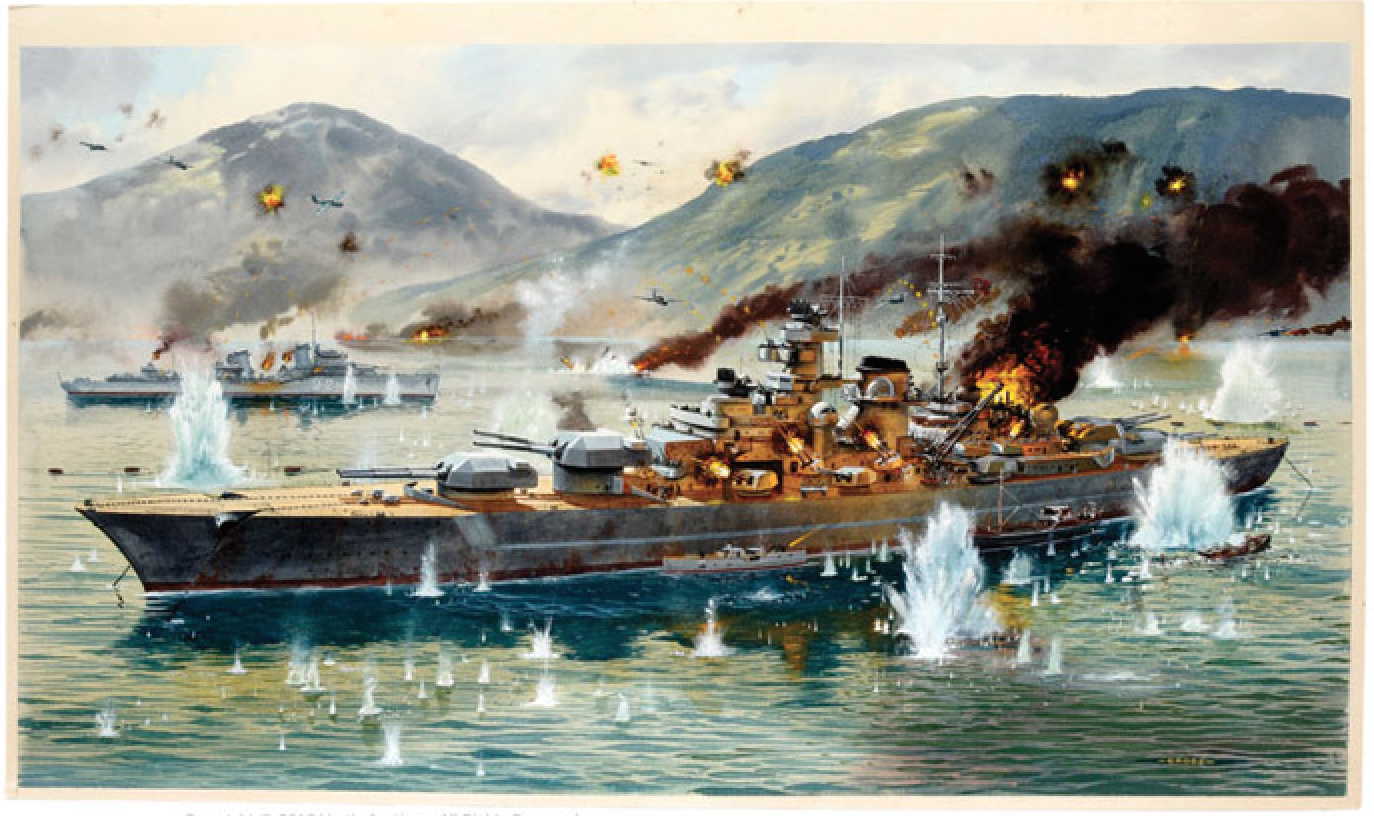
In 1940 Winston Churchill stated, ‘It is a terrible thing that this prize should be waiting and no one be able to think of a way of winning it’. He had made reference to the German Battleship Tirpitz, which he also named “The Beast''. He had tasked RAF Coastal Command, RAF Bomber Command along with the Fleet Air Arm with the destruction of this ship. These Royal military organizations spent four years at great cost to sink the KMS Tirpitz. It was one of the highest valued targets of that war. At its various moorings in Norway, the battleship was attacked 15 times by no less than 400 aircraft.
The Tirpitz was finally sunk by aircraft of RAF Bomber Command on November 12, 1944, using 12,000 lb “Tallboy” bombs. The Avro Lancasters of 9, 617, and 209 squadrons made a return to the fjord to attack the 52-ton battleship, sending it and 1000 of her crew to the bottom of Tromso fjord.
Join the Aces High Special Event community for the exciting action in the fjords of Norway in “Fjord Fury”.
Country Percentage
Axis 50%
Allies 50%
Event Plane Set
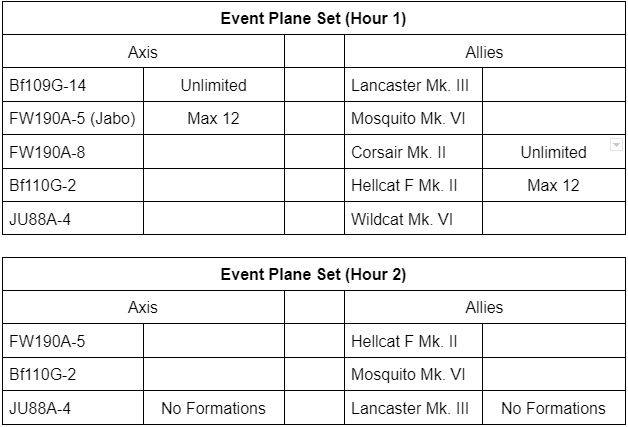
Planning notes: The following are definitions and instructions for CiC planning:
- Unlimited - The planner may add as many aircraft of this type as possible while meeting the max and min requirement of the other types in the frame.
- Max - This is the maximum number of aircraft of this type that must be in the frame.
- Min - This is the minimum number of aircraft of this type that must be in the frame.
- Blank - The planner(s) may use these aircraft types but are not required within the frame. There is no max or min associated with this type. A side may have as many as desired.
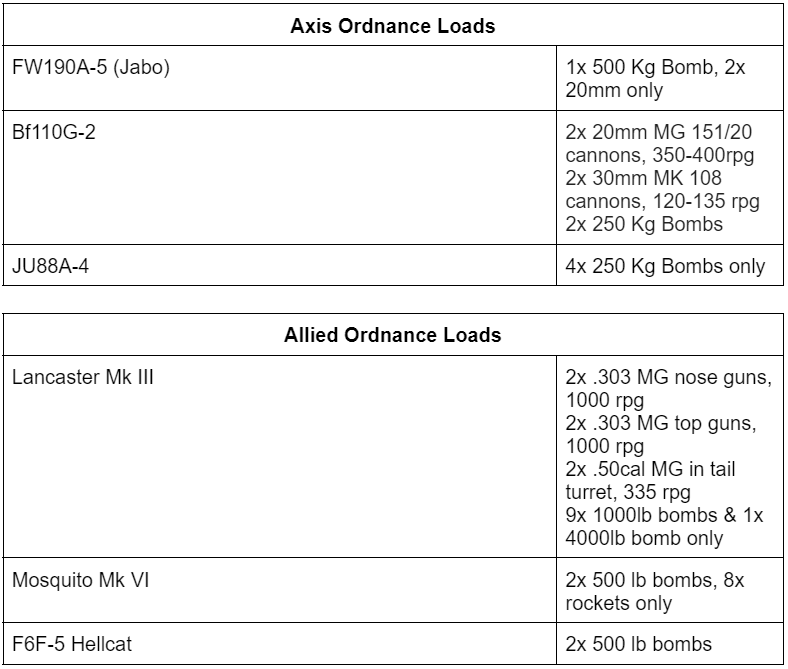
Ordnance Loadout
Victory Conditions
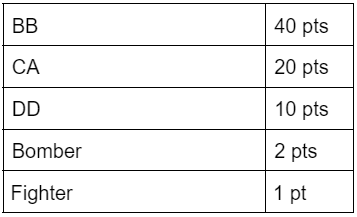
In the first hour, each side will be tasked to attack and destroy targets that will have the same point value per side per frame. The targets will be shipping, assigned by the host CM. The value of each target will be displayed in the scoring section.
In the second hour, each side will be provided a BONUS target that may be attacked. A target value will be displayed in the scoring section for these targets. Each side may decide whether or not to attack the second target, it is not required. Any side that does destroy a second hour target will receive the stated points in the scoring section.
The side that scores the highest number of points at the frame's end will be the victor of the frame.
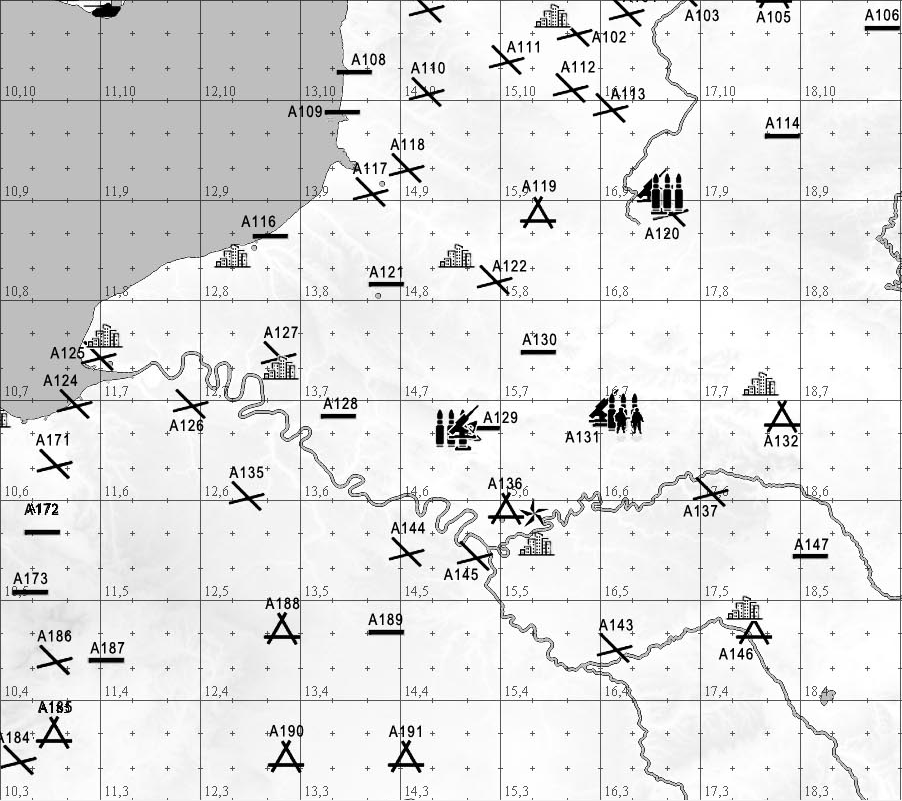
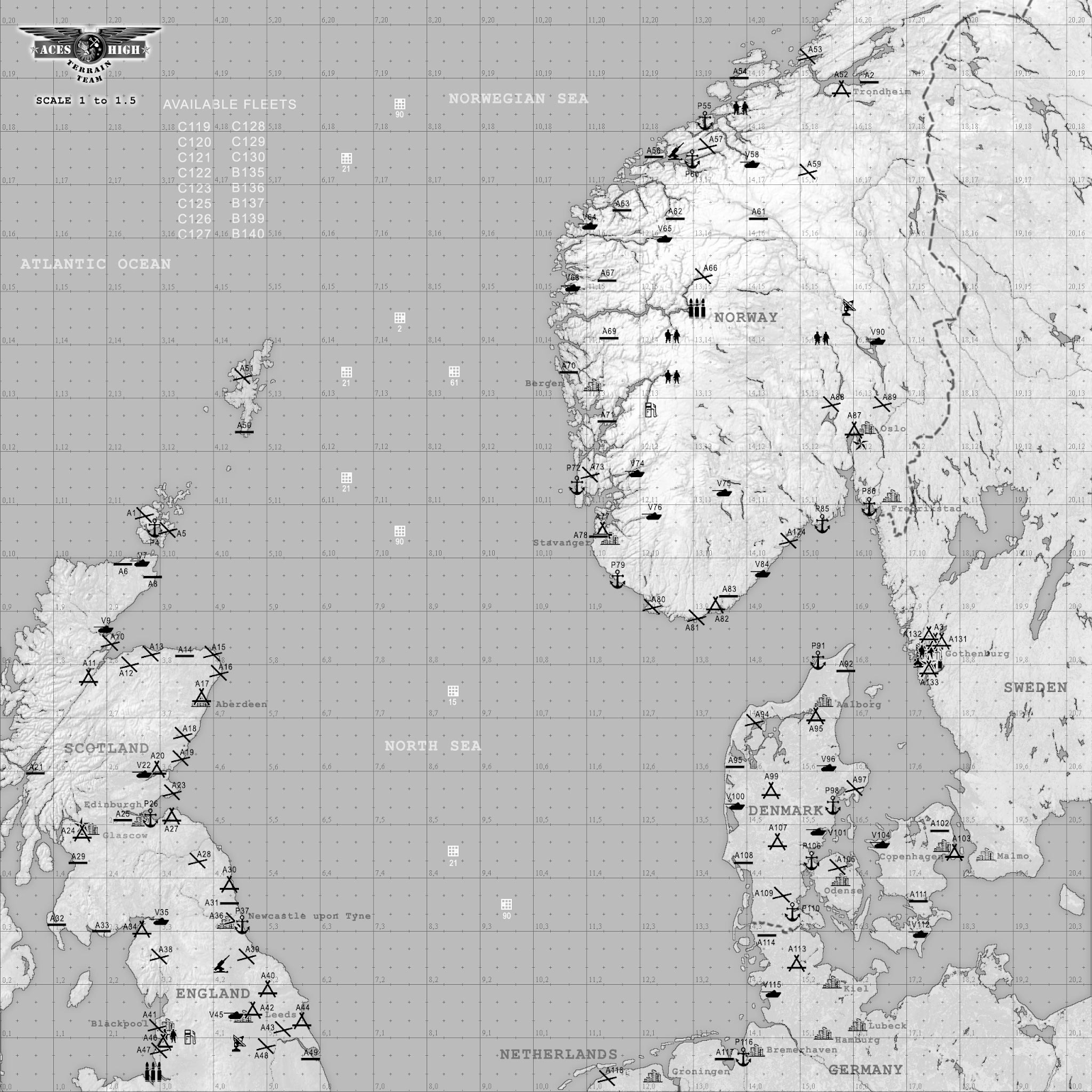
MAP
Special Event Rules
- This is a multi-life event. Pilots may re-plane in 2nd-hour aircraft once they become available in the hangar.
- Combatants may rearm in original aircraft at any friendly base or ship.
- Ordnance for each aircraft will be set by the setup CM in the hangar.
- All targeted objects will retain their normal MA destruction weight.
- The attackers will have up to T+60 to make their initial attack, otherwise, they will be unable to win the frame.
- The bomber alt cap will be 16K.
- The fighter alt cap will be 20k.
- Destroyed targets are down for the remainder of the frame.
- Neither side must attack second-hour targets.
- The second-hour targets may not be attacked until the second hour.
- The Tirpitz may not be manned or moved.
- All CiCs are required to comply with the stated number of aircraft allocations per frame.
- Orders must be reviewed by the Host CM prior to delivery to each side.
Scoring
Arena Settings
- Terrain map: nrthseaw
- Fuel burn rate: 1.0
- Anti-aircraft gun strength: 0.4
- Bombsight calibration: AUTOMATIC (MA standard)
- Icons: 3.0K yards (9,000 feet)
- Sector Radar ("bar dar"): OFF
- Dot Radar: OFF
- Fighter and Bomber warning range: 52,800 feet (10 miles)
- Tower range set to 52,800 feet (for display only, to match the above setting)
- Haze range: 12 miles
- Friendlycollisions: OFF
- Enemy collisions: ON
- Kill shooter: OFF
- Stall Limiter: Set ON (Players may disable)
Wind:
Altitude Speed Direction
00 - 02K 0 NO WIND
02 - 10K 0 W -> E
10 - 18K 0 W -> E
18 - 20K 0 W -> E
20 - 50K+ 75 DOWNDRAFT
Weather:
med5kmed15k.awa
Arena Clock:
Frame 1 0900 (9:00 AM, Morning)
Frame 2 1130 (11:30 AM, Morning)
Frame 3 1400 (2:00 PM, Afternoon)
Axis Skins
BF109G-14
16/JG5 by Fencer
JG5 by DutchGuy
FW190A5
JG5 by Devil505 (Default)
FW190A-8
12/JG5
BF110G-2
10./ZG26 by Devil505
JU88A-4
1./KG77 by Greebo
Allied Skins
Lancaster Mk III:
RAF 9 Squadron by Greebo
Mosquito Mk VI:
RAF 143 Squadron by Greebo
RAF 248 Squadron by Greebo
Hellcat Mk II:
FAA 804 NAS by Greebo
Wildcat Mk VI (FM-2):
FAA- 881 NAS by Greebo
Corsair Mk II:
FAA 1842 NAS by Greebo
Designer Notes:
Designed by AKWarHwk January 2022
- Details
- Written by: Will Hyman
- Category: Western European Theatre
- Hits: 20
After Operation Market Garden failed to secure a bridgehead over the Rhine River, the Western Allies' plan to break out into the industrial Ruhr Valley and end the war by Christmas was stifled. As October turned to November and the weather began to close in, the Allied push to the Rhine was starting to bog down.
In the Netherlands, 21st Army Group had captured Nijmegen and Eindhoven and secured the Scheldt Estuary. Just to the Southeast, the US First Army had finally captured the German city of Aachen in late October suffering heavy casualties, but was now bogged down in bloody fighting for the Hurtgen Forest. In the Lorraine area of France, General Patton and the US 3rd Army were fighting for the city of Metz.
During this time, the US Ninth Air Force, and the British 1st and 2nd Tactical Air Force were instrumental in providing Close Air Support to the Allied troops all along the Western Front. When they weren’t providing Close Air Support to the troops on the ground, they were running missions into Germany interdicting supply trucks, locomotives, and armored columns, destroying the enemy’s ability to resupply and reinforce.
Despite the situation, the Luftwaffe still had some fight left in them and the fighter bombers of the 9th Air Force continued to find heavy engagements as well as sightings of the new German jet fighter, the Me 262. In this FSO, we set the stage for the 9th Air Forces tactical air war over France and Germany in late October and November 1944.
PLANE SET:
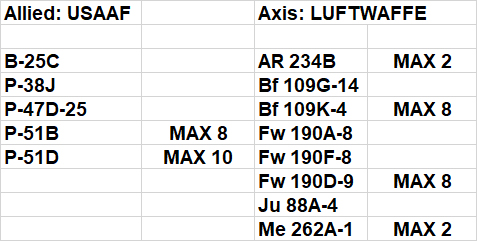
22K ALT CAP FIGHTERS - ALL FIGHTERS
16K ALT CAP - ALL BOMBERS
SPECIAL RULES:
All Allied Fighters - 1,000lb Bombs Disabled
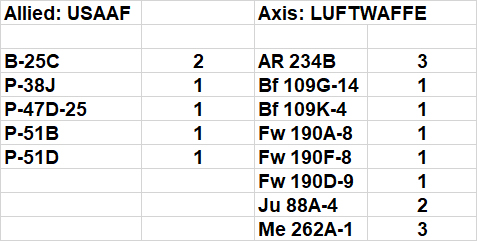
AIRCRAFT SCORING:
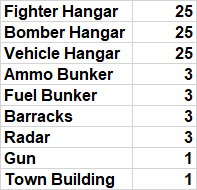
OBJECT SCORING:
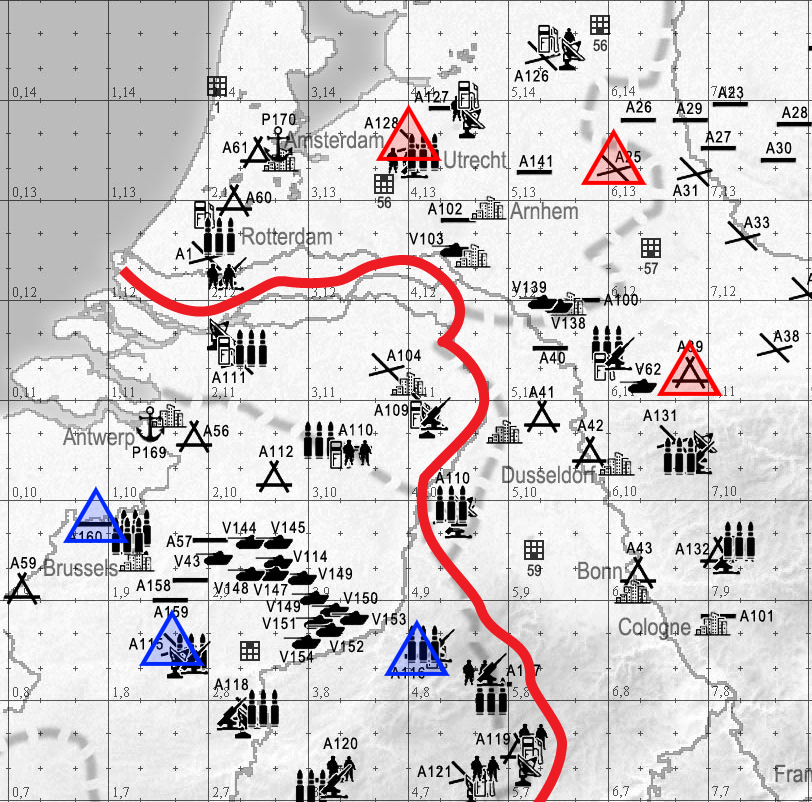
SETTINGS
- Germany terrain
- Icon Range – Friendly 3k, Enemy 3k.
- No Radar
- Fighter and Bomber Warning Range - 79200 (15 miles)
- Tower Range – 79,200 (for display to match the above Fighter and Bomber Warning)
- External view for bombers (F3) - On
- Friendly Collisions - Off
- Enemy Collisions - On
- Kill Shooter - Off
- Fuel - 1.0
- Ack - 0.3
- Formations - Enabled
- Bombsite calibration - Main Arena Standard
- Time:
FRAME 1 - 0900
FRAME 2 - 1200
FRAME 3 - 1500
- Object Downtime – full (200)
- Winds - MAX Downdraft 22K
- Clouds - Med5KMed15K
Designed by Nefarious
- Details
- Written by: Spikes
- Category: Western European Theatre
- Hits: 18
Introduction
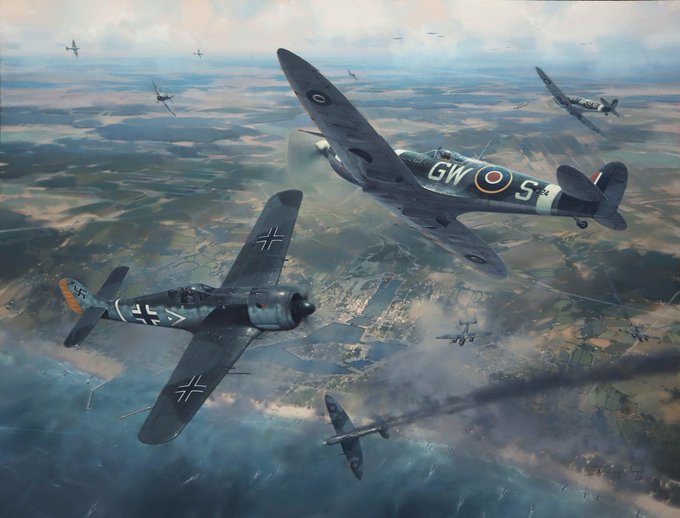
Operation Jubilee brought about some of the fiercest aerial combat since the Battle of Britain raged over the shores, towns and countrysides of England back in 1940. The RAF employed 72 squadrons of aircraft; 48 squadrons of Spitfires, 8 squadrons of Hurricanes, 4 squadrons of Mustang Is, 3 squadrons of Typhoons, 6 squadrons of Bostons, 1 Blenheim squadron, and 2 squadrons of USAAF B-17s in addition to several other types of aircraft in support of operations.
The RAF was opposed by two wings of Luftwaffe fighters from JG 2 and JG 26 comprising 190 aircraft. Attack support was provided from KG 2 and elements of anti-shipping support from KG 53, KG 40 and KG 77. The RAF paid a heavy price for their foray into France that day, August 19, 1942. The Luftwaffe held the keys to the clouds with its heavy deployments of the FW190A fighters and Jabos, which wrestled air superiority from the Allies over the beaches. The aerial combat was so heavy and continuous that the invasion fleet remained in peril from the beginning of the attack until the end even with the RAF aerial umbrella overhead.
Country Percentage
Axis 50%
Allies 50%
|
Hour 1 Planeset |
||||
|
Luftwaffe |
Min/Max |
RAF |
Min/Max |
|
|
FW190A-5 |
Spitfire IX |
|||
|
BF109G-2 |
Min 8 |
Typhoon IB |
Max 8 |
|
|
JU88A-4 |
Min 8 |
Hurricane IIC |
Min 8 |
|
|
Bf110c-4b |
Min 8 |
Boston III |
Min 8 |
|
|
Hour 2 Plane and Vehicle Set |
||||
|
Luftwaffe |
Min/Max |
RAF |
Min/Max |
|
|
BF109G-2 |
Spitfire IX |
|||
|
Bf110c-4b |
Hurricane IIC |
|||
| SdKfz 251 | LVT(A)-2 | |||
| LVT(A)-4 | LVT(A)-4 | |||
|
Planeset Ordnance |
||||||
|
Luftwaffe |
RAF |
|||||
|
Aircraft |
Ord Type |
Aircraft |
Ord Type |
|||
|
Ju88A-4 |
(4) 250 Kg Bombs - No Torps |
Boston III |
(4) 500 lb. Bombs |
|||
|
Bf110C-4b |
(2) 250 Kg Bombs |
Hurricane IIC |
(2) 500 Ib. Bombs |
|||
| FW190A-5 | (2) or (4) 20mm Canon | |||||
Victory Conditions
This is a progressive attack and winner-takes-all event.
Each side will be tasked to work towards building security for the second hour.
The Allies will be tasked with closing Saint-Aubin Airfield (A116) and securing the Port of Dieppe (P195). The first hour planning for the Allies will set up for the capture of (P195) in the second hour.
The Axis will attempt to create a condition for the Allies where capturing the Port of Dieppe is more difficult.
IF THEN ELSE (Conditions)...
Condition voided...
IF the Allies have ships remaining at the beginning of the second hour. (Then)
The Allies will spawn vehicles from V67 to capture the base. Simulating closer landings to the port base for capture.
ELSE
The Allies will receive a new fleet farther out, where vehicles will need to make their way ashore to make the capture.
END
IF the Port of Dieppe is captured by the Allies. (Then)
The Axis will have an opportunity to recapture to port from vehicle spawns out of A121.
ELSE
The Axis will defend the port until the end of the frame.
END
Note: The winner at the end of the frame will hold the Port of Dieppe (A195).
Special Event Rules
- This is a Multi-life event. Pilots may replane if shot down after the first 30 minutes into the second hour, aircraft only.
- Combatants may rearm at any friendly base.
- Ordnance for each aircraft will be set by the setup CM in the hangar.
- Hangars and ships will be given a destruction weight of 3200 lbs.
- The attackers will have up to T+30 to make their initial attack.
- The bombers and Jabos/FBs alt cap is 14K, and the fighter alt cap is 20K.
- Destroyed targets are down for the remainder of the frame.
- Each side may attack the other's bases near the target area with "NO" restrictions.
- The Allies may steer their shipping throughout the event. However, they must stay within the restricted area.
- A121 can not be attacked by the Allies at any point.
- There are 10 troops required to capture the base.
Scoring
Aircraft and vehicles in this event have "NO" value. They are tools to complete each assigned task. Each side is invited to fly as many aircraft or drive as many vehicles required to complete the assigned objectives.
Arena Settings
-
Terrain map: BOF44 (2020)
-
Fuel burn rate: 1.0
-
Anti-aircraft gun strength: 0.3
-
Bombsight calibration: AUTOMATIC (MA standard)
-
Icons: 3.0K yards (9,000 feet)
-
Sector Radar ("bar dar"): OFF
-
Dot Radar: OFF
-
Fighter and Bomber warning range: 52,800 feet (10 miles)
-
Tower range set to 79,200 feet (for display only, to match the above setting)
-
Haze range: 12 miles
-
Friendlycollisions: OFF
-
Enemy collisions: ON
-
Kill shooter: OFF
-
Stall Limiter: Set ON (Players may disable)
-
TownDownForCapturePer: 0.7500
-- Wind:
Altitude Speed Direction
00 - 02K 0 NO WIND
02 - 10K 05 W -> E
10 - 18K 13 W -> E
18 - 20K 27 W -> E
20K+ -199 DOWNDRAFT 75MPH
-- Arena Clock:
Frame 1 0715 (7:15 AM, Morning)
Frame 2 0900 (9:00 AM, Morning)
Frame 3 1200 (12:00 PM, Afternoon)
-- Weather:
Cumulus Clouds at 6 and 12 thousand over the target areas and up the French coast.
-- Historical Combat Skins:
Luftwaffe
BF109G-2
Stab II./JG 26 by Devil505
FW190A-5
9./JG 2 by Devil505 (Jabo)
10.(Jabo)/JG 2 by Devil505
III./JG 2 by Kweassa
III./JG 26 by Devil505
III./JG 26 by Kweassa
4./JG 2 by Devil505
JU88A-4
5./KG 77 by Greebo
Ku106 by Greebo
RAF
Spitfire IX
401S RCAF by Greebo
402S AE-B by Jocko417
64S RAF by Greebo
611S RAF by Greebo
Typhoon IB
609S by Greebo
56S RAF by Greebo
Boston III
88FS by BH3841 (Default)
Hurricane IIC
174S/RAF by Greebo
87S/RAF by Greebo
Designer Notes:
Designed by AKWarHwk
Updated October 2025
- Details
- Written by: Spikes
- Category: Western European Theatre
- Hits: 15
D-DAY “White Flag”
Introduction
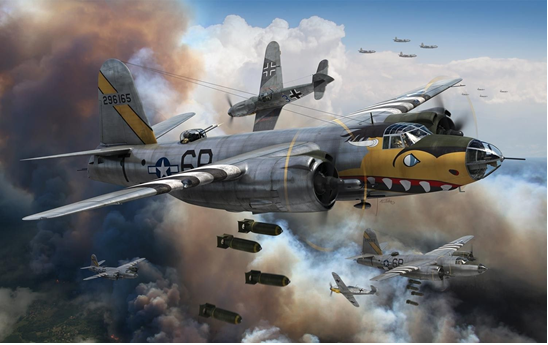
Following the D-Day invasion and the great “Breakout” during Operation Cobra, the 9th USAAF was tasked to clear the way for the 3rd US Army to reach Paris. The 9th USAAF, which was the mobile tactical arm of the US Army Air Force in western Europe, moved to France on July 16, 1944. From western France, they began operations to clear the road of Wehrmacht artillery, panzers, and soldiers. As 3rd Army tank columns rolled towards Paris, 9th USAAF fighter-bombers would fly ahead and spot potential ambushes and roadblocks. These pilots communicated directly to the forward air controllers riding along with the tank columns. The FAC was a USAAF officer that received communications from the 9th USAAF Fighter-Bombers and gave instructions to these aircraft on what needed to be targeted.
Level bombers got into the act by flying thousands of sorties to destroy troop movements, railroad junctions, railroad sidings, bridges, radar, and communications centers. By the time of this action, most of the 9th Air Force’s bombers were the Martin B-26B Marauder. Even though the aircraft was dubbed the widow maker because of the large number of training accidents that occurred in the aircraft, new modifications to the airframe and changes in flight training reduced training accidents almost completely. By the end of the war, the B-26 was the safest and most survivable bomber in the US Air Force inventory.
The Luftwaffe was beginning to see a serious reduction in strength due to constant combat from early 1943 through to D-Day, where only two Luftwaffe sorties were seen to have penetrated the massive fighter screen of the RAF and USAAF. Missions from Operation POINTBLANK, which targeted the German Aircraft Industry, pounded away at Luftwaffe aerodromes and fighters in the low countries and France until the bases that JG 26 and JG 2 were stationed on had to be moved farther inland towards Germany where Allied bombers and fighters faced greater risk to attack.
Event Challenge
This Aces High FSO event will focus on lower altitude Allied attacks against German infrastructure; Towns, Vehicle hangars, and Troop Barracks, Ordnance bunkers, and Radars. The Allies will attack and the Axis will defend.
Side Split
Allies: 55%
Axis: 45%
Plane Set
|
Luftwaffe |
USAAF |
||
|
Aircraft |
Min - Max |
Aircraft |
Min - Max |
|
FW190A-8 |
Unlimited |
B-26B |
12 Min |
|
BF109G-14 |
20 Max |
A-20G |
8 Min |
|
BF109G-6 |
12 Min |
P-47D-11/25 |
Unlimited |
| FW190A-5 | 10 Max |
P-38J/L |
|
|
P-51B/D |
20 Max |
Allied fighter pilots may choose their version of the aircraft assigned.
Victory Conditions
The Allies will be charged with clearing the way for Allied Armored columns racing to rendezvous in Paris.
Each frame will be a victory for the Allies provided the following conditions exist at frames end;
- The target base must have its town “white flagged” by the close of the frame.
- The Vehicle Hangar on the target base must be destroyed.
- There must be three barracks objects destroyed on the target base.
- The ordnance bunkers on the target base must be destroyed.
- The Radar tower on the target base must be destroyed.
The absence of these conditions by the frame’s end will cause a victory for the Luftwaffe.
Special Event Rules and Restrictions
- This is a single-life event. Pilots may not re-plane for another flight if they are shot down, killed, ditch, or otherwise cannot rearm on a friendly rearm pad.
- Combatants may rearm at any friendly base.
- Ordnance for each aircraft will be set by the setup CM in the hangar.
- All targeted objects will retain their normal MA destruction weight.
- The attackers will have up to T+75 to make their initial attack.
- The bomber alt cap is 14K and the fighter alt cap is 24K.
- Destroyed targets are down for the remainder of the frame.
- The Axis will have access to manned ground guns at the targeted base(s).
- Allied fighters MAY attack all applicable targets.
- Recovering to a friendly base by the end of the frame will not be necessary.
- Only Town objects, the VH, Barracks, Ordnance bunkers, and the Radar tower are live targets for this event. Any other ground target will not count towards the victory conditions.
Terrain
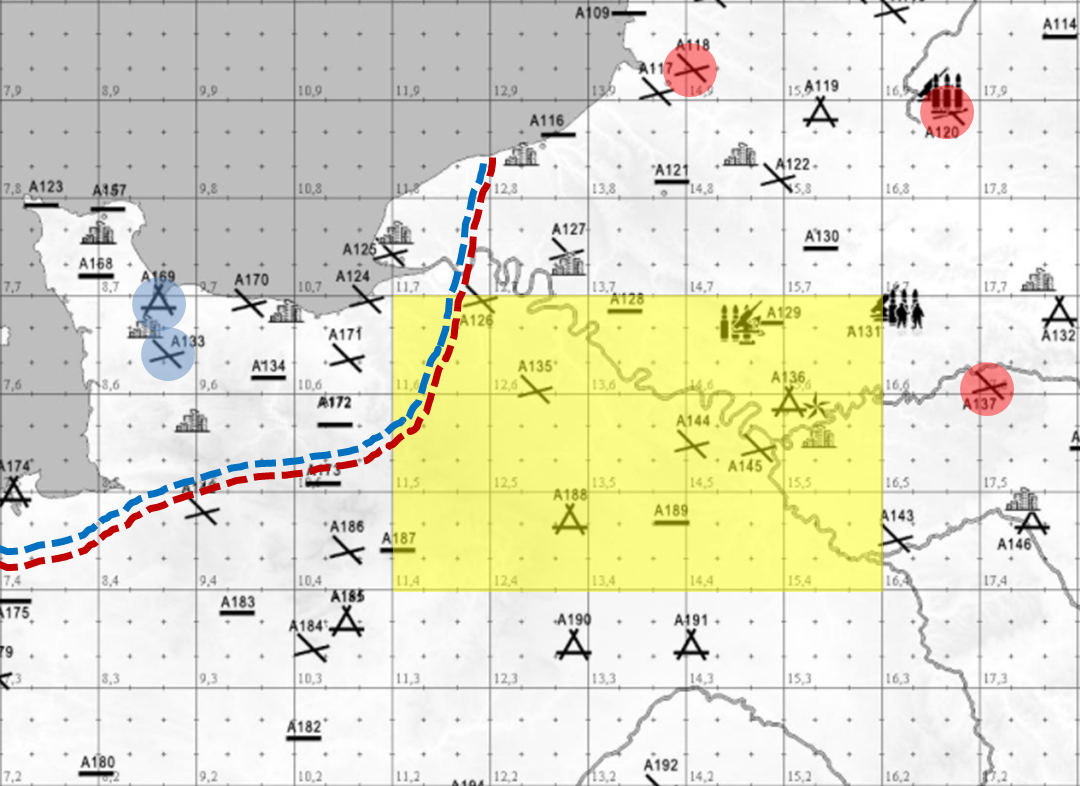
Active Bases
Axis
A118
A120
A137 (Bf109G-6 Only)
Allies
A169 (Bombers Only)
A133 (Fighters Only)
Ordnance Distribution
Allied aircraft except for the P-51 may carry bombs. Luftwaffe aircraft will have no ordnance available.
Allied aircraft will only have the 500 lb. bomb available as an ordnance choice.
The Axis will have the 30 mm canon choice removed for the FW190A-8 only.
Targets and Scoring
White flagged town + VH destroyed + Three destroyed barracks objects + All ordnance bunkers + Radar tower = Frame Victory
Arena Settings
- Terrain map: BOF44
- Fuel burn rate: 1.0
- Anti-aircraft gun strength: 0.3
- Bombsight calibration: AUTOMATIC (MA standard)
- Icons: 3.0K yards (9,000 feet)
- Sector Radar ("bar dar"): OFF
- Dot Radar: OFF
- Fighter and Bomber warning range: 52,8000 feet (10 miles)
- Tower range set to 52,800 feet (for display only, to match the above setting)
- Haze range: 18 miles
- Friendlycollisions: OFF
- Enemy collisions: ON
- Kill shooter: OFF
- Stall Limiter: Set ON (Players may disable)
Wind
Altitude Speed Direction
00 - 02K 0 NO WIND
02 - 10K 05 SW -> NE
10 - 18K 13 SW -> NE
18 - 24K 27 SW -> NE
24K - DOWNDRAFT + 90 Knots
Clouds
Mostly Cloudy at 24K
Scattered Clouds from 13k to 14k in a 12-mile radius around the target.
Frame Clock
Frame 1 9:00 (9:00 AM, Morning)
Frame 2 11:00 (11:00 AM, Morning)
Frame 3 15:00 (3:00 PM, Afternoon)
Designer Notes:
Designed by AKWarHwk
There are no points associated with scoring the event.
- Details
- Written by: Spikes
- Category: Western European Theatre
- Hits: 16
Case Red: France 1940
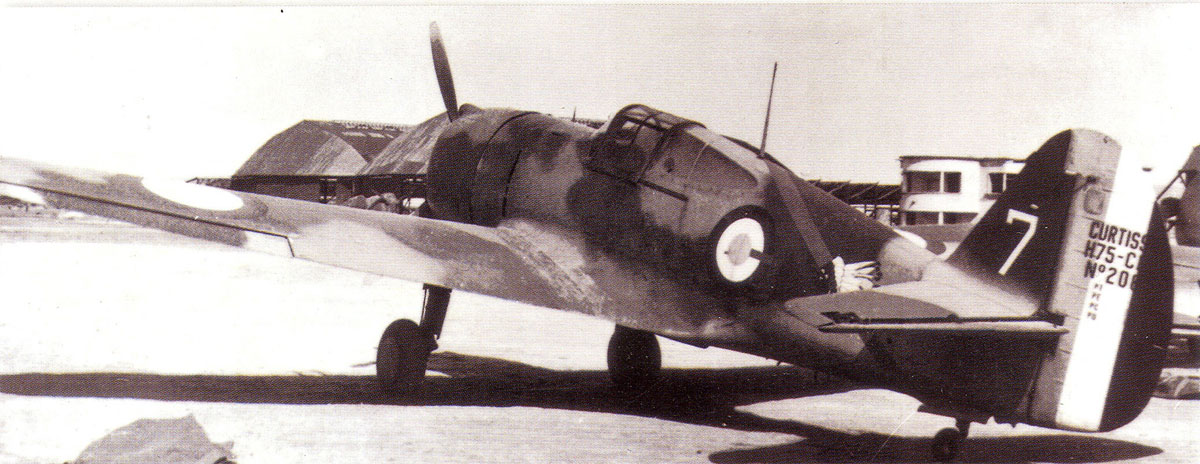
Fall Rot (Case Red) was the plan for the second phase of the conquest of France by Germany that started in early June of 1940. By this point, Dunkirk was captured by the advancing German Army. Germany continued to push south towards Paris, and the Luftwaffe did much of the heavy lifting during this push.
While the initial goal of the Luftwaffe was air superiority, it quickly became air supremacy with the French Air Force on the verge of collapse. The RAF tried to assist by flying sorties over Dunkirk in hopes to divert attention from France, but suffered heavy losses.
This FSO is designed to depict the air war of the Fall Rot campaign as the Luftwaffe squares off against the French Air Force and Royal Air Force over the skies of France.
Order of Battle:
|
RAF/FAF |
Luftwaffe |
||
|
Hurricane Mk. I |
MIN 12 |
Bf 109E-4 |
MIN 20 |
|
Hawk-75 (P-40C) |
MIN 12 |
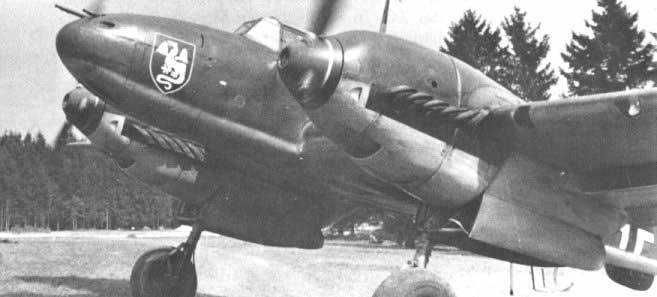
Bf 110C-4b |
MAX 12 |
|
D.520 (Yak-7B) |
MAX 20 |
He 111H |
MIN 16* |
|
Ju 88A-4 (Jabo) |
|||
Notes:
Bomber ALT cap 14K.
Fighter ALT cap 18K.
Fighters may not take ordnance or drop tanks.
Ju 88A-4 may not take formations.
*CIC may assign all He 111s, all single Ju 88s, or a mix so long as the total number of assigned pilots equals a minimum of 16.
Scoring:
Fighters - 1
He 111 - 2
Ju 88 - 3
Hangars - 8
Arena Settings:
- - Terrain: bof44
- - Clouds: med5kmed15k
- - Fuel Burn: .90
- - Icons: 3K Friendly/Enemy
- - Ack: .3
- - Fighter and Bomber warning range: 63360 (about 12 miles)
- - Tower range set to 63360 (for display only to match the above setting)
- - Haze/Fog: 15 miles
- - Radar: Off
- - Enemy collisions: on
- - Friendly collisions: off
- - Killshooter: off
- - Time: 1000 (10AM) Game Clock
- - Formations: On
- - Formation Autopilot: On
- - Bomber calibration: Automatic
- - Wind: 0K-2K NO WIND
- 2K-10K: W TO E - Speed 5
- 10K-18K: NW TO SE - Speed 10
- 18K+: 45MPH Downdraft
Area of Operations: