- Details
- Written by: Larry G
- Category: Western European Theatre
- Hits: 24
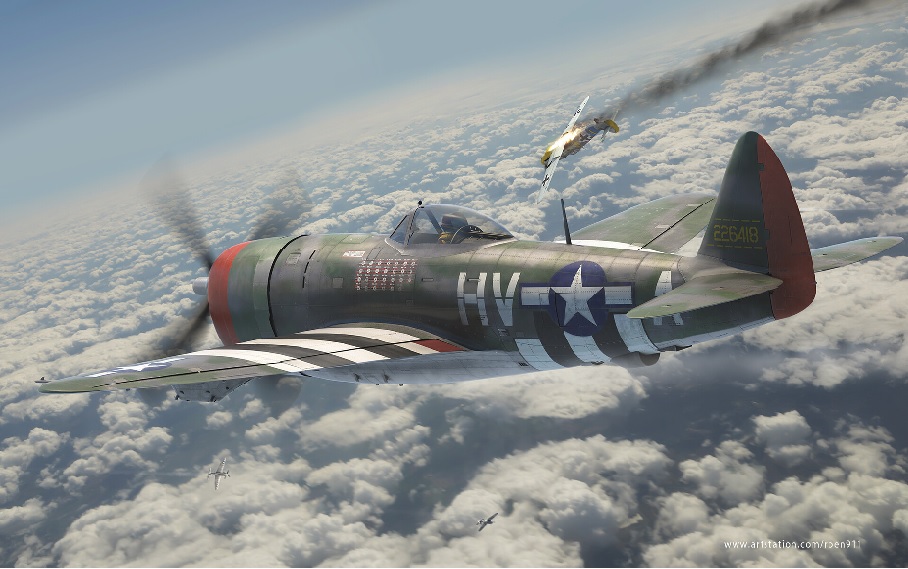
The Prior Months of April and May of 1944 the Allied forces were planning a Major Invasion on Occupied France
The Month of June 1944 over France was the Begining to the End of the Lufftwafe Aircraft and Seasoned Pilot's, This was Operation was Know as Operation Overlord (D-Dday)
The Allied Supreme Commander, General Eisenhower wrote to General Marshall and President Roosevelt "I consider the Transport Plan as indispensable to the preparations to Overlord. There is no other way this tremendous Air Force can help us, during the preparatory period, to get ashore and stay there". By June 6th only two bridges across the Seine river remained intact, and three quarters of the railway system within 150 miles from the assault beaches had been rendered unserviceable. Consequently, the Germans lost the race to build up forces in the Normandy area after the invasion.
Country Percentages:
Axis 50%
Allied 50%
Axis Knights
Allied Bishops
CM Rook
OOB:Luftwaffe will Defend Designated Targets For Each Frame
Axis (Luftwaffe):
BF 109G-6 No Min/Max
Bf 109G-14 (Late Model G6)No Min/Max
Fw 190A-8 No min/no max
OOB: Allies Must Hit their Designated Targets Each Frame
Allied (USAAF):
P51B- Max of 8
P-47D-25 No Min/Max
P-38J Min of 6
B-17G Min of 12 Frame 3
B-24J Min of 12 for Frame 1 and 2
Special Rules and Ordnance Restrictions:
* The Axis have no attack objectives in this setup.
* Allied fighters have all air-ground ordnance disabled.
* Formations are enabled.
* No Axis aircraft may go "feet dry" over England AT ANY TIME in the event.
Scoring:
Aircraft Pts
---------------
All bombers: 10 pts
All fighters: 2 pts
Ground Target Pts
--------------------------
3 pts = Ammo Bunker
3 pts = Barracks
3 pts = Radar
25 pts = Vehicle Hangar
25 pts = Fighter Hangar
25 pts = Bomber Hangar
Arena Settings:
- BoB44 Map
- Fuel burn 1.0
- Icons short (3k)
- 1.0 Ack
- Fighter and Bomber warning range 42,000 (about 8 miles)
- Tower range set to 42,000 (for display only to match the above setting)
- Haze/fog full visibility (17 miles)
- Radar off
- Enemy collisions on
- Friendly collisions off
- Killshooter off
- Time: 15:00 ( 3PM ) Game Clock
- Formations: On
- Bomber calibration: Auto ( MA style )
- Wind: 0-2K NO WIND
2K-18K NE TO SW - Speed 5
18K-25K N TO S - Speed 10
25k+ N TO S - Speed 15
Designer's Notes:
* The Allied fighters are representing escort fighters with no fighter-bomber duties.
Molsman 2026
- Details
- Written by: Spikes
- Category: Western European Theatre
- Hits: 26
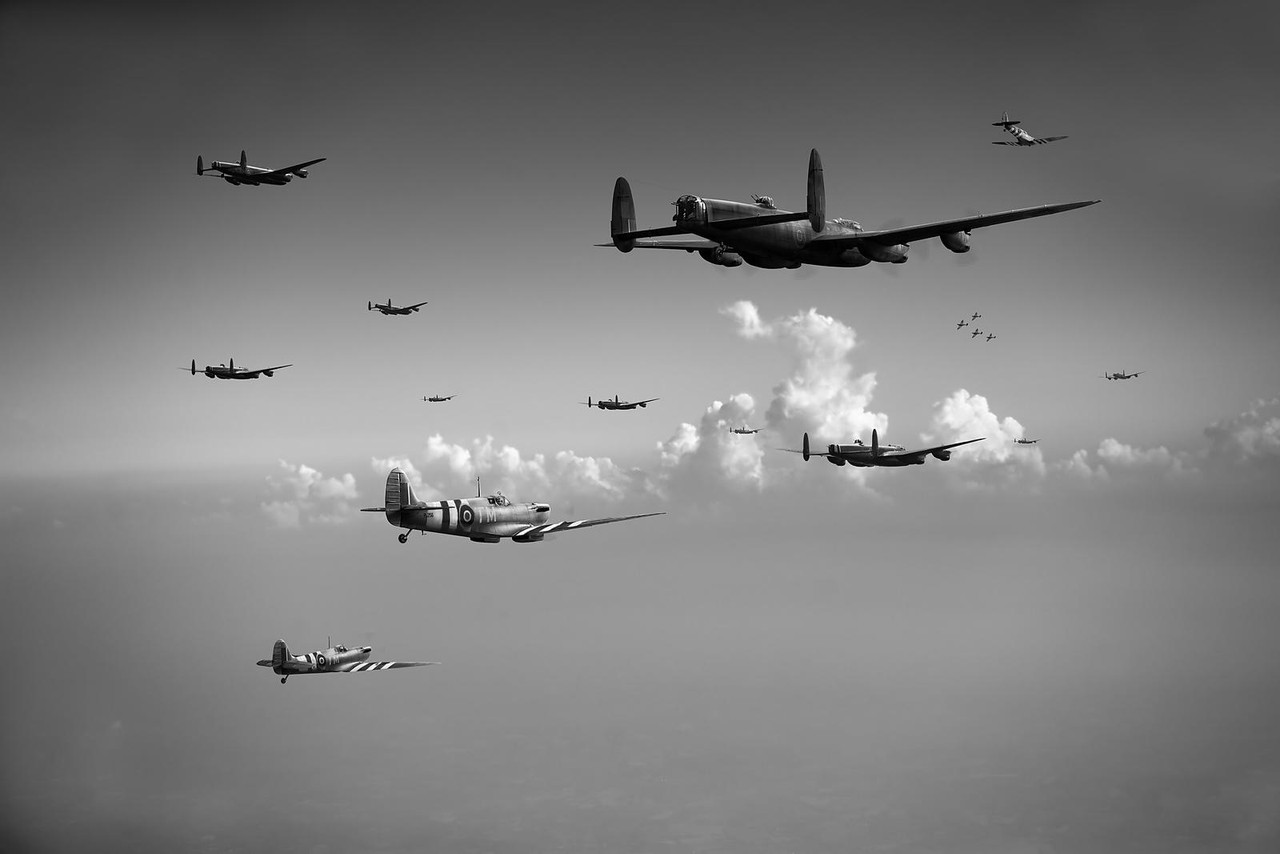
artist unknown
Operation Clarion 1945
As World War 2 was coming to an end the RAF was doing joint Operations with the Eighth Airforce as they were hitting Major Factories and Transportation Centers in the Heart of Germany.
In mid-September 1944 General Henry H. ( “Hap”) Arnold, commander of the U.S. Army Air Force, proposed that every available British and American airplane be used on some clear day to swarm all over the German Reich, attacking military objectives in towns that had hitherto been unmolested by the air forces. This type of operation, he felt, would afford the Germans an opportunity to witness at firsthand the might of the Allies and to reflect on their own helplessness. But clear days that opened up the entire expanse of Germany to such a venture were rarities, especially during the autumn, and during the winter the Allied air forces were tied up, in part, with the German counter-offense in the Ardennes, and, in part, giving first priority to attacking German oil targets.
On February 22, thirty-four RAF Lancasters, bombed the railway viaducts at Altenbeken and Bielefeld, without losing any aircraft. Also during the day, 85 Lancasters, escorted by 49 Spitfires, while losing one aircraft, dropped over 383 tons on the town area and a Benzol plant at Gelsenkirchen. Seventy-five RAF Lancasters, escorted by 48 Spitfires,suffered no losses and dropped over 333 tons on the Benzol plant at Osterfeld.
February 23
The RAF Second Tactical Air Command sortied 179 aircraft to make armed reconnaissance in Dulmen, Paderborn, Cologne, Duren, Munster areas and to attack railroad bridges and ammunition depots.
During the day 324 RAF bombers, escorted by 119 Spitfires, while suffering the lost of one Halifax bomber, dropped over 1,170 tons on Essen and 130 Lancasters, escorted by 33 Spitfires, while suffering no losses, dropped nearly 580 tons on the Benzol plant at Gelsenkirchen.
This was also when JV44 was being formed of Elite Luftwaffe Pilots to fly the Me-262's towards the end of the War Lead by Adolf Galland and the Allied Forces’s were starting to see these Jetsduring bomber Mission’s in the Heartland of Germany
This Battle will try and recreate the RAF’s involvement with Operation Clarion with one of the Rare Occasion’s that the RAF participated in Daylight bombing missions.
First Sortie Aircraft:
RAF Luftwaffe
Spitfire IX No min/ max BF109G-14 No Min/Max
Spitfire IXV No Min/Max FW 190D9 No Min/Max
Spitfire XVI Max 8 TA 152H Max 8
Lancaster III Min/Max 10
Mossie XVI Min/Max 10
Second Sortie Aircraft:
RAF Lufwaffe
Typhoon MkI BF 109K-4
Mossie XVI Min 10
Notes:
There is to be a minimum of 10 RAF Buffs in the Air for the first Sortie. A mix of Lancasters and Mossies, all Lancasters, or all Mossies for the first Sortie CIC’s choice as long as there is 10 buffs in the air.
Second Sortie a minimum of 10 Mossie XVI must be used.
Towns are Also Off limits as Targets
Bases’s That are Assigned for Allied Targets will play the Part of Rail Yards. So All Structures on Base are Valid Targets.
Frame 3
Luftwaffe Will Only Have 8 ME262’s available and they can be split between Squads at the CiC’s choice. Also 262’s will be limited to 1 base to take off from due to fuel shortages and rearm.
RAF Will only have 8 Tempest Mk V and they can be split between Squads at the CiC’s choice
Loadout Restrictions:
No Ords for fighters
HC 4000lb bomb is restricted for the Mossi
Lancaster Loadout: 6 x 1000lbs
Mossi XVI 2x 500lbs 4x 500lbs
Flight re-opens at t+30
Fighter alt cap 20K
Bomber alt cap 16K
Scoring:
Fighters – 1
Limited fighters 2
Lancs 2
Mossies 3
Me262’s 5
Tempest 5
Hangars – 10
Bunkers - 5
Strat Objects 5
Arena Settings:
- Terrain:Germanyw
- Fuel Burn: 1.0
- Clouds: light5k
- Icons: 3K Friendly/Enemy
- Ack: .3
- Fighter and Bomber warning range: 63360 (about 12 miles)
- Tower range set to 63360 (for display only to match the above setting)
- Haze/Fog: 15 miles
- Radar: Off
- Enemy collisions: on
- Friendly collisions: off
- Killshooter: off
- Time: Take off 07:45 multiplier set at 1
- Formation Autopilot: On
- Bomber calibration: Automatic
- Wind: 0K-2K NO WIND
2K-16K: E TO W - Speed 5
16K-20K: SE to NW - Speed 10
20K-26K: NE to SW - Speed 15
Redesgined by:
Molsman 2026
Original Operation Clarion done in 2014-04-04
- Details
- Written by: Devil5O5
- Category: Western European Theatre
- Hits: 25
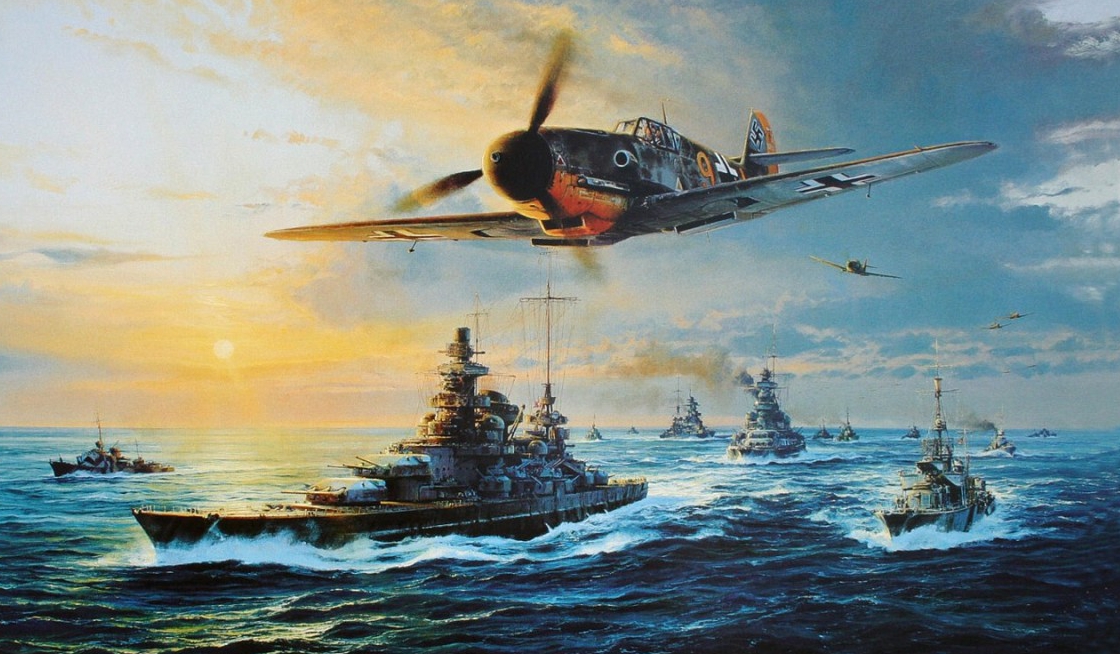
The German Kriegsmarine’s surface fleet suffered a disastrous 1941. Bismarck was sunk and the other capital ships were all laid up in ports for repairs or refitting by the end of the year. This made them easy targets for the RAF’s Bomber Command. At the port of Brest, on the west coast of France, the battleships Scharnhorst and Gneisenau as well as the heavy cruiser Prinz Eugen had all suffered bombing damage.
As the calendar turned to 1942, it was clear that those ships needed to return to the relative safety of the German home ports. The obvious route around the British Isles and through the North Sea was well defended by the Royal Navy. So a more daring plan was hatched intending to catch the English off-guard; sail the ships directly between England and France. Luftwaffe fighter arm general Adolf Galland convinced the Kriegsmarine planners that the best timing would have the fleet set out under the cover of darkness and arrive at the narrowest point of the English Channel at midday, allowing the Luftwaffe to cover the ships against air attack. The three available fighter wings of JG 1, JG 2, and JG 26 along with the night fighters of NJG 1 would provide the escort from before dawn until after dusk on February 12th. The Luftwaffe’s portion of this operation was codenamed “Donnerkeil”(Thunderbolt).
In England, preparations were made for the German ships to attempt a return sortie to German waters. That action was just one contingency of a broader plan of action against the German ships deploying from Brest. A coordinated effort by the RAF, Fleet Air Arm, and Coastal Command was expected to engage the German vessels and sink them in the Channel. Spitfires and Hurricane fighters would cover attacks by Hampden and Wellington bombers and also torpedo attacks by Beauforts and Swordfish. The English operation was codenamed “Fuller”.
This FSO will recreate the combat over the German flotilla in a battle that will be forever known as The Channel Dash.
Side Split: Allies 52% / Axis 48%
|
Royal Air Force / Fleet Air Arm |
Luftwaffe |
First Sortie Aircraft
|
Hurricane Mk. IIC (20mm) |
Max 8 |
Fw 190A-5 |
Max 8 |
|
Spitfire Mk. V |
No Min / No Max |
Bf 109F-4 |
No Min / No Max |
|
TBM-3 (Beaufort) |
Min 4 |
Bf 110C |
Min 8 |
|
B-25C (Hampden) |
Min 8 |
Subsequent Sortie Aircraft
|
Hurricane Mk. IIC (8x or 12x .303 MG’s) |
Bf 109F-4 |
|
Spitfire Mk. V |
Bf 110C |
|
TBM (Beaufort) |
|
|
B-25C (Hampden) |
Ordnance Restrictions:
- 20mm Cannons only available on the Hurricane Mk. II on the first sortie.
- TBM (Beaufort) must attack with Torpedos. All bombs disabled.
- B-25C limited to the 8x 250lb bomb load only. Straffer noses are also disabled.
- All bombs and rockets disabled for fighters.
Event Rules and Clarifications
- Alt Cap is 12K for fighters, 8K for all bomb//torpedo carrying aircraft.
- Minimums and Maximums are for the first sortie of each frame. CiC’s satisfy the requirement for aircraft with minimums by assigning squads whose combined minimum commitment level meets or exceeds the aircraft minimum.
- Fighters may not strafe down ships.
- B-25’s must be used with formations as level bombers.
- Dense clouds are to be expected between 4 and 12K to simulate the stormy weather of the historical event.
- Target fleets will be placed as close together as possible and follow a fixed track for the entire frame. The tracks will be shown in the objectives.
- Ship target fleets consist of two BB groups and one CV group (CV destroyed before the frame begins). Total ship numbers are 8 Destroyers, 2 Battleships, and 1 Cruiser.
- Ship Hardness: Destroyers = 4,000 pounds / Cruiser = 20,000 pounds / Battleships =40,000 pounds
- Sunken ships will remain down for the entire frame.
- Ship auto ack will respawn after 30 minutes.
- Manned guns are disabled.
- Any non-target object that is destroyed will be restored at the earliest convenience by a CM.
Scoring
|
Fighters |
2 |
|
B- 25C / TBM-3 |
3 |
|
Battleship |
200 |
|
Cruiser |
100 |
|
Destroyer |
20 |
Arena Settings
- Terrain: BoF44
- Fuel Burn: 1.0
- Icons: 3K Friendly/Enemy for aircraft.
- Ack: .3
- Object hardness mults[shp]: 1.0
- Object shape settings[bb]: 40.0
-Object shape settings[ca]: 10.0
- Object shape settings[de]: 2.0
- Fighter and Bomber warning range: 63360 (about 12 miles)
- Tower range set to 63360 (for display only to match the above setting)
- Haze/Fog: 15 miles
- Radar: Off
- Enemy collisions: on
- Friendly collisions: off
- Killshooter: off
- Time: Frame 1 = 1000 (10AM) Game Clock
Frame 2 = 1200 (12PM) Game Clock
Frame 3 = 1400 (2PM) Game Clock
- Clouds:light1kmed3kmed5k.awa
- Wind: 0K-2K NO WIND
2K-12K: SW to NE - Speed 10
12K+: 45MPH downdraft
- Details
- Written by: Devil5O5
- Category: Western European Theatre
- Hits: 25
Adlerangriff
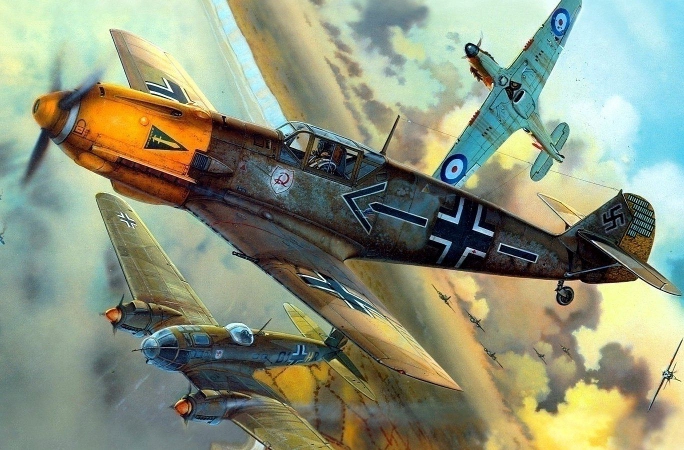
By the end of June 1940, Germany had defeated Britain's allies in mainland Europe. Germany’s next move was to conduct an air campaign against Britain. If successful, this plan would either drive Britain into peace talks or cripple its ability to resist a planned seaborne invasion - Operation Sealoin
The first phase of the campaign focused on attacking shipping coastal targets, relatively low risk missions so that the Luftwaffe could recoup its strength after the Battle of France. By August, it was ready to enter an intensified phase, targeting the Royal Air Force itself over southern England. Unternehmen Adlerangriff “Operation Eagle Attack” would see Luftwaffe bombers attacking RAF bases and radar installations while the Bf 109 fighters and Bf 110 destroyers engaged the British Spitfire and Hurricanes in the air.
Churchill had other plans, however - tenacious resistance. Utilizing a network of early warning radar sites and ground spotters, the British fighters could engage the Germans with localized strength.
This FSO will recreate the frantic air battles of the Battle of Britain in August 1940.
Side Split: Allies 48% / Axis 52%
|
Royal Air Force Fighter Command |
Luftwaffe |
First Sortie Aircraft
|
Spitfire Mk. 1 |
Max 18 |
Bf 109E-4 |
No Min / No Max |
|
Hurricane Mk. 1 |
Min 12 |
Bf 110C-4B |
Max 8 |
|
He 111 |
Min 9 |
Subsequent Sortie Aircraft (Beginning at T+45)
|
Hurricane Mk. 1 |
Bf 109E-4 |
|
Ju-87D Stuka |
Ordnance Restrictions:
- Bf 109 has bombs disabled.
- Ju 87 may only carry 250kg or 500kg centerline bombs.
- He 111 will have the 2x 20mm option disabled. He 111 may only carry 32x 50kg bombs or 8x 250kg bombs.
Event Rules and Clarifications
- Alt Cap is 18K for fighters, 14K for Bombers and Stukas.
- He 111’s must bomb from an altitude of no less than 7K in Hour 1.
- Minimums and Maximums are for the first sortie of each frame. CiC’s satisfy the requirement for aircraft with minimums by assigning squads whose combined minimum commitment level meets or exceeds the aircraft minimum. However, it is expected that the squads assigned aircraft with minimums attempt to meet that minimum total - using their own extra pilots to cover another squad that is low on pilots, if needed.
- Hour 1 target areas must be bombed before T+60 and Hour 1 targets become invalid after T+60.
- Hour 2 targets are available before T+60 for Stukas. All other attackers must wait until T+60.
- Bf 109’s may not strafe down target objects. Only Bf 110’s, He 111’s, and Stukas will score points for destroying target objects.
- Stukas only score Hour 2 values on ground targets, even before T+60.
- Shipping targets will consist of 2 CV fleets with the carriers sunk before the frame starts. (10 target ships in total)
- Hardness of Ships is set to 1,000 pounds.
- Any non-target object that is destroyed will be restored at the earliest convenience by a CM.
- Scoring values will be reduced in Hour 2 to compensate for an increased sortie rate. Aircraft on their first sortie will always score full points against enemy aircraft even after the second hour begins. A player's first sortie ends once they rearm, land, or are shot down. This is to prevent a situation where a last minute strike in Hour 1 can award full bombing points while only risking fewer points for a death on the way home.
- Axis aircraft will show sector counters (Bar Dar) for the Allies when they are within 24 miles of an Allied base. There will be a 90 second delay on position updates.
Scoring
|
Fighters |
4 - First Sortie (1 - Subsequent Sorties) |
|
He 111 |
12 - First Sortie (6 - Subsequent Sorties) |
|
Stukas |
1 |
|
Hangars |
24 (12 in Hour 2) |
|
Bunkers (Barracks, Ord, Fuel, Radar), |
6 (1 in Hour 2) |
|
Ships |
12 (6 in Hour 2) |
Arena Settings
- Terrain: BoB40
- Fuel Burn: 1.0
- Icons: 3K Friendly/Enemy for aircraft.
- Ack: .3
- Object hardness mults[shp]: 1.0
- Object shape settings[de]: 1.0
- Fighter and Bomber warning (Base Flash) range: 63360 (about 12 miles)
- Tower range set to 126720 (about 24 miles)
- Sector Counter (Bar Dar) range 126720 (about 24 miles)
- Sector Counter Alt: 1000ft
- Radar Mode Bishops: Value 464
- Radar Mode Knights: Value 48
- Radar Update Rate: 90 seconds
- Haze/Fog: 15 miles
- Radar: Off
- Enemy collisions: on
- Friendly collisions: off
- Killshooter: off
- Time: 1100 (11AM) Game Clock
- Clouds: light5k
- Wind: 0K-2K NO WIND
2K-12K: SW TO NE- Speed 5
12K-18K: SW TO NE - Speed 10
18K+: 45MPH downdraft
- Details
- Written by: Spikes
- Category: Western European Theatre
- Hits: 24
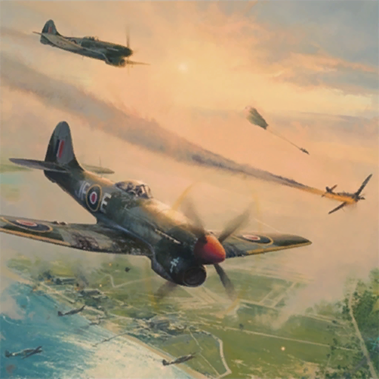
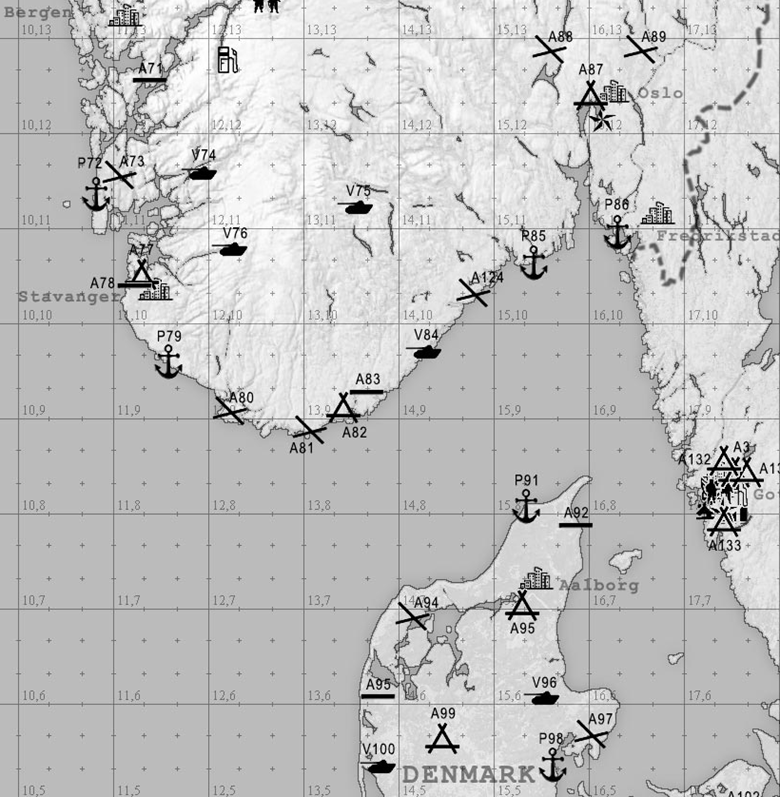
By spring 1945, Nazi Germany faced imminent defeat. Allied forces had seized most of the country, leaving only Denmark and Norway under full German control. On April 30, Adolf Hitler committed suicide in his Berlin bunker, transferring leadership to Admiral Karl Dönitz. Although there were considerations within the German High Command about consolidating remaining forces in Denmark for a final stand against the Allies, no concrete plans were implemented.
What if the German High Command went through with this plan? This FSO aims to create an alternate history scenario where the Allies push through Denmark as the Axis retreat to Norway. Can the Luftwaffe put a stop to the Allied advance?
Allies: 52% / Axis 48%
Order of Battle | Phase 1:
|
Royal Air Force |
Luftwaffe |
||
|
Tempest Mk. V |
MAX 10 |
Ta 152H-1 |
MAX 14 |
|
Spitfire Mk. XIV |
Fw 190D-9 |
||
|
Typhoon IB |
Bf 109K-4 |
||
|
Liberator III (B-24) (Fr 1+3) |
Fw 190F-8 (Fr2) |
||
|
Mosquito XVI (Fr1+3) |
Ar 234B (Fr2) |
MAX 8 |
|
Order of Battle | Phase 2:
|
Royal Air Force |
Luftwaffe |
|
Spitfire Mk. XIV |
Fw 190A-8 |
|
Typhoon |
Bf 109K-4/G-14 |
|
Mosquito VI (Fr1+3) |
Fw 190F-8 (Fr2) |
Loadout Restrictions:
Tempest and Fw 190D have bombs disabled. Typhoon has 1000lb bombs disabled.
Notes:
Bomber Alt Cap is 18K.
Fighter Alt Cap is 26K.
Phase 2 aircraft enabled at T+30, Phase 2 target not valid until t+60
Scoring:
Fighters - 1
Bombers – 2
Ar 234 – 3
Hangars – 5
Bunkers - 1
Town - .25
Arena Settings:
- - Terrain: northsea
- - Fuel Burn: 1.0
- - Icons: 3K Friendly/Enemy
- - Ack: .3
- - Fighter and Bomber warning range: 63360 (about 12 miles)
- - Tower range set to 63360 (for display only to match the above setting)
- - Haze/Fog: 15 miles
- - Radar: Off
- - Enemy collisions: on
- - Friendly collisions: off
- - Killshooter: off
- - Time: 1000 (10AM) Game Clock
- - Formations: On
- - Formation Autopilot: On
- - Bomber calibration: Automatic
- - Wind: 0K-2K NO WIND
- 2K-16K: E TO W - Speed 5
- 16K-20K: SE to NW - Speed 10
- 20K-26K: NE to SW - Speed 15
Area of Operations: