- Details
- Written by: Spikes
- Category: Eastern European Theatre
- Hits: 19
Country Percentages:
Allied 52%
Allied Bishop
CM Rook
OOB:
Axis (Luftwaffe/Finnish Air Force):
Bf 109G-2
Fw 190A-5 (max 48)
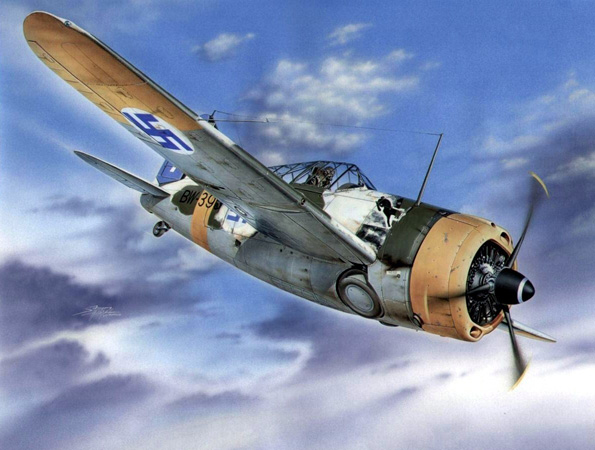
Brewster B-239 (max 24)
Bf 110G-2
Ju 87D-3
Ju 88A-4
Recon Aircraft: Bf 109G-6/U3 (Bf 109G-14, 12 per frame) *Special mission aircraft
Yak-9T (min 24)
P-39Q (min 24)
P-40E
IL-2
Boston III
* Bomber formations are enabled.
* The Bf 109G-14 has air-ground ordnance and gun pods disabled.
* The Fw 190A-5 has air-ground ordnance disabled.
------------
Twin engined bomber = 10 pts
Bf 109G-14 = 10 pts
All other aircraft types= 5 pts
Landing Bonus = 5 pts
-----------------
Gun = 1 pt
Ammo Bunker = 3 pts
Barracks = 3 pts
Radar = 3 pts
Vehicle Hangar = 25 pts
Fighter Hangar = 25pts
Bomber Hangar = 25 pts
Town Building = 3 pts
Factory at strategic target = 3 pts
Truck in convoy = 1 pt
Train = 2 pts
Recon Mission = 50 pts
- Fuel burn 1.0
- Icons friendly 3k/enemy 3k
- 0.5 Ack
- Fighter and Bomber warning range 42,000 (about 8 miles)
- Tower range set to 42,000 (for display only to match the above setting)
- Haze/fog full visibility (17 miles)
- Radar off
- Enemy collisions on
- Friendly collisions off
- Killshooter off
- Time: 15:00 ( 3PM ) Game Clock
- Formations: On
- Bomber calibration: Manual
- Wind: 0K-2K - No Wind
2K-24K NE TO SW - Speed 10
24k+ NE TO SW - Speed 15
Designer's Notes:
- Details
- Written by: Spikes
- Category: Eastern European Theatre
- Hits: 17
1,394 days and nearly 30 million dead since the invasion of Russia, Marshal Georgy Zhukov's 1st Belorussian Front prepared to attack the fortified German positions of the Seelow Heights across the Oder River. Almost 1 Million Soviet Troops and 20,000 Tanks and artillery pieces would square off against 100,000 German Troops and 1,200 tanks and guns in what would be the one of the last major pitched battles of the Second World War.
Four days later on April 19th, Zhukov and his army would break through the German positions after suffering heavy casualties, but the Gates to Berlin were now wide open and nothing but broken and routed resistance lay between them and capital city. On April 21st the Belorussian front began to shell Berlin and would continue to do so until the surrender.
The Russian Army's rapid advance had completely encircled Berlin on April 24th and after 6 days of bitter house to house, building to building fighting the Soviets crossed Moltke Bridge and stormed the Reichstag. Unbeknownst to them, Hitler had taken his own life early that morning. When the smoke finally cleared and the Allies accepted the German surrender the Soviets had lost over 80,000 dead from the Seelow Heights, Halbe and the final Battle of Berlin while German estimates counted 100,000 soldiers and 125,000 civilians dead.
The Luftwaffe was nearly non existent since January 1945 but continued to operate in small pockets of resistance until the end of the war. In these last weeks of the war in Europe the Luftwaffe would face threats from both the Western Allies and the Soviets, sometimes resulting in combat between both US/British and Soviet aircraft at the same time. They would also see limited action in the newest fighters the Luftwaffe could muster like the Ta-152, Me-262 and Ar-234.
This FSO will focus on the last days of the Luftwaffe as they fought off the last major Soviet advance and encirclement while making the usual gameplay concessions for FSO. US and British forces will not be involved.
 Â
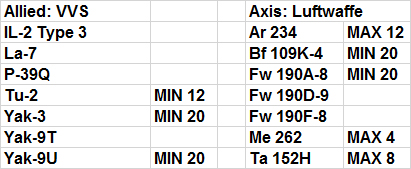
 -Requirements Indicate # of Aircraft.
-Formations are Enabled.
-Certain Aircraft will only be enabled from certain fields. Please refer to the Objectives and Orders.
SCORING:
AIRCRAFT:
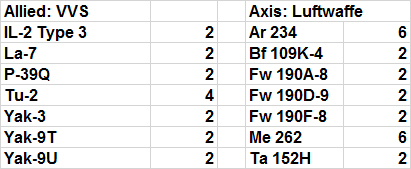
OBJECTS:

Ace Missions:
Each side will have one mandatory Ace mission per frame. These frames will represent notable pilots of the time and theater. One pilot from each side will designated an "Ace" Pilot. They must fly the Aces listed aircraft. They will be scored as follows.
Â
Ace Pilot = 20 Points
Ace Pilot Kills = 20 Points
Â
So for example if an Ace Pilot is shot down they are worth 20 points to the other side. Like wise, every victory an Ace Pilot lands they will be rewarded 20 points.
Allied Aces
La-7 – Ivan Kozhedub – Kozhedub began the war as a flight instructor but requested transfer to the front in 1943. He claimed his first kill, a Ju87 in the Battle of Kursk. Kozhedub would claim a Me 262 shot down in February of 1945 and claimed his 61st and 62nd kills over Berlin on April 17th, 1945. Kozhedub was the highest scoring Allied Ace in WW2 and was awarded 3 HSUs. Kozhedub passed away in 1991.
Yak-3 – Arsenii Vorozheikin – Arsenii had served in the Soviet Army and in 1934 he started training to fly for the military. He saw his first combat in Khalkin Gol and after that saw action against the Finns in the Winter War. By April of 1945 he was stationed near Berlin and would claim an Ar 234 shot down near the city. He ended the war with 52 kills total and awarded two HSU’s. Vorozheikin passed away in 2001.
Yak-9U – Ivan Fyodorov – Fyodorov flew his first combat sorties in the Kuban in April 1943 with his first victory coming on April 20th. Fyodorov would fly Yak fighters all the way to Berlin. He would shoot down his last enemy aircraft over Berlin, a Fw 190, on April 21st, 1945. He would claim 36 victories and be awarded the HSU.
Axis Aces
Fw 190D-9 – Hans Dortenmann – Dortenmann started his military career in the Army and started flight training in 1941. His first victory came in February of 1944 on the Eastern Front. Dortenmann would survive the war claiming 38 victories, 18 in the Fw 190D9 the most successful pilot in the Dora. His last victory would come over Berlin against a Yak-3 on April 27th, 1945.
Me 262 – Johannes “Macki” Stienhoff – Macki had started his combat experience in 1939 and fought in the West, East and Mediterranean. He began flying Me 262s with Kommando Nowotny, JG 7, and JV44. In March of 1945 Macki shot down an IL-2 near the River Oder. Stienhoff was seriously burned when he crashed his 262 on April 18th 1945, he had amassed 176 kills, 6 in the Me 262. He passed away in 1994.
Ta 152H – Josef Kiel – Kiel shot down his first aircraft, a Blenhiem Bomber, on May 15th 1940. He was badly wounded in November, 1940 and would require a long recovery. Kiel would not claim another victory until November of 1944. Kiel would be the only pilot to make ace status on the Ta 152. His last victories came on April 21st 1945, where he shot down 2 Yak-9 fighters over Berlin.
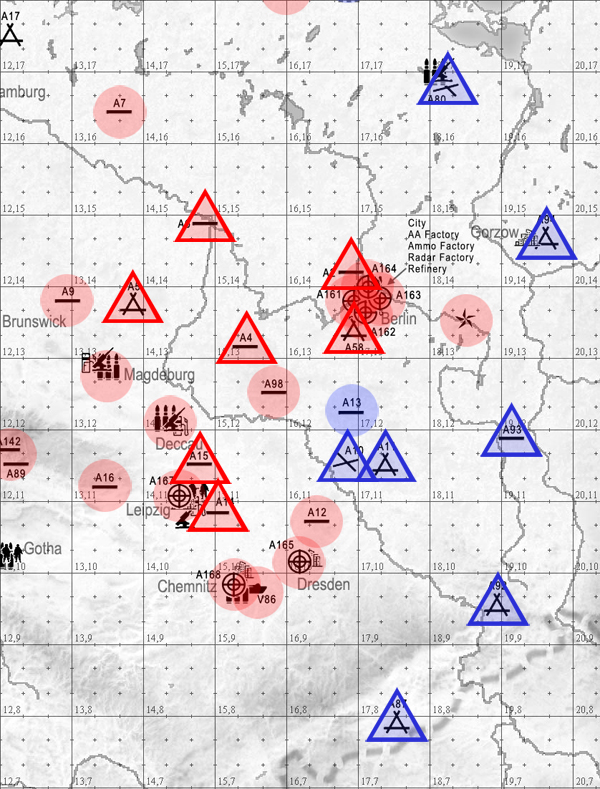
- Germany terrain
- Icon Range – Friendly 3k, Enemy 3k.
- No Radar
- Fighter and Bomber Warning Range - 79200 (15 miles)
- Tower Range – 79,200 (for display to match the above Fighter and Bomber Warning)
- External view for bombers (F3) - On
- Friendly Collisions - Off
- Enemy Collisions - On
- Kill Shooter - Off
- Fuel - 1.0
- Ack - 0.4
- Formations -Â Enabled
- Time 11:00AM
- Object Downtime – full (200)
- Winds - None
Â
Designed by Nefarious
- Details
- Written by: AKRaider
- Category: Eastern European Theatre
- Hits: 18
 Operation Panzerfaust
Â
Hungary, Late 1944
Â
Â
Â
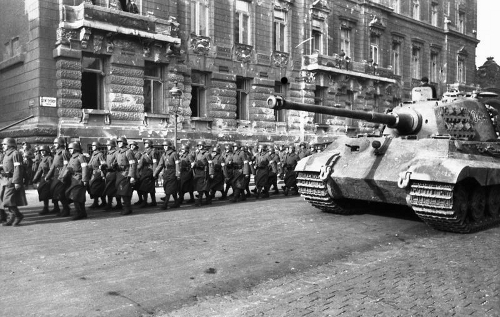
In October 1944, the ruling Hungarian government was in negotiation with the Allied powers in order to secure a separate peace, despite being a signatory of the Tripartite Pact. The German leadership received warnings of Hungary's actions, with Hitler ordering swift action. In a daring raid labled Operation Panzerfaust, German commandos kidnapped the son of the Hungarian regent, Miklos Horthy, and held him hostage demanding Horthy abdicate his position.Â
Once German forces had installed a friendly government in Hungary, they awaited the beginning of the Russian push westward. Only a few weeks after Panzerfaust, the Russian offensive began. By mid-November, Russian forces had entered the suburbs of Budapest, with a siege of the city beginning in December, and lasting until February 1945, when the last city defenders surrendered.
This FSO setup will attempt to replicate the period after the conclusion of Operation Panzerfaust and the beginning of the siege of Budapest (October - December 1944) in three frames.
Frame 1:Â 08 Jan, 2010 (0600 Game T-Time)
Frame 2:Â 15 Jan, 2010 (1000 Game T-Time)
Frame 3:Â 22 Jan, 2010 (1400 Game T-Time)
Scoring:
Objective based scoring will be used. 50% of each frame's score will be for air-to-air kills, with the remaining 50% being divided between 6 air-to-ground objectives each frame. Each air-to-ground objective will be worth a total of 8.3 points. Objective scores will be based on victory criteria that will be published in each frames objectives.Â
Air-to-Air
Air-to-air score will be worth 50 potential points each frame. The total number of aircraft that lift for each side will be tallied and added together using their respective point totals. That number is the total aircraft potential for each side. All single engined fighters will be worth 1 point. All aircraft with multiple crewmembers will be worth 1.25 points. To reach the percentage score, the total points scored will be divided by total aircraft lifted. For example, if 60 P-40, 20 Il-2, and 14 A-20 aircraft launch, and 20 P-40, 10 Il-2, and 2 A-20 aircraft are shot down, the Germans would score (20) for P-40, (12.5) for Il-2, and (2.5) for A-20. The total value destroyed (35) is divided by the total number launched (94) to get a percentage (37%). That percentage is used to modify the 50 potential air-to-air points i.e. (35) / (94) = 37%; 50 X .37 = 18.5. So, in this example, the Germans would score 18.5 points for air-to-air victories.
Safe Landings. Either side that achieves a "landed safely" on the FSO logs for 50% or more of the total sorties launched shall receive 110% of their air-to-air score. Ditches and unabated crashes will count against the bonus, including those discos, ditches, and crashes that occur as pilots get sorted at the beginning of the frame. So, squadron COs and CIC's are encouraged to have everyone organized prior to taking off at the beginning of each frame.
Air-to-Ground
Air-to-ground score will be worth 50 potential points each frame. Each of the 4 target objectives will be worth 10 points to either side. The Allies and Germans will be awarded points based on victory conditions listed in each frame?s objectives. Target objectives will consist of strategic targets only. Each objective will have its own victory conditions that will define who receives points, and for what destruction criteria. Both sides will have an equal potential to score the same points for each objective.
Plane Set:
Russian:
P-39QÂ Â Â Â (Min 36)
La-5FNÂ Â Â (Max 48)
Yak-9UÂ Â Â (Max 48)
Yak-9TÂ Â Â Â (Optional/24 Max)
A-20Â Â Â Â Â (Max 36)
IL-2Â Â Â Â Â (Max 36)
Axis:
Bf-109G6Â Â (Min 36)
Bf-109G14Â (Max 48)
Bf-110GÂ Â (Max 36)
Fw-190A8Â (Max 48)
Fw-190F8Â (Max 36)
Ju-88 Â Â Â (Min 36/No forms)
Ju-87 Â Â Â (Optional/24 Max)
Special Rules:
  --Manual calibration will be used for bombers
Arena Settings:
  --Hungary Map
  --Fuel Burn 1.5
  --Icons Short
  --.3 Ack
  --Fighter and Bomber Warning Range 48,000 (~8 nautical miles)
  --Tower Range 48,000 (~8 nautical miles, To Match Warning Range)
  --Visibility 17 Miles
  --Wind speed will vary with altitude and frame. See Objectives
  --Radar Off
  --Enemy Collisions On
  --Friendly Collisions Off
  --Killshooter Off
  --Takeoff time per frame descriptions above
Contact all the squads on your side at:
http://ahevents.org/fso/view_assignments.html
Â
Updated FSO Rules at:
- Details
- Written by: Spikes
- Category: Eastern European Theatre
- Hits: 18
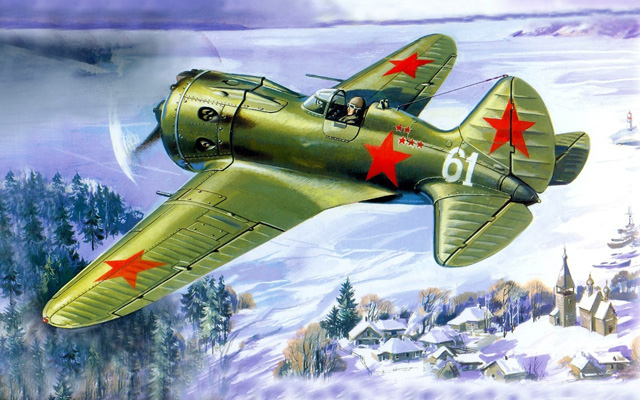
NORTHERN STAR: Leningrad Front Spring 1942
By the beginning of 1942 much had changed in the war in Europe. Operation Barbarossa, the Third Reich's invasion of the Soviet Union had begun in June of 1941. It had stalled at the gates of Moscow that winter with the Soviets desperately hanging on as they attempted to rebuild the army and air force. The German invasion of the USSR had also drawn Finland into the war for a second time, after a brief armistice between Finland and the Soviets in the aftermath of the Winter War between 1939 and 1940. In the northern sector, the Baltic Sea city of Leningrad had been under siege by the Axis since September of 1941 with no sign of victory yet in sight. Throughout the winter of 1941-42 Allied aid had continued to the Soviets via Murmansk and other routes with vital supplies of combat aircraft and other vital war material to keep the Red Army in the conflict as the Soviet Union labored to rebuild its industrial capacity. Domestic Soviet aircraft like the workhorse I-16 were joined by P-40s, P-39s, Hurricanes and other western types. Some 18 percent of all combat aircraft used by the USSR in WW2 were of foreign manufacture, with more than 100 pilots achieving ace status flying them
For the Luftwaffes part the fighter arm would see its zenith on the Eastern Front with many aces achieving victories above the century mark. The Finnish Air Force fighter squadrons would also add their own impressive chapter in air combat, flying a small mix of fighter planes from both the west and Germany during the years fighting the USSR from 1939-1944.
This FSO recreates the contest between these combatants when the war in the East was still less than a year old, and would ultimately claim the lives of tens of millions on both sides.
Country Percentages:
Axis 50%
Allied 50%
Field Assignments:
Allied Knight
CM Rook
AC-
Bf 109F-4 (48 max)
Bf 109E-4 (48 min)
Brewster B-239 (20 min-36 max)
Bf 110C-4b (20 min-24 max)
Ju-87D 'Stuka' (20 min)
Ju-88A (20 min)
GV-
SdKfz 251 halftrack (8 min-16 max)
Jeep (optional only, drawn from tank or halftrack assigned players)
AC-
I-16 (48 min)
P-39D (20 min-24 max)
P-40B
Hurricane IIC (20 min-24 max)
IL-2 'Sturmovik'' (20min)
B-25C Glass nose bomber (20 min)
GV-
M3 halftrack (8 min-16 max)
Jeep (optional only, drawn from tank or halftrack assigned players)
------------
All other aircraft = 2 pts
------
Halftracks = 1 pt
Jeeps = 0.5 pt
-----------------
Ammo Bunker = 3 pts
Barracks = 3 pts
Radar = 3 pts
Vehicle Hangar = 25 pts
Fighter Hangar = 25pts
Bomber Hangar = 25 pts
Town Building = 3 pts
Factory at strategic target = 3 pts
Truck in convoy = 1 pt
Train = 2 pts
Base Capture = 25 pts
Arena Settings:
- Fuel burn 1.0
- Icons short (3k)
- 0.5 Ack
- Fighter and Bomber warning range 42,000 (about 8 miles)
- Tower range set to 42,000 (for display only to match the above setting)
- Haze/fog full visibility (17 miles)
- Radar off
- Enemy collisions on
- Friendly collisions off
- Killshooter off
- Time: 15:00 ( 3PM ) Game Clock
- Formations: On
- Bomber calibration: Manual
2K-18K N TO S - Speed 5
18K-25K NW TO SE - Speed 10
25k+ NW TO SE - Speed 15
Designer's Notes:
Please note the updated rules:
http://ahevents.org/fso-related/fso-rules.html
Design by Warloc
- Details
- Written by: Spikes
- Category: Eastern European Theatre
- Hits: 15
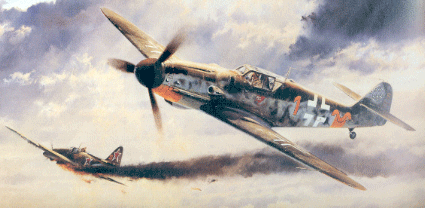
Operation Polkovodets Rumyantsev (literally: Commander Rumyantsev, after 18th century Field Marshal Peter Rumyantsev), was a military operation conducted by the Red Army in its fight against the German Wehrmacht during World War II. The operation was conducted in the Belgorod sector in the aftermath of the decisive armored clash at Kursk in July of 1943. The operation began in early August 1943 and was aimed at following up the defensive success against Field Marshal Von Manstein's Army Group South. It was immediately successful, pushing back the German defenders and liberating the cities of Belgorod and Kharkov. By the early afternoon of August 23, 1943 the Soviet divisions of General Vatutin's Voronezh Front and General Malinovsky's South West Front had successfully liberated Kharkov from German forces, annihilating most of the defenders. It was the last time that the city of Kharkov changed hands during what the Soviets called "The Great Patriotic War". The operation led to the retreat of the German forces in the Ukraine behind the Dnepr river, and it set the stage for the liberation of the city of Kiev in the autumn of 1943.
At this stage of the war the VVS were being equipped with more advanced types like the LA-5FN and the later models of the lend-lease US built P-39 Airacobra. This event recreates the air action that took place between the opposing forces of the strengthening Soviet Fighter Regiments and the Luftwaffe's veteran Jagdgruppen on the Eastern Front.
Country Percentages:
Axis 50%
Allied 50%
Field Assignments:
Axis Bishop
Allied Knight
CM Rook
OOB:
Axis (Luftwaffe):
Bf 109G-2
Fw 190A-5 (max 36)
Bf 110G-2 (min 24)
Ju-87D Stuka (min 24)
Ju-88A-4 (min 12 *players*) with formations optional.
P-39Q (max 48)
P-39D
Yak-9T (min 24)
IL-2 Sturmovik (min 24)
B-25C "glass nose" (min 12 *players*) with formations optional.
Boston III (min 12 *players*) with formations optional.
Scoring:
------------
All other aircraft: 2 pts
-----------------
Ammo Bunker = 3 pts
Barracks = 3 pts
Radar = 3 pts
Vehicle Hangar = 25 pts
Fighter Hangar = 25pts
Bomber Hangar = 25 pts
Town Building = 3 pts
Factory at strategic target = 3 pts
Truck in convoy = 1 pt
Train = 2 pts
- Fuel burn 1.0
- Icons short (3k)
- 0.3 Ack
- Fighter and Bomber warning range 42,000 (about 8 miles)
- Tower range set to 42,000 (for display only to match the above setting)
- Haze/fog full visibility (17 miles)
- Radar off
- Enemy collisions on
- Friendly collisions off
- Killshooter off
- Time: 15:00 ( 3PM ) Game Clock
- Formations: On
- Bomber calibration: Auto ( MA style )
2-10K NW TO SE - Speed 5
10-18K NW TO SE - Speed 5
18-24K W TO E - Speed 10
24k+ - Speed 50 downdraft (Alt limiter)
Designer's Notes: