- Details
- Written by: perdweeb
- Category: Eastern European Theatre
- Hits: 13
The Final Victory: Kharkov 1943

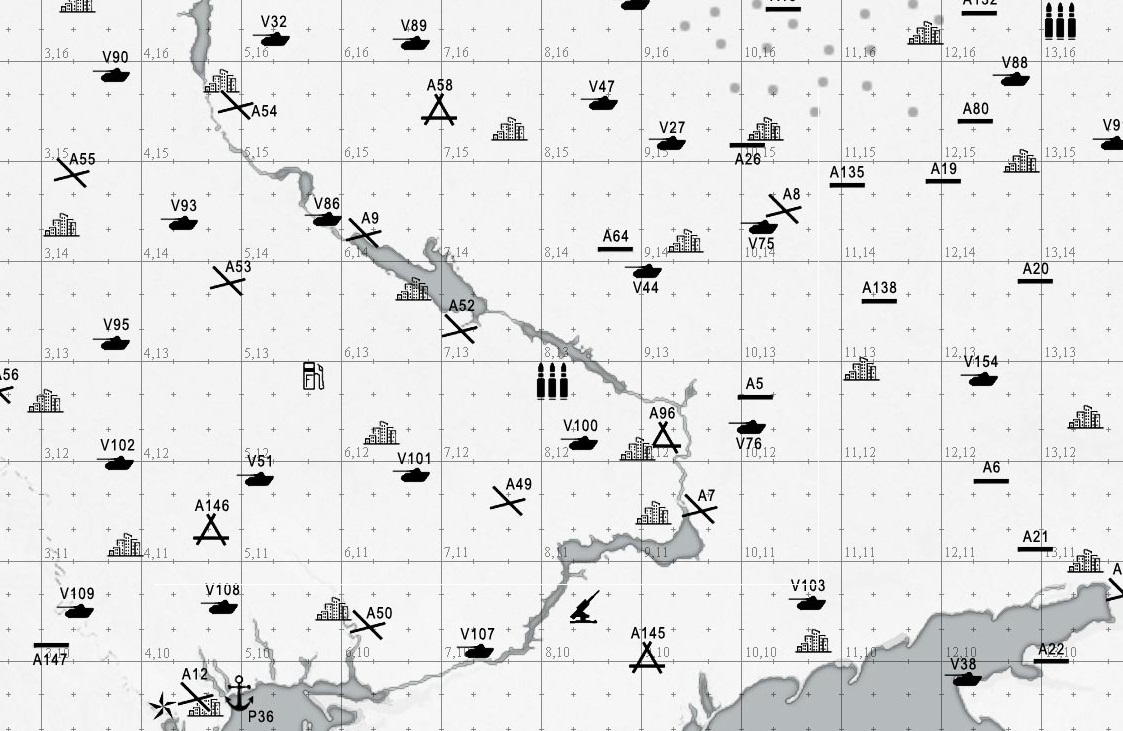
During the months of February and March of 1943, the Wehrmacht was pushing east from the Dnieper River and toward Russia. The next city in the Wehrmacht's path was on the Russian border of Ukraine, Kharkov. Twice the Soviets and Germans had fought over the city since the war began, in February 1943, the Third Battle of Kharkov would take place. Gen. Erich von Manstein commanded the German forces which consisted of the 1st and 4th Panzer Army along with an SS Panzer Corps. The Soviets were commanded by committee, which included Generals Golikov, Popov, and Vatutin leading the Central Front Army consisting of two Guards Armies and three regular Armies. The battle raged for a full month as the Germans gavce ground in order to counterattack, in true Manstein fashion. The Soviet armies were depleted and found it difficult to stop the oncoming German army. To make matters worse, air superiority was nigh completely lost to Luftlotte 4 as their fighters dominated the skies over Kharkov, which allowed their armor andf personnel to be blanketed with close air support from ground attack aircraft. This would be, arguably, Germany's final major victory on the Eastern Front.
Our event will recreate the battles over the city of Kharkov as the VVS and Luftwaffe will once again attempt to gain air suporiority for their troops on the ground.
Side Split: 50% Allies/50% Axis
|
VVS |
Luftwaffe |
||
|
La-5FN |
MAX 12 |
Bf 109G-2 |
MAX 16 |
|
Yak-9T |
MAX 16 |
Bf 109F-4 |
|
|
Yak-7b |
Bf 110G-2 (jabo) |
MIN 16 |
|
|
Tu-2S (single) |
MIN 16 |
||
Hour 2:
|
VVS |
Luftwaffe |
|
Tu-2S (single) |
Bf 110G-2 (jabo) |
|
Yak-9T |
Bf 109G-2 |
|
Yak-7b |
Bf 109F-4 |
Special Rules:
All aircraft have a 20K altitude cap.
Ordnance carrying aircraft alt cap is 16K.
Ordnance disabled on all fighters except Bf 110G-2.
Gondolas disabled on Bf 109G-2.
Targets destroyed by La-5, Yak, or Bf 109 will not be scored.
Scoring:
- Aircraft - 1
- Hangars - 5
- Bunkers - 0.5
- Town Buildings - 0.2
- Recommended Skins List:
-
-
Arena Settings:
- Terrain: blackseaw
- Clouds: med5kmed15k
- Fuel Burn: 1.0
- Icons: 3K Friendly/Enemy
- Ack: .3
- Fighter and Bomber warning range: 52800 (about 10 miles)
- Tower range set to 52800 (for display only to match the above setting)
- Haze/Fog: 15 miles
- Radar: Off
- Enemy collisions: on
- Friendly collisions: off
- Killshooter: off
- Time: 1000 (10AM) Game Clock
- Formations: Off
- Formation Autopilot: On
- Bomber calibration: Automatic
- Wind:
0K-2K NO WIND
2K-8K: S TO N - Speed 5
8K-16K: SW TO NE - Speed 10
16K-20K: SW to NE - Speed 10
20K+: 45 MPH Downwind
Area of Operations:
- Details
- Written by: perdweeb
- Category: Eastern European Theatre
- Hits: 13
Grapple for the Gulf: Continuation War 1942
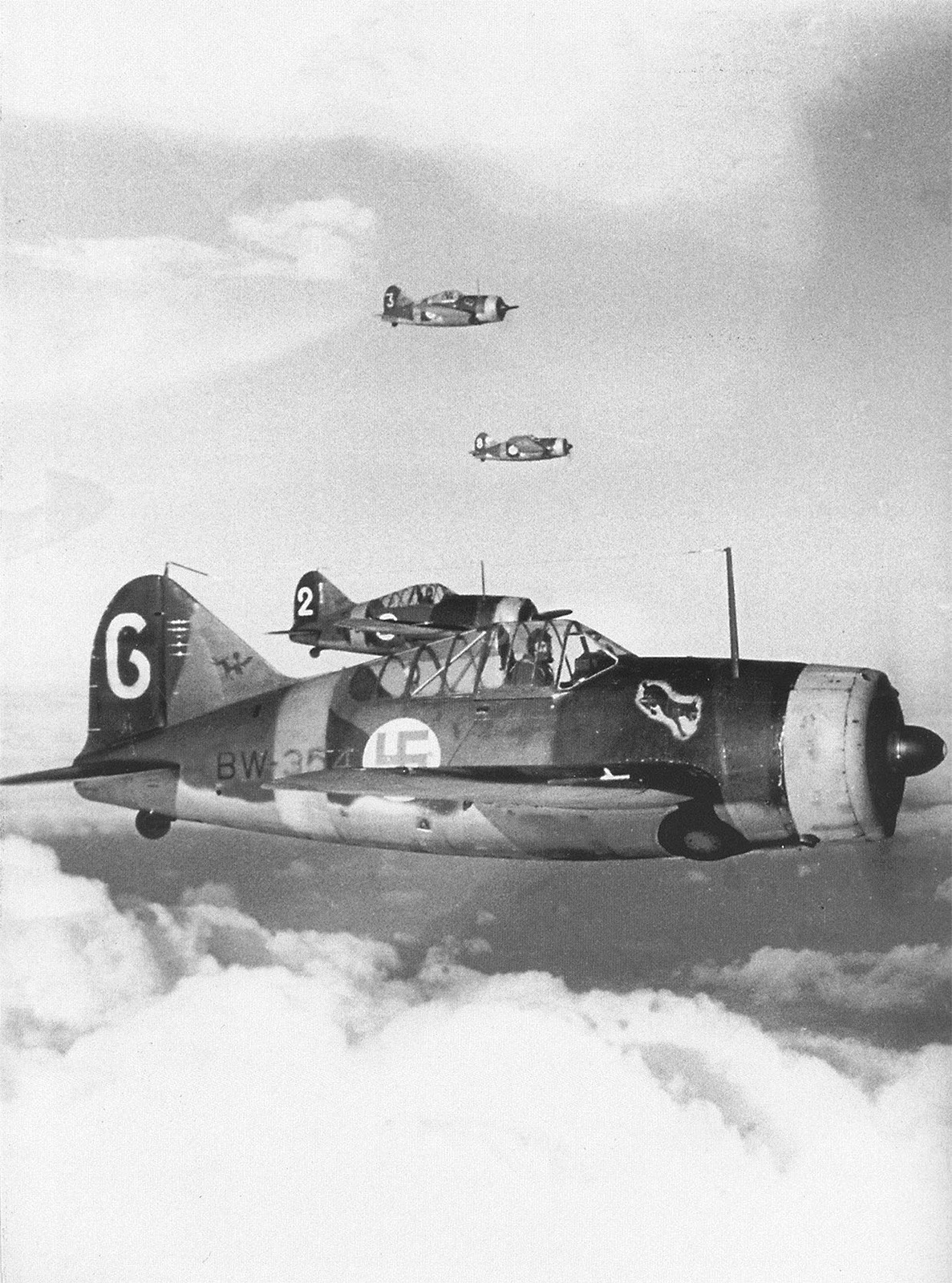
Shortly after Operation Barbarossa, the Peace of Moscow between Finland and the USSR was nullified. Part of that treaty included some small islands in the Gulf of Finland that were occupied by the Soviets. The islands switched hands in 1942 a few times until finally, they were fought over. In 1942, the Continuation War from the Winter War was just beginning. The main fronts were Karelia, the Arctic, and the Baltic Sea. The islands of Gogland, Surrsaari, and Sommeri were up for grabs during the summer months of 1942 in the Gulf of Finalnd. Both sides attacked and invaded these islands.
This event will recreate the skirmishes in the Gulf of Finland between the VVS and FAF. There will be attack on naval invasion forces as well as bombardment of positions.
Allies: 50% / Axis 50%
|
Frame 1 Planeset |
|||
|
VVS |
FAF |
||
|
Yak-7b (LaGG-3/Yak-1) |
MAX 10 |
B-239 |
MAX 6 |
|
I-16 |
P-40C (Hawk) |
||
| He 111 (SB) | MIN 10 | ||
|
Frame 2 Planeset |
|||
|
VVS |
FAF |
||
|
Yak-7b (LaGG-3, Yak-1) |
MAX 24 |
B-239 |
MAX 16 |
|
I-16 |
P-40C (Hawk) |
||
|
B-25C (IL-4) |
MIN 10 |
He 111 (SB) |
MIN 10 |
|
Frame 3 Planeset |
|||
|
VVS |
FAF |
||
|
Yak-7b (LaGG-3, Yak-1) |
MAX 24 |
B-239 |
MAX 16 |
|
I-16 |
P-40C (Hawk) |
||
|
B-25C (IL-4) |
MIN 10 |
||
2nd Hour:
|
VVS |
FAF |
||
|
Yak-7b |
P-40C |
||
|
I-16 |
He 111 |
||
|
B-25C |
|||
Notes:
- Bomber max altitude is 12K.
- Fighter max altitude is 16K.
- Objects destroyed by fighters will not count toward score.
- He 111 may not take 20mm gondolas, torpedo, 2x1000Kg or 1800 kg.
- B-25C may not take Strafer options.
- Ordnance disabled for all fighters.
- Drop tank disabled for P-40C.
Scoring:
- Fighters - 1
- Hangars - 5
- Ships - 5
- Bunkers (10 max) at Port Only - 2 (max of 20)
- Arena Settings:
- - Terrain: finland
- - Fuel Burn: 1.0
- - Icons: 3K Friendly/Enemy
- - Ack: .3
- - Fighter and Bomber warning range: 52800 (about 10 miles)
- - Tower range set to 52800 (for display only to match the above setting)
- - Haze/Fog: 15 miles
- - Radar: Off
- - Enemy collisions: on
- - Friendly collisions: off
- - Killshooter: off
- - Time: 1000 (10AM) Game Clock
- - Formations: On
- - Formation Autopilot: On
- - Bomber calibration: Automatic
- - Wind: 0K-2K NW TO SE Speed 5
- 2K-8K: N TO S - Speed 5
- 8K-16K: NW to SE - Speed 8
- 16K+: 45MPH Downdraft
- Area of Operations:
- Details
- Written by: perdweeb
- Category: Eastern European Theatre
- Hits: 14
Pushing Back: Moscow 1941
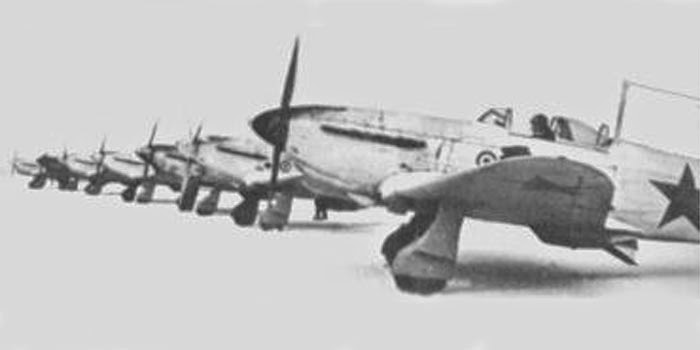
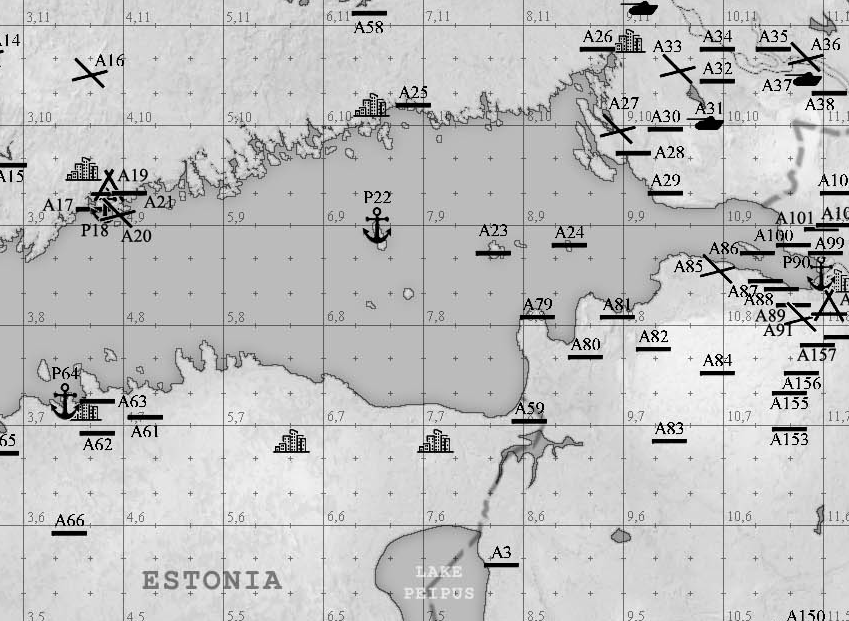
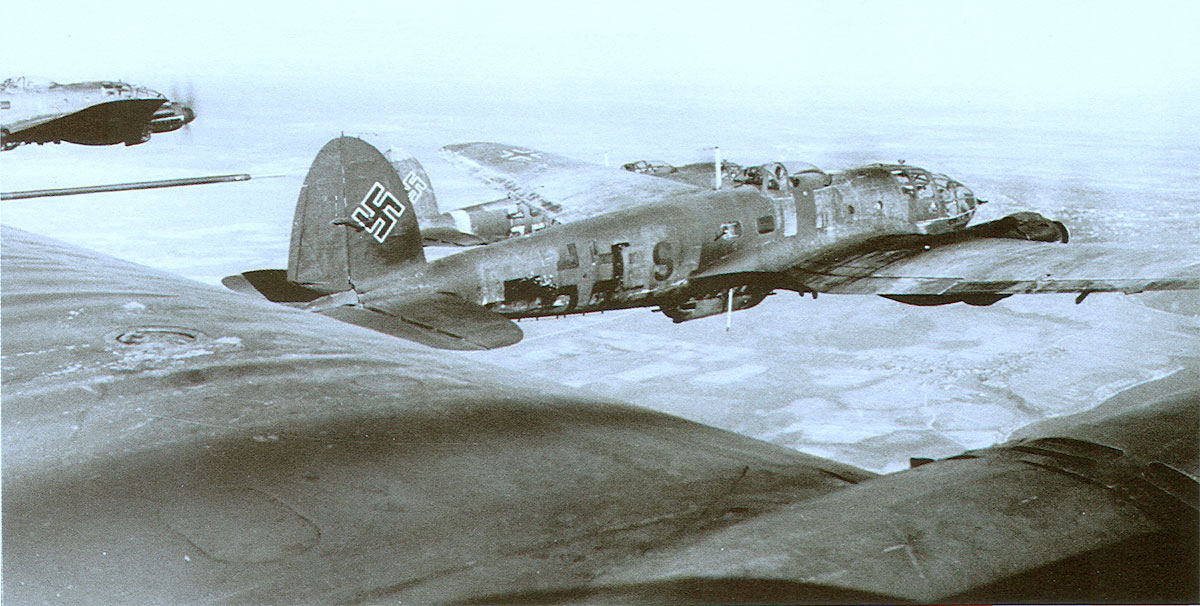
After the initial surge of Barbarossa, Army Group Center sputtered to a halt west opf Moscow in 1941. As winter set in, Mother Russia reared its head added to its lore of being a winter abyss. During the month of December, the German forces were ill-equipped for winter and the Soviets pushed back, beginning a counteroffensive early in the month.
Our event will focus on the fighting around Moscow in December of 1941 and January of 1942.
Side Split: 50% Allies/50% Axis
|
VVS |
Luftwaffe |
||
|
Yak-7b |
Bf 109F-4 |
MAX 16 |
|
|
I-16 |
MIN 10 |
Bf 109E-4 |
MIN 16 |
|
C.205 (MiG-3) |
He 111 |
MIN 10 |
|
|
B-25C |
MIN 10 |
||
2nd Hour:
|
VVS |
Luftwaffe |
||
|
Yak-7b |
Bf 109E-4 |
||
|
I-16 |
Ju 87D |
||
|
IL-2 |
|||
Special Rules:
All aircraft have a 18K altitude cap.
Bomber alt cap is 14K.
Ordnance disabled on all fighters.
C.205 has 20mm disabled.
He 111 has torpedo disabled.
Scoring:
- Aircraft - 1
- Hangars - 5
- Town Buildings (Max 80) - 0.25
-
-
Arena Settings:
- Terrain: russiaw
- Clouds: med5kmed15k
- Fuel Burn: 1.0
- Icons: 3K Friendly/Enemy
- Ack: .3
- Fighter and Bomber warning range: 52800 (about 10 miles)
- Tower range set to 52800 (for display only to match the above setting)
- Haze/Fog: 15 miles
- Radar: Off
- Enemy collisions: on
- Friendly collisions: off
- Killshooter: off
- Time: 1000 (10AM) Game Clock
- Formations: On
- Formation Autopilot: On
- Bomber calibration: Automatic
- Wind:
0K-2K: NE to SW Speed 8
2K-8K: N TO S - Speed 10
8K-14K: NE TO SW - Speed 15
14K-18K: E to W - Speed 18
18K+: 45 MPH Downwind
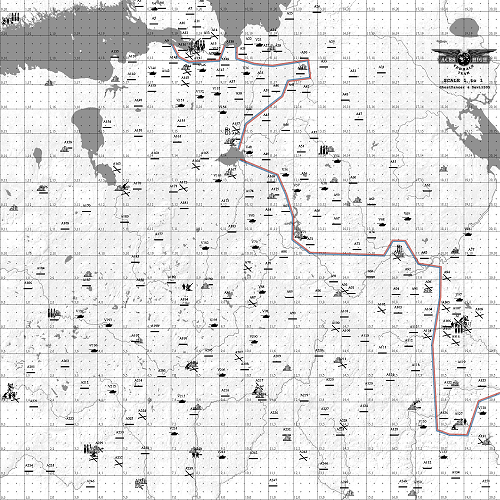
Area of Operations:
- Details
- Written by: Spikes
- Category: Eastern European Theatre
- Hits: 13
Crossing the Dnieper: Autumn 1943
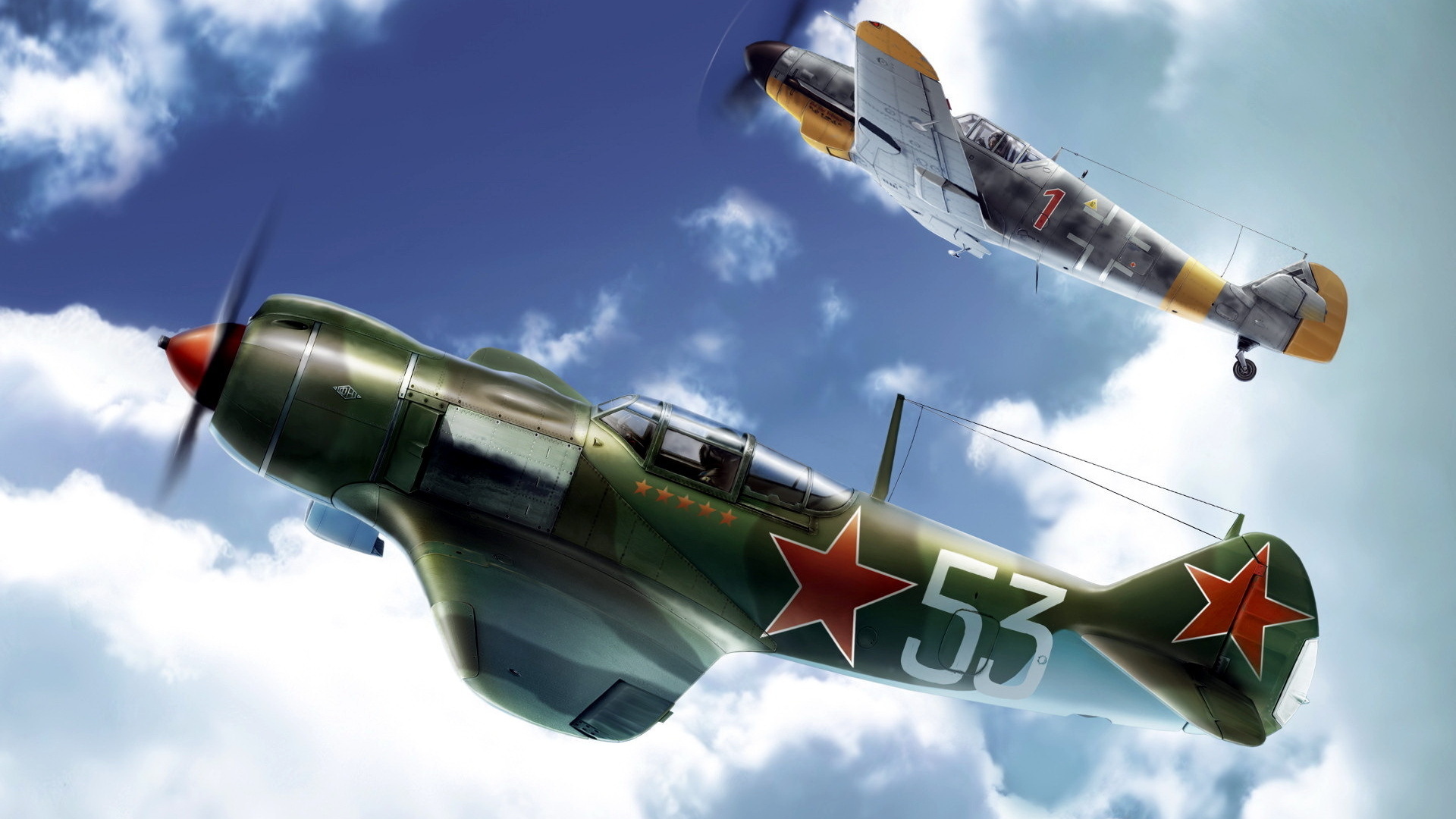
During the last half of 1943, the Red Army had pushed its away up against the eastern banks of the Dnieper River. The Wehrmacht held the towns of Kiev, Cherkassy, Kremenchuk, and Dnieprom but the pressure mounted by late summer. Seemingly daily raids from above and from the gorund intruded into German territory along the Dnieper River. Both air forces were attacking and defending positions through the fall months during the Lower Dnieper Offensive.
Our event will focus on the fighting around the cities of Cherkassy and Kremenchuk in the fall of 1943.
Side Split: 50% Allies/50% Axis
|
VVS |
Luftwaffe |
||
|
La-5FN |
MAX 20 |
FW 190A-5 |
MAX 12 |
|
Yak-9T |
MIN 10 |
Bf 109G-6 |
MIN 10 |
|
Tu-2S |
MIN 10 |
Ju 88 |
MIN 10 |
Special Rules:
All aircraft have a 20K altitude cap.
Bomber alt cap is 16K.
Ordnance disabled on all fighters.
Scoring:
- Aircraft - 1
- Hangars - 5
- City Buildings - 0.25
- Recommended Skins List:
-
Arena Settings:
- Terrain: blacksea
- Clouds: light5k
- Fuel Burn: 1.0
- Icons: 3K Friendly/Enemy
- Ack: .3
- Fighter and Bomber warning range: 52800 (about 10 miles)
- Tower range set to 52800 (for display only to match the above setting)
- Haze/Fog: 15 miles
- Radar: Off
- Enemy collisions: on
- Friendly collisions: off
- Killshooter: off
- Time: 1000 (10AM) Game Clock
- Formations: Off
- Formation Autopilot: On
- Bomber calibration: Automatic
- Wind:
0K-2K NO WIND
2K-8K: S TO N - Speed 5
8K-16K: SW TO NE - Speed 10
16K-20K: SW to NE - Speed 15
20K+: 45 MPH Downwind
Area of Operations:
- Details
- Written by: Will Hyman
- Category: Eastern European Theatre
- Hits: 15
As 1942 turned to 1943, the free world watched with bated breath as the Soviets tightened the noose around the trapped German Sixth Army at Stalingrad. By some miracle, the Soviets had held and were now on the cusp of capturing or destroying 265,000 German, Croatian, Romanian, and Italian soldiers inside the surrounded pocket of the destroyed city on the Volga.
800 miles North of Stalingrad on the Soviet Kalinin and North-Western Fronts there was another crisis unfolding for the German Army. On November 27th 1942, The Soviets successfully encircled the city of Velikiye Luki which was being held by a regiment of 7,000 soldiers of the German 83rd Infantry Division. The garrison's commander, Lieutenant General Theodore Scherer was ordered by Hitler to hold the city at all costs. No stranger to being surrounded, The previous winter of 1941-42 Scherer led the successful defense of Cholm in the Demyansk area where he was surrounded for 104 days before being relieved.
With re-supply efforts from the air, The German defenders of Velikiye Luki fought off several determined attacks from Soviet Tanks and Shock Troops throughout the month of December 1942. Two major attempts to relieve the German defenders met stiff Soviet resistance and fell short just five miles from the city in late December and early January. On January 5th the Soviets launched a major attack and split the city into two. On the night of January 14th, a break-out was attempted and 150 men were able to reach the German lines. Two days later, on January 16th the remnants of the surrounded garrison surrendered to the Soviets.
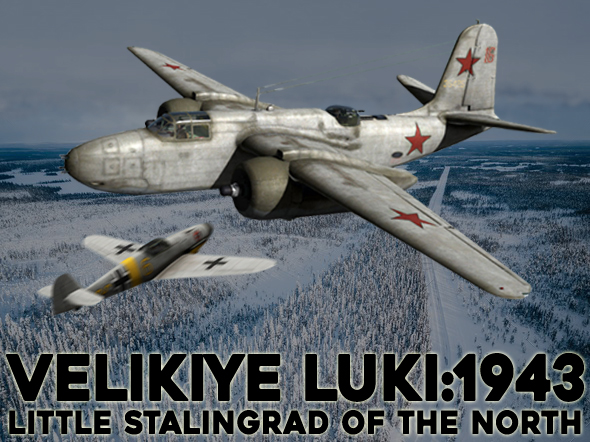
Known as “Little Stalingrad of the North”, Velikiye Luki was a critical battle that effectively ended any threat to Moscow and severed the rail lines between German Army Group North and Army Group Center. This FSO is set during the encirclement of the German Army at Velikiye Luki.
PLANE SET:
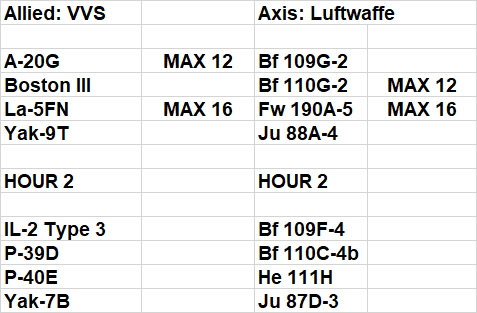
SPECIAL RULES:
2ND HOUR AIRCRAFT AVAILABLE
A-20G and Bf 110G-2 must carry bombs and operate in the Jabo role.
20K ALT CAP FIGHTERS - Yak-9T, La 5FN, Bf 109G-2, Fw 190A-5, P-39D, P-40E, Yak-7B, Bf 109F-4
14K ALT CAP - Boston III, A-20G, Bf 110G-2, Ju 88A-4, IL-2 Type 3, Bf 110C-4B, He 111H, Ju 87D-3
Rockets Disabled - Bf 109G-2, Fw 190A-5, Bf 110G-2
AIRCRAFT SCORING:
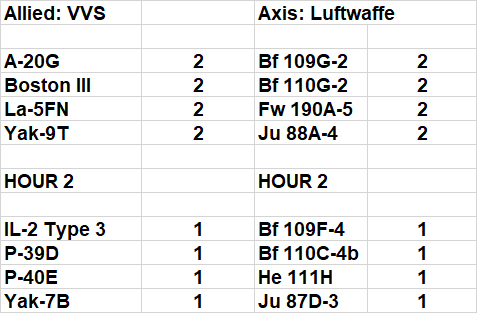
OBJECT SCORING:
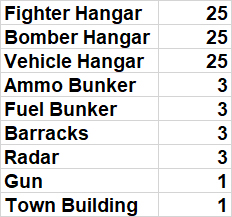
ACE MISSIONS
Each side will have one mandatory Ace mission per frame. These frames will represent notable pilots of the time and theater. One pilot from each side will be designated an "Ace" Pilot. They must fly the Aces listed aircraft.
They will be scored as follows.
Ace Pilot Kills = 5 Points
Ace Pilot = 20 Points
So for example if an Ace Pilot is shot down they are worth 20 points to the other side. Likewise, every victory an Ace Pilot lands they will be awarded 5 points.
ALLIED:
Frame 1 – (VVS) - (La-5FN) - Vladimir Serov - Born in 1922, Serov joined the military in 1941 and graduated from the Krasnodar Military Aviation School of Pilots the same year. He was deployed to the front in April 1942 and got his first kills flying the P-40 with the 159th Fighter Regiment. The following year Serov would begin flying the La-5 where he would reach 39 aerial victories and six shared victories. In two short years he would rise in rank from sergeant and would end it as a squadron commander and senior lieutenant before being killed in action June 26th 1944.
Frame 2 – (VVS) - (La-5FN) - Dmititry Medvedev - Graduating from the 8th Odessa Military Aviation School in 1937, Medvedev saw action against the Japanese at Khalkin Gol in and the Finnish in the Winter War before the German Invasion in 1941. In 1942 he was assigned to the Volhkov Front near Leningrad flying the Lagg-3 and in February 1943 received the new La-5 fighter. Medvedev would go on to fight at the battle of Kursk and the push into Romania and Czechoslovakia totaling 14 victories and 15 shared victories. Medvedev passed away in 1992.
Frame 3 – (VVS) - (La-5FN) - Konstantin Krasavin - Krasavin was born in 1917 near Moscow and graduated from Stalingrad Military Flying School in 1940 and commissioned a Military Officer. Initially flying a Lend-Lease Hurricane in the battle of Moscow, he would fly in the fighting for the Demyansk Pocket accruing nearly 300 sorties by 1943. Krasavin would later fly the La-5 and La-7 all the way to the Prague Offensive near the end of the war. Krasavin would be awarded the Hero of the Soviet Union in 1946 and passed away in 1988 at the age 70.
AXIS:
Frame 1 – (Luftwaffe) - (Fw 190A-5) - Hannes Trautloft - Trautloft joined the Luftwaffe in 1931 and was one of the first German volunteers to fight in the Spanish Civil War. Trautloft served in the Invasion of Poland, France, the Battle of Britain and the Balkans campaign. Trautloft would score the first day of the Russian campaign and go on to score 45 more victories over Russia until he was promoted to Inspector of all Fighter units. Trautlloft would be sacked in 1945 for taking part in the fighter pilots mutiny. Trautloft would survive the war and passed away in 1995. His total victory count stood at 58.
Frame 2 – (Luftwaffe) - (Fw 190A-5) - Walter Nowotny - Nowotny joined the Luftwaffe in 1939 and after training was sent to the Eastern Front with JG 54 in 1941. Nowotny claimed his first victories in July 1941 and his victories continued to mount over 1942 including 5 kills in one day on July 14th and 7 kills in one day on August 2nd. When Nowotny transitioned to the Fw 190 his victories totals soared and by September 1943 was the highest scoring Luftwaffe Ace to that point in the war with 215. Nowotny was killed November 8th 1944 while flying the Me 262. His final victory count was 258 kills.
Frame 3 – (Luftwaffe) - (Fw 190A-5) - Hans Philipp - By late 1942 Philipp was a veteran of nearly every German campaign. Seeing his first victory over Poland in 1939, he participated in the Invasion of France, the Battle of Britain, the Balkans and the Invasion of Russia. On January 15th, 1943, Philipp would claim his 150th victory and two months later would achieve his 200th becoming the 2nd Luftwaffe pilot to reach this number. Philipp was killed in Action on October 8th, 1943 while fighting P-47s over Bremen.
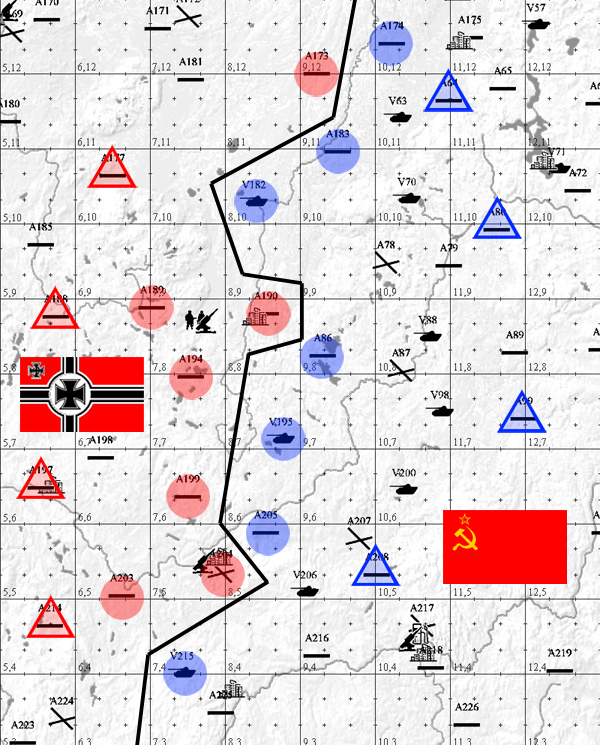
SETTINGS
- Russia Winter terrain
- Icon Range - Friendly 3k, Enemy 3k.
- No Radar
- Fighter and Bomber Warning Range - 79200 (15 miles)
- Tower Range - 79,200 (for display to match the above Fighter and Bomber Warning)
- External view for bombers (F3) - On
- Friendly Collisions - Off
- Enemy Collisions - On
- Kill Shooter - Off
- Fuel - 1.0
- Ack - 0.3
- Formations - ENABLED
- Bombsite calibration - Main Arena Standard
- Time:
FRAME 1 - 0900
FRAME 2 - 1200
FRAME 3 - 1500
- Object Downtime - full (200)
- Winds - MAX Downdraft 20K
Designed by Nefarious