- Details
- Written by: Spikes
- Category: Eastern European Theatre
- Hits: 18
Green Hearts and Red Stars - Leningrad 1942
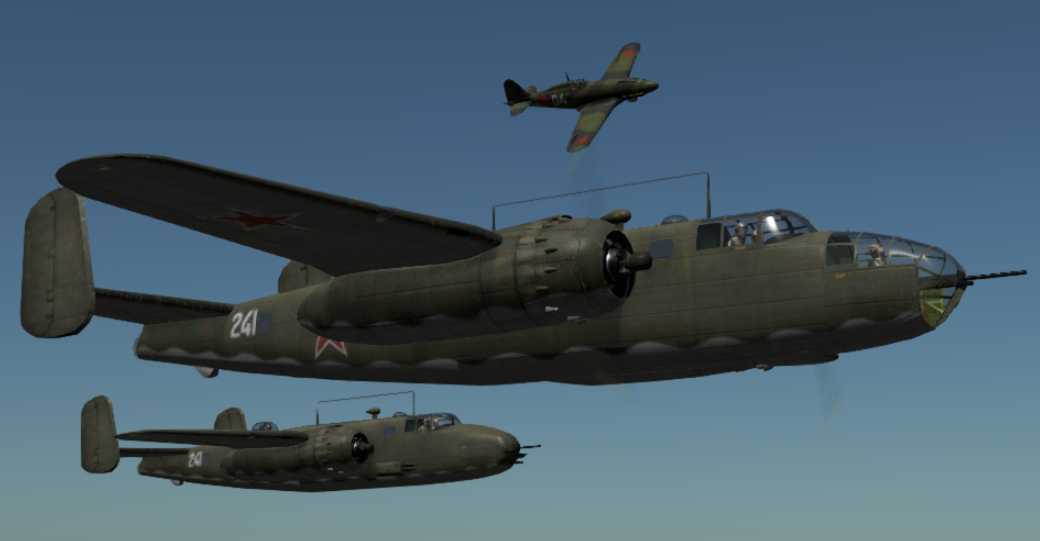
By August 1942, the Soviet city of Leningrad had been under siege for eleven months. With German troops dug in to the south and the Finns to the north, the city was completely cut off from the rest of the Soviet Union. The only lifeline being the short stretch of the southern end of Lake Ladoga to the east of the pocket. In the warm months, this stretch of the lake was traversed by small boats and during the winter the frozen lake provided an open corridor for an ice road dubbed the "Road of Life." Despite these efforts to supply Leningrad, military material and food were at desperately low levels inside the pocket; with daily deaths from starvation measuring in the thousands.
With the successful German offensives in southern Russia towards Stalingrad and the Caucasus Mountains, the Soviet high command saw an opportunity to break the German lines south of Lake Ladoga and establish a land connection to the Leningrad pocket, breaking the siege. They believed that the Germans were fully committed to that offensive and that what remained near Leningrad was a token force. It was decided that the Volkov Front's 8th Army would carry out the main operation, attacking westward through the narrowest stretch of German held territory. The first objective was the town of Sinyavino, halfway between the Volkov and Leningrad Fronts, less than five miles from either line. Supporting the 8th Army in the air was the Volkov Front's 14th Air Army along with units from the Leningrad Front and Leningrad PVO air defense force. The 8th Army launched its attack on August 27, 1942. They advanced as far as the southern outskirts of Sinyavino by September 5th, but failed to capture the town.
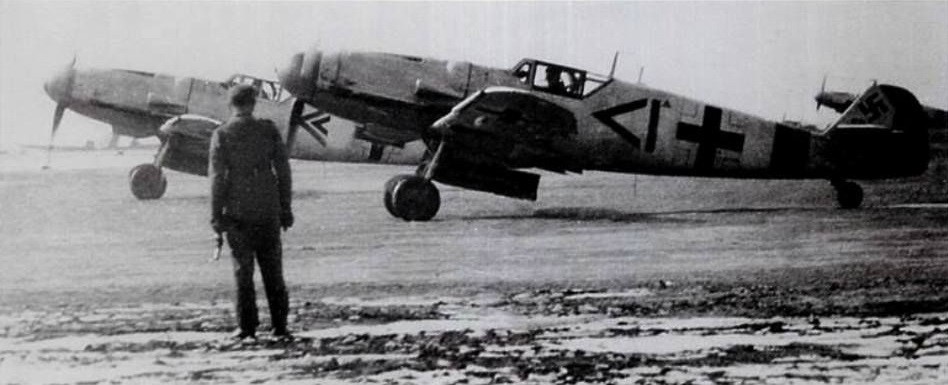
Opposing the Soviet advance were the German 18th and 11th Armies of Army Group North. The Soviet estimation of weak German defenses could not have been more wrong as Army Group North was preparing for an offensive of its own. Operation Nordlicht (Northern Lights) was intended to finally capture and raze Leningrad, freeing up troops for operations in 1943. Instead of being a token force, Army Group North was at a strength unseen since the opening of Barbarossa in June 1941. The launch of Operation Nordlicht was put on hold to counter the surprise Soviet offensive. Their advance would finally be halted on September 9th and no gains were made by either side in the following ten days. Afterward, the Germans launched a counter offensive to cut off the Sinyavino salient. Bitter fighting continued until the Germans eliminated the last positions held by the Soviet 8th Army on October 15th. Supporting Army Group North in the air was Luftflotte 1. Their most notable unit being Jagdgeschwader 54 with their green hearted Bf 109's. Jg 54 would amass 471 air victories during the Sinyavino Offensive period.
The Sinyavino Offensive was a failure for the Soviets as Leningrad remained cut off, but it did succeed in damaging Army Group North to the point that they were incapable of mounting any further offenses. The front stabilized and Leningrad remained under siege until January, 1944.
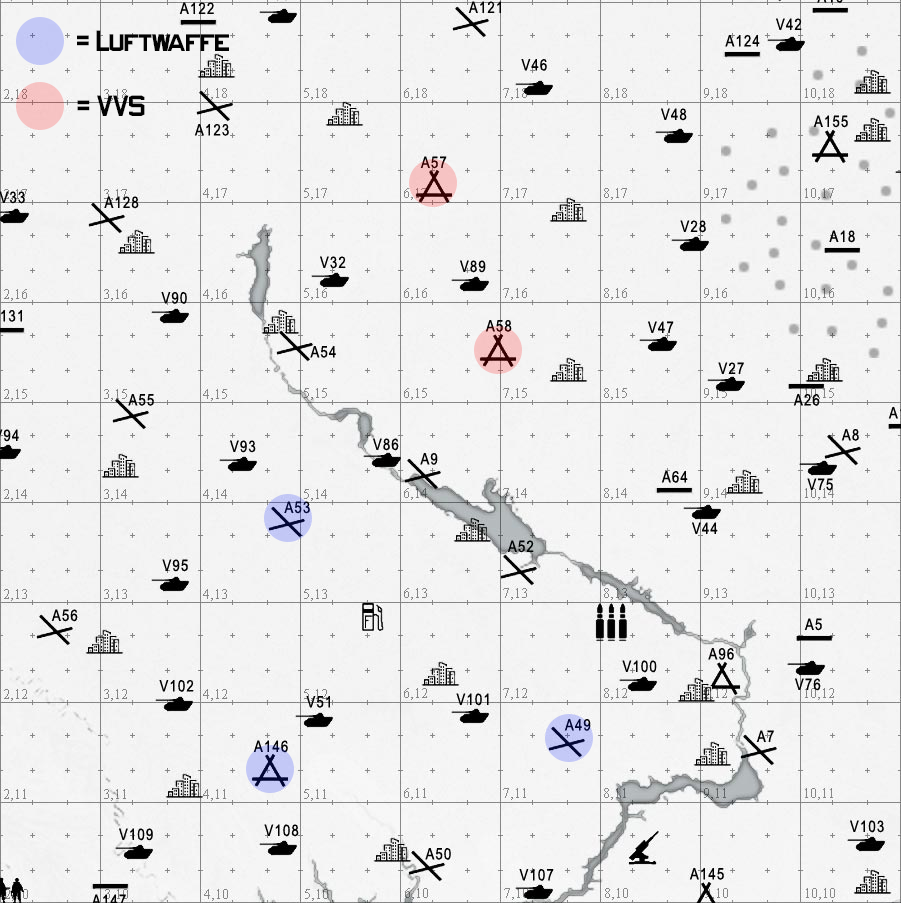
This FSO aims to recreate the fierce air battles during the Sinyavino Offensive. Frame one represents the full Soviet offensive of August 27th. Frame 2 represents both sides targeting troop positions on September 10. Frame 3 represents the full Axis counter offensive of September 21.
Allies: 50% / Axis 50%
|
Frame 1 Planeset |
|||
|
VVS |
Luftwaffe |
||
|
MiG-3 (C.205) |
MIN 12 |
Bf 109G-2 |
MAX 36 |
|
Yak-7B |
MIN 12 |
Bf 109F-4 |
NO MIN/MAX |
|
P-40C/E |
MIN 12 Total |
||
|
Il-2 Type 3 |
MIN 10 |
||
|
Il-4 (B-25C) |
MIN 10 |
||
|
Frame 2 Planeset |
|||
|
VVS |
Luftwaffe |
||
|
MiG-3 (C.205) |
MIN 12 |
Bf 109G-2 |
MAX 36 |
|
Yak-7B |
MIN 18 |
Bf 109F-4 |
NO MIN/MAX |
|
P-40C/E |
MIN 12 Total |
Ju 88A-4 |
MIN 10 |
|
Il-4 (B-25C) |
MIN 10 |
||
|
Frame 3 Planeset |
|||
|
VVS |
Luftwaffe |
||
|
MiG-3 (C.205) |
MIN 12 |
Bf 109G-2 |
MAX 36 |
|
Yak-7B |
MIN 18 |
Bf 109F-4 |
NO MIN/MAX |
|
P-40C/E |
MIN 12 Total |
Ju 88A-4 |
MIN 10 |
|
Ju 87D-3 |
MIN 10 |
||
|
Frame 1 Ordnance Restrictions |
|||
|
VVS |
Luftwaffe |
||
|
MiG-3 (C.205) |
No 20mm Gun Package |
Bf 109G-2 |
No Gondolas/Bomb/DT |
|
Yak-7B |
No Rockets |
Bf 109F-4 |
No DT |
|
P-40C/E |
No DT/Bomb |
||
|
Il-2 Type 3 |
No 37mm Gun Package |
||
|
Il-4 (B-25C) |
No Strafer Package |
||
|
Frame 2 Ordnance Restrictions |
|||
|
VVS |
Luftwaffe |
||
|
MiG-3 (C.205) |
No 20mm Gun Package |
Bf 109G-2 |
No Gondolas/Bomb/DT |
|
Yak-7B |
No Rockets |
Bf 109F-4 |
No DT |
|
P-40C/E |
No DT/Bomb |
Ju 88A-4 |
No 4x 500kg Bomb Load No Internal Bomb Load |
|
Il-4 (B-25C) |
No Strafer Package |
||
|
Frame 3 Ordnance Restrictions |
|||
|
VVS |
Luftwaffe |
||
|
MiG-3 (C.205) |
No 20mm Gun Package |
Bf 109G-2 |
No Gondolas/Bomb/DT |
|
Yak-7B |
No Rockets |
Bf 109F-4 |
No DT |
|
P-40C/E |
No DT/Bomb |
Ju 88A-4 |
No 4x 500kg Bomb Load No Internal Bomb Load |
|
Ju 87D-3 |
No 1800kg Bomb |
||
Active Fields:
Axis:
- A108 – Fighters Only (20 per frame, see Notes)
- A148
- A153
- A161 - Fighters Only, Frame 1
Allies:
- A169 – Fighters Only (20 per frame, see Notes)
- A114
- A167 - Fighters Only, Frame 3
- A177
- A183
Notes:
- Bomber/Attack aircraft max altitude is 12K.
- Fighter aircraft max altitude is 18K.
- Objects destroyed by fighters will not count toward score.
- Front line bases (A108 and A169) may roll up to 20 fighters at the start of each frame.
- Town White Flag is either a visible white flag or "Prepped" status on clipboard. Approximately 75% of buildings must be destroyed. White Flagging a Town at a target is considered a bonus objective and will not be counted towards score unless all hangars at the target are destroyed.
- A161 and A167 will be available for fighter aircraft to launch from in select frames (see Active Airfields).
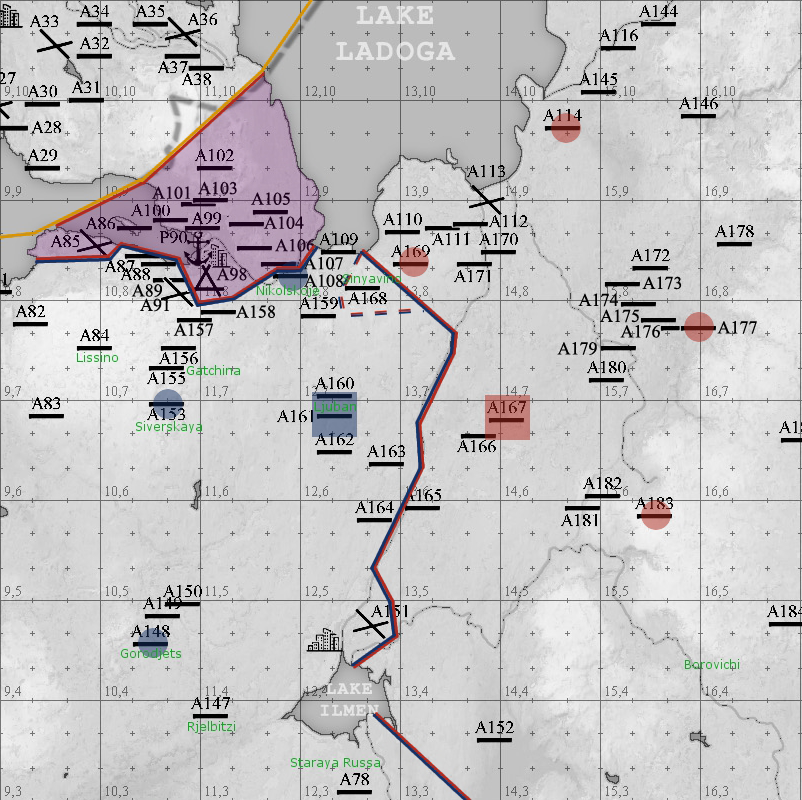
- Leningrad area (Purple shaded area on Operation map) will be Rook with no flash range.
- The "MIN 12 Total" for P-40C/E means a combined total of 12 must be used, can take all C's or all E's or mix and match as desired.
Scoring:
- Fighters – 2
- Arena Settings:
- - Terrain: finland
- - Fuel Burn: 1.0
- - Icons: 3K Friendly/Enemy
- - Ack: .3
- - Fighter and Bomber warning range: 52800 (about 10 miles)
- - Tower range set to 52800 (for display only to match the above setting)
- - Haze/Fog: 15 miles
- - Radar: Off
- - Enemy collisions: on
- - Friendly collisions: off
- - Killshooter: off
- - Time: 1000 (10AM) Game Clock
- - Formations: On
- - Formation Autopilot: On
- - Bomber calibration: Automatic
- - Wind: 0K-2K NO WIND
- 2K-8K: N TO S - Speed 5
- 8K-14K: NW to SE - Speed 10
- 14K-18K: NE to SW - Speed 10
- 18K+: 45MPH Downdraft
- Designed by Devil5O5 in conjunction with Spikes and perdweeb.
- Special thanks to Greebo for assistance with substitute plane skins.
- Area of Operations:
- Details
- Written by: perdweeb
- Category: Eastern European Theatre
- Hits: 20
Panic in the Pocket: Cherkassy-Korsun 1944
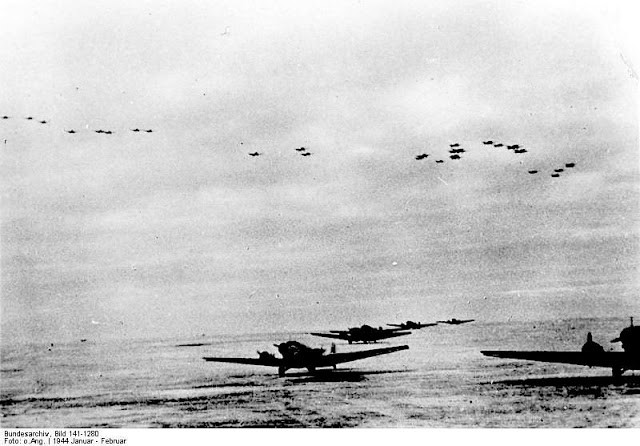
On Christmas Eve, 1943, the Red Army began the Dnieper-Carpathian Offensive. Its mission was to drive Germany’s Army Group South west across the Dnieper River and into Ukraine. The first month was very successful as the Red Army was able to push Army Group South west and south across the Dnieper River. From 24 January to 16 February 1944, the Red Army fought an encircled German force comprised of six divisions. There were multiple attempts to break out of the pocket, which stretched from the city of Cherkassy on the banks of the Dnieper River to the small village of Korsun to the southwest. The double envelopment meant that the Germans had no way of reaching supply lines which it desperately needed to maneuver out of the encirclement.
Supply missions were carried out by the Luftwaffe in an attempt to aid the encircled divisions. Ju 52’s were loaded with supplies and flown to the city of Cherkassy and other strategic areas in the pocket. The supplies reached the Ju 52’s via Ju 88’s and other bombers which dropped the supplies over the Korsun airfield. Meanwhile, ground attack runs were being carried out by both sides and the VVS conducted bombing raids of German strongholds within the pocket. This event seeks to simulate the air war and desperate supply missions of the Battle of the Cherkassy-Korsun Pocket.
Side Split: 50%/50%
|
Frame 1 Planeset |
|||
|
VVS |
Luftwaffe |
||
|
La-5FN |
MAX 24 |
Fw 190A-5 |
MAX 24 |
|
Yak-9T |
MIN 12 |
Bf 109G-6 |
MIN 12 |
|
Yak-7B |
MIN 6 |
Fw 190F-8 |
MAX 12 |
|
P-39Q |
NO MIN/MAX |
Ju 87D-3 |
NO MIN/MAX |
|
Boston III |
MIN 12 |
||
|
Frame 2 Planeset |
|||
|
VVS |
Luftwaffe |
||
|
La-5FN |
MAX 24 |
Fw 190A-5 |
MAX 24 |
|
Yak-9T |
MIN 12 |
Bf 109G-6 |
MIN 12 |
|
Yak-7B |
NO MIN/MAX |
Ju 88A-4 |
MIN 12 |
|
P-39Q |
NO MIN/MAX |
||
|
Il-2 Type 3 |
MIN 12 |
||
|
Frame 3 Planeset |
|||
|
VVS |
Luftwaffe |
||
|
La-5FN |
MAX 24 |
Fw 190A-5 |
MAX 24 |
|
Yak-9T |
MIN 12 |
Bf 109G-6 |
MIN 12 |
|
Yak-7B |
NO MIN/MAX |
Ju 88A-4 |
MIN 12 |
|
P-39Q |
NO MIN/MAX |
||
|
Boston III |
MIN 12 |
||
|
Frame 1 Ordnance Restrictions |
|||
|
VVS |
Luftwaffe |
||
|
La-5FN |
No Bombs |
Fw 190A-5 |
No Bombs/Rockets |
|
Yak-9T |
None |
Bf 109G-6 |
No Bombs/Rockets |
|
Yak-7B |
No Rockets |
Fw 190F-8 |
No 500KG Bomb |
|
P-39Q |
No Bombs |
Ju 87D-3 |
None |
|
Boston III |
None |
||
|
Frame 2 Ordnance Restrictions |
|||
|
VVS |
Luftwaffe |
||
|
La-5FN |
No Bombs |
Fw 190A-5 |
No Bombs/Rockets |
|
Yak-9T |
None |
Bf 109G-6 |
No Bombs/Rockets |
|
Yak-7B |
No Rockets |
Ju 88A-4 |
None |
|
P-39Q |
None |
||
|
Il-2 Type 3 |
None |
||
|
Frame 3 Ordnance Restrictions |
|||
|
VVS |
Luftwaffe |
||
|
La-5FN |
No Bombs |
Fw 190A-5 |
No Bombs/Rockets |
|
Yak-9T |
None |
Bf 109G-6 |
No Bombs/Rockets |
|
Yak-7B |
No Rockets |
Ju 88A-4 |
None |
|
P-39Q |
No Bombs |
||
|
Boston III |
None |
||
Active Fields:
Special Rules:
Scoring:
Arena Settings:
Designed by perdweeb. Special contributions made by Spikes and Devil5O5.
Area of Operations
- Details
- Written by: Spikes
- Category: Eastern European Theatre
- Hits: 17
KUBAN STAIRS: Russian Front 1943
The roots of the Kuban campaign stemmed from the disaster of Stalingrad in the winter of 1942-43. German forces in the Caucasus began to withdraw and consolodate their defensive positions in early 1943. The German 17th Army constructed defensive positions across the Kuban river delta east of the Crimea. The 'Kuban brideghead' became important to both sides. For the Germans it protected the eastern approaches to the Caucasus and for the Soviets it was viewed as a launch point for further German attacks.
The campaign marked the resurgance of the Soviet Air Force. For the first time since 1941 the VVS had the strength to seriously oppose the Germans. The Soviet 4th and 5th Air Armies were tasked to support the North-Caucasus Front responsible for the Kuban. Many fighter aviation regiments were equipped with Lend-Lease fighters including the P-39 "Kobra" which was to become the most popular western fighter in VVS service. Opposing them was Luftlotte 4 which included the veteran fliers of JG 3 and JG 52 flying the Bf 109G.
During April and May 1943 the Germans and Soviets fought a series of heavily contested battles in the Kuban. The Luftwaffe and the Soviet Air Force fought some of the most intense air battles of the Eastern Front as each side sought to dominate the skies over the battlefield. In the end neither army was able to dislodge the other and the campaign ended in stalemate in early June. The Soviet Air Force claimed 1,100 German aircraft destroyed to the Luftwaffes 2,280 claimed victories. Although the Luftwaffe destroyed more aircraft they were hard pressed to make up for the own losses of planes and veteran aircrews. The tide of the air war had turned in the Soviets favor and the strength of the Luftwaffe would continue to decline as the war progressed.
Many Soviet aces made names for themselves including Kapitan Aleksandr I. Pokryshkin of the 16th Guards Fighter Aviation Regiment. Known as the "father of Soviet fighter aviation" he claimed 25 victories over the Kuban in a four month period. He is also credited with developing the "Kuban Stairs" tactic of flights staggered one on top of the other where the covering fighters would initiate a high speed diving attack on the enemy.
This FSO recreated the air battles over the Kuban in the spring of 1943.
Country Percentages:
Axis 45%
Allied 55%
Field Assignments:
Axis Knight
Allies Bishop
CM Rook
OOB:
Axis (Luftwaffe):
Bf 109G-2
Bf 109F
Ju 87D
Ju 88A
Soviet (VVS):
P-39D (min 24)
Yak-7
IL-2 Sturmovik
B-25C
Special Rules and Ordnance Restrictions:
* All aircraft must be used by a minimum of 12 *players*.
* Strike planes must attack their targets by T+45.
* Objectives must be defended by 24 *players* min.
* Drop tanks are disabled for all aircraft.
* Air-ground ordnance is disabled for all fighters.
* The B-25 has the strafer option disabled.
* ALL AIRCRAFT ARE TO BE LANDED AND THE PLAYERS TOWERED OUT BY FRAME END OR WILL BE CONSIDERED SHOT DOWN AND THE CREWS KIA.
Scoring:
Aircraft Pts
------------
Bomber = 10 pts
Fighter = 5 pts
Attack = 5 pts
Target Pts
----------
Gun = 0.5 pts
Hangar = 25 pts
Cruiser = 100 pts
Destroyer = 50 pts
All Other = 3 pts
Survival Pts
------------
Landing = 2 pts
Pilot Survival = 2 pts
Arena Settings:
- Black Sea terrain
- Fuel burn 1.0
- Icons friendly 3k/enemy 3k
- 0.3 Ack
- Fighter and Bomber warning range 42,000 (about 8 miles)
- Tower range set to 42,000 (for display only to match the above setting)
- Haze/fog full visibility (17 miles)
- Radar off
- Enemy collisions on
- Friendly collisions off
- Killshooter off
- Time: 15:00 ( 3PM ) Game Clock
- Formations: On
- Formation Autopilot: On
- Bomber calibration: Automatic
- Wind: 0K-18K SE TO NW - Speed 5
18K+ SE TO NW - Speed 10
Designer's Notes:
Design by Warloc
- Details
- Written by: Phast12
- Category: Eastern European Theatre
- Hits: 16
Operation Bagration was the codename for the Soviet 1944 Belorussian Strategic Offensive Operation that occurred between June 22 and August 19th 1944. In Apr 1944, Soviet leaders created a plan to attack the 'German Group Center'. In order to prevent the Germans from detecting the build up of forces before the action, a deceptive operation was planned to throw off the Germans. On 17 Apr the first deceptive tactic was employed to prepare for Bagration, which was to switch the entire Soviet front to a defensive mode by ceasing major offensives and to construct defensive structures. Later, when the Soviet forces in the area could mean nothing but an assault, Soviet forces started to spread false intelligence that the offensive was to be made against Army Group South in Ukraine, reinforcing something that the German originally expected.
The Germans fell for the deceptions as most of the armor in the German reserves were transferred to northern Ukraine, leaving Army Group Center in the north without proper reinforcements. Other factors such as the reaction to the western Allies' Normandy invasion also weakened the available forces on the Soviet front for the Germans. They were weakened further by Hitler's denial to allow for a pull back to shorten the front lines and a the addition of a no retreat policy.
On June 22,1944, the Soviets launched massive air attacks. The next day (one day after the third anniversary of the German invasion) the Red Army moved forward under cover of darkness. The numbers involved dwarfed that of D-Day over 1,700,000 Soviet troops and 6,000 armor rushing against 34 surprised German divisions, nearly achieving a 10-to-1 numerical advantage with armor and 7-to-1 with aircraft. The German lines fell apart quickly, and Minsk fell under Soviet control on 3 Jul. Ten days later, Soviet troops reached the Polish border. By the end of Jul 1944, the entire Army Group Center ceased to exist, losing 300,000 men to death and 120,000 to capture. Over 2,000 tanks were lost as well. On the Soviet side, 60,000 were killed and nearly 3,000 tanks were lost. This was one of the very few major battles on the Soviet fronts where the Soviets suffered fewer casualties than the Germans.
Following this major blow to the Germans the Allies continue the roll forward towards Germany. This FSO is set in Dec 1944 into Jan 1945
CM note:
black sea winter terrain will be used to represent actual location.
SIDE BALANCE
Axis: 50%
Allies: 50%
Allied Plane Set:
Yak-9T
Yak-9U
Yak-3
Planes below can be used as JABO
LA-7
La-5FN
Yak-7B
P-39Q
Points earned via the planes below are double
Tu-2s
IL-2 Type 3
Axis Plane Set:
FW 190 D-9
Bf 109 K-4
Planes below can be used as JABO
Bf 109 G-14
FW 190 A-5
FW 190 A-8
FW 190 F-8
Points earned via the planes below are double
Ju-88
Me 410 (Must carry Bombs)
Special Instructions:
- Some form of Bomber and/or JABO attack must be made against designated target (minimum of 12 pilots).
- JABO/Bombers must carry bombs and/or rockets to target
- Ground attack points only counted for Bomber/JABO planes
- 20k Alt Cap
- Pilots may refuel and rearm at ANY FRIENDLY FIELD.
- Use of Formations is discretionary
- All Aircraft must land successfully at ANY FRIENDLY FIELD before T+120 or you will be scored as KIA.
ORD RESTRICTIONS:
FW 190 A-5 - Disable 500 kg Bomb
FW 190 F-8 - Disable Rockets
FW 190 D-9 - Disable All Bombs (250 /500)
Me 410 - Disable
1x 50mm BK 5, 22 rpg (in bomb bay)
2x 30mm MK 103, 100 rpg (in bomb bay)
4x 20mm MG 151/20, 200 rpg (in bomb bay)
2x 20mm MG 151/20, 300 rpg (in bomb bay)
2x 500 SAP Bomb
SCORING
Single Engine plane = 1
Multi Engine plane = 2
Fighter Hanger = 25
Bomber Hanger = 25
Vehicle Hanger = 25
Ammo Bunker = 3
Fuel Bunker = 3
Barracks = 3
Radar = 3
Gun = 1
Town Building = 1
SETTINGS
- Map = blkseaw
- Icon Range – Friendly 3k, Enemy 3k.
- No Radar
- Fighter and Bomber Warning Range - 79200 (15 miles)
- Tower Range – 79,200 (for display to match the above Fighter and Bomber Warning)
- External view for bombers (F3) - On
- Friendly Collisions - Off
- Enemy Collisions - On
- Kill Shooter - Off
- Fuel - .7
- Ack - 0.2
- Formations - Enabled
- Bombsite calibration - Main Arena Standard
- Object Downtime – full (200)
- Winds
20k and above: -127 Rise
- Time:
FRAME 1 - 0800
FRAME 2 - 1000
FRAME 3 - 1200
Disable access to all FLEETS / TASK GROUPS
Written by: Phast12
- Details
- Written by: Spikes
- Category: Eastern European Theatre
- Hits: 17
The Battle Over Stalingrad 1942
Introduction
Prior to the German Sixth Army capturing Stalingrad the Soviet Air Armies and Luftwaffe fought along a wide frontal area. Many air battles yielded many victories for skilled pilots and death for other. Many skilled aces compiled an enormous number of victories like Nowotny, Schack and Baronov as each side fought for air supremacy in the skies over Soviet Russia. This 1942 Luftwaffe vs VVS FSO series will place the fighter and bomber aircraft of the time in close combat. Victory can be swift and so can defeat, join us for the FSO team as we present the Eastern Front scenario in "The Battle Over Stalingrad 1942".
Country Split
Axis 50%
Allies 50%
Event Planeset
Luftwaffe
BF109G-2 (10) Max
BF110C-4B (8) Max
BF109F-4 (Unlimited)
JU87D (12) Min
HE111H (12) Min
VVS
Yak -7B (Unlimited)
P-40E (24) Min
P-39D (12) Max
IL-2 (12) Min
B-25C (12) min
Ordnance Distribution (Loadouts)
If the aircraft is not listed with ordnance here, it may not carry any ordnance.
Luftwaffe
JU87D-3 = [1] 250Kg Bomb [4] 50 Kg Bombs
HE111H = [8] 250Kg Bombs - [2] 20mm MG FF Disabled
VVS
IL-2 Type 3 = [4] 100 Kg Bombs
B-25C = [6] 500 lb. Bombs - Glass nose only
Terrain
Special Event Rules and Ordnance Restrictions
- This is a one life event. Pilots may not re-plane at their home airfields.
- Ordnance for each aircraft will be set by the setup CM in the hangar.
- Aircraft may rearm and refuel at any friendly base. Aircraft should be landed before frame’s end at any friendly base.
- All twin engine level bomber are restricted to an altitude below 18K.
- Twin engine level bombers may not dive bomb targets.
- All assaults must be made by no less than 12 attacking aircraft.
- Concerning an attack on a town target. There are no points awarded for less than a "White Flag" condition. Town will post "White Flag" at 0.7500 or 75% down.
- All destroyed objects stay down for the entire frame.
- Ground Strafing(Vulching) is permitted.
Scoring
Single Engine Fighter - 1 pt.
Single Engine Attack - 1.5 pts.
Twin Engine Bomber - 2 pts.
Hangars = 5 pts.
Barracks = 2 pts.
Ammo = 1 pt.
Fuel = 1 pt.
City objects - .5 pts.
Arena Settings
•Terrainmap: Blksea
•Fuel burn rate: 1.0
•Anti-aircraft gun strength: 0.5
•Bombsight calibration: AUTOMATIC (MA standard)
•Icons: 3.0K yards (9,000 feet)
•Sector Radar ("bar dar"): OFF
•Dot Radar: OFF
•Fighter and Bomber warning range: 52,800 feet (10 miles)
•Tower range set to 52,800 feet (for display only, to match the above setting)
•Haze range: 10 miles
•Friendlycollisions: OFF
•Enemy collisions: ON
•Kill shooter: OFF
•Stall Limiter: Set ON (Players may disable)
Wind:
Altitude Speed Direction
00 - 02K 0 NO WIND
02 - 10K 05 W -> E
10 - 18K 13 W -> E
18 - 26K 27 W -> E
26 - 30K 38 W -> E
30K+ -199 DOWNDRAFT
Arena Clock:
Frame 1 06:00 (6:00 AM, Morning)
Frame 2 11:00 (11:00 AM, Morning)
Frame 3 15:00 (3:00 PM, Afternoon)
ACE MISSIONS
Each side will have one mandatory Ace mission per frame. These frames will represent notable pilots of the time and theater. One pilot from each side will be designated an "Ace" Pilot. They must fly the Aces listed aircraft. The Aces must be relayed to the Admin CM before launch. They will be scored as follows.
Ace Pilot = 20 Points (Opponent Score)
Ace Pilot Kills = 20 Points
So for example if an Ace Pilot is shot down they are worth 20 points to the other side. Likewise, every victory an Ace Pilot lands they will be rewarded 20 points.
Luftwaffe
Frame 1 - BF110C-4b Leutnant Eduard Meyer, who received the Knight's Cross of the Iron Cross on 20 December 1941 for 18 aerial victories and 48 aircraft destroyed on the ground, as well as two tank kills.
Frame 2 - BF109F-4 Herman Graf - By January 24, 1942, Graf had scored his 41st victory and earned the Knight’s Cross of the Iron Cross. Four months later, on May 17, the Oak Leaves to the Knight’s Cross were bestowed on him when he achieved his 104th victory. The Swords to his Cross came two days later.
That fall, Graf dominated the air over Stalingrad in his Messerschmitt Me-109. In 30 days, he shot down 62 Soviet aircraft. After his tally reached 172, Graf was awarded the Diamonds to the Knight’s Cross on September 16, 1942. One of only nine pilots to receive this enviable decoration, Graf was reportedly proud that every one of his kills, in the course of more than 830 missions, was in air-to-air combat.
Frame 3 - BF109G-2 Alfred Franke was a German Luftwaffe ace and recipient of the Knight's Cross of the Iron Cross during World War II. The Knight's Cross of the Iron Cross was awarded to recognise extreme battlefield bravery or successful military leadership. On 9 September 1942, Alfred Franke was killed north of Stalingrad after dog-fighting with a Soviet Il-2 Shturmovik flown by Kapitan Pavel S. Vinogradov.[1] He was posthumously awarded the Knight's Cross on 29 October 1942 and was also promoted to Leutnant. During his career he was credited with 60 aerial victories. 4 on the Western Front and 56 on the Eastern Front.
VVS
Frame 1 - Yak-7B - Mikhail Baranov not only was a prominent ace, but also a capable leader: inspiring the men of 183 IAP's to score some 35 victories 1 July to 8 August 1942, more the remaining four regiments of the 269 IAD (6, 148, 254 and 864 IAPs) scored in total; 32. The 183 IAP however lost 12 Yak-1s (the whole division lost 47 Yaks and LaGGs).
Frame 2 - P-40E - Lt D.I. Koval of the 45th IAP gained ace status on the North-Caucasian front, shooting down six German aircraft flying a P-40.
Frame 3 - P-39D - Polkovnik Aleksey Semyonovich Smirnov - On 30 June 1942, the regiment was as one of the first regiments to be re-equipped with P-39D Airacobras. He was to fly this fighter with notable success during subsequent assignments on Voronezh, Northwest, Kalinin, 1st and 2nd Baltic and 3rd Byelorussian Fronts to come out of World War II as the regiment’s top ace. Smirnov ended the war with 4 biplane victories and a total of 34. These were claimed on 72 encounters on 457 sorties of which 100 were ground attacks. The last sortie and combat took place over East Prussia.
Designer Notes:
Designed by – AKWarhwk May 2017