- Details
- Written by: Spikes
- Category: Mediterranean Theatre
- Hits: 16
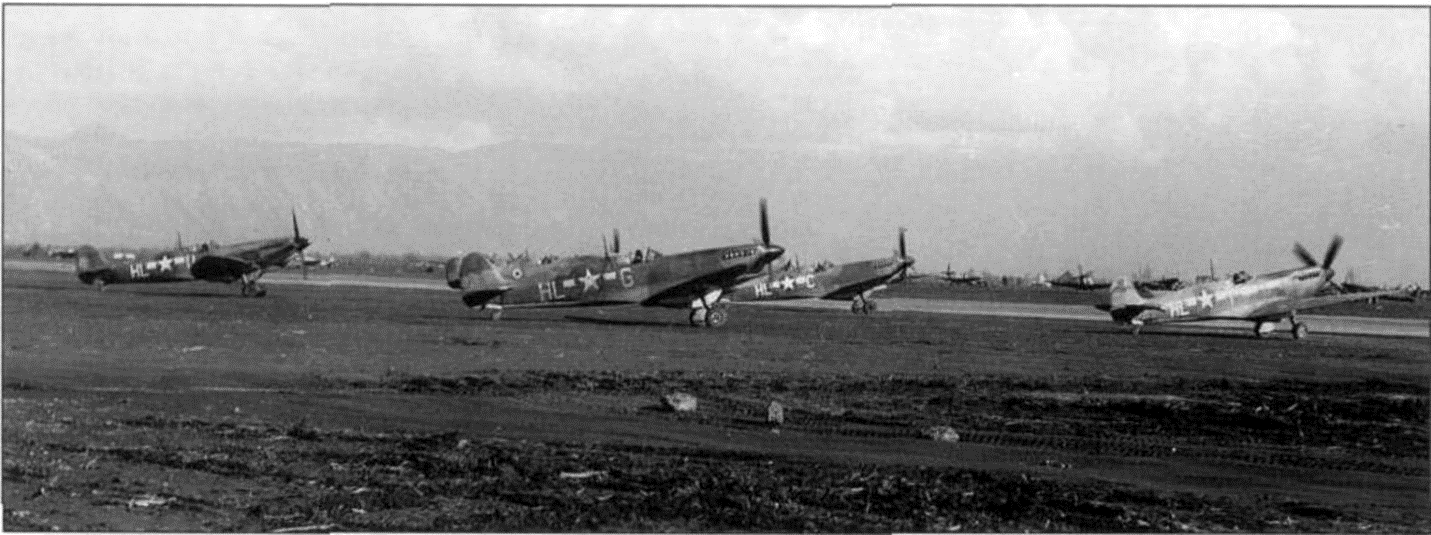
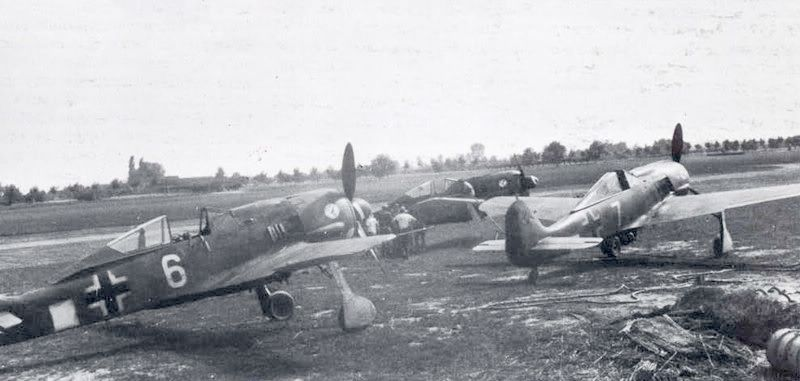
From January to June of 1944, the fighting at the Anzio beachhead was fierce. While Generals Clark and Alexander exchanged blows with General Kesselring, the Twelfth Air Force flew countless missions into German territory. The bombing raids were carried out against many targets around Rome that were key to the success of the Wehrmacht in Anzio. Defending these targets and patrolling the coastline were fighters from JG 2 and 77.
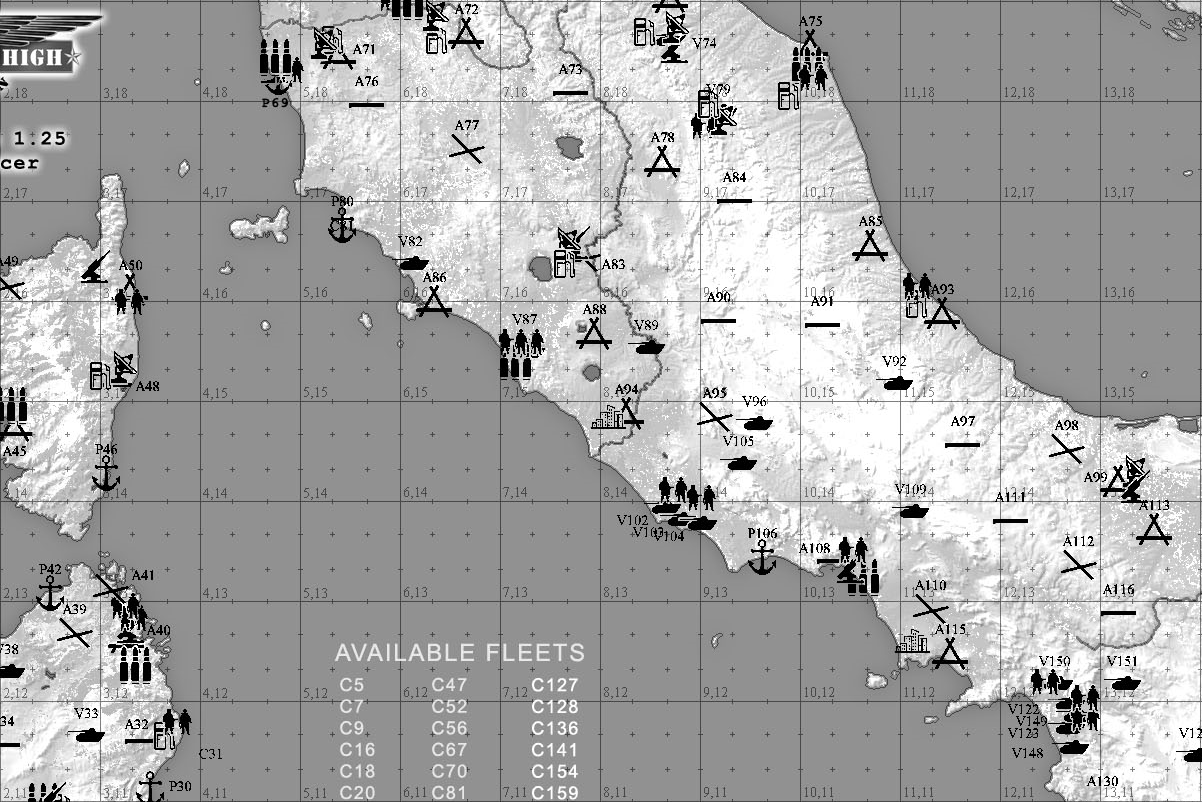
This event seeks to simulate the air battles that took place over the beaches of Anzio and around the industrial and strategic targets of Central Italy. Specifically, the event will simulate the combat missions of the Twelfth Air Force during the months of February and March of 1944.
Allies: 50% / Axis 50%
Order of Battle:
Frame 1:
|
USAAF |
Luftwaffe |
||
|
Spitfire Mk. IX |
MAX 24 |
Fw 190A-5 |
MAX 12 |
|
Spitfire Mk. VIII |
MAX 8 |
Fw 190A-8 |
MAX 8 |
|
P-47D-11 |
MIN 12 |
Bf 109G-6 |
MIN 20 |
|
B-25C |
MIN 10 |
Ju 88A-4 |
MIN 10 |
Frame 2:
|
USAAF |
Luftwaffe |
||
|
Spitfire Mk. IX |
MAX 24 |
Fw 190A-5 |
MAX 12 |
|
Spitfire Mk. VIII |
MAX 8 |
Fw 190A-8 |
MAX 8 |
|
P-47D-11 |
MIN 12 |
Bf 109G-6 |
MIN 20 |
|
B-26B |
MIN 10 |
Ju 88A-4 |
MIN 10 |
Frame 3:
|
USAAF |
Luftwaffe |
||
|
Spitfire Mk. IX |
MAX 24 |
Fw 190A-5 |
MAX 12 |
|
Spitfire Mk. VIII |
MAX 8 |
Fw 190A-8 |
MAX 8 |
|
P-47D-11 |
MIN 12 |
Bf 109G-6 |
MIN 20 |
|
P-47D-25* |
MIN 12-MAX 16 |
Fw 190F-8* |
MIN 12-MAX 16 |
Loadout Restrictions:
- Fighters (non-Jabos*) may not carry ordnance.
- P-47D-25 must carry 2x500lb bombs (centerline disabled), Fw 190F-8 must carry 500kg bomb.
- Jabos may not carry rockets (M8 Rockets and PB1 rockets).
- B-25C is glass-nose only.
- P-47D-25 represents a P-47D-22RE; P-47D-11 represents a P-47D’s from -11 to -15.
Notes:
- Level Bomber Alt Cap is 14K.
- Jabo Alt Cap is 16K.
- Fighter Alt Cap is 20K.
- Hangars are targets for Level Bombers, bunkers are targets for Jabos.
Scoring:
- Fighters - 2
- Bombers - 2
- Hangars - 12
- Bunkers - 2
- If all 15 Bunkers are destroyed by EOF, +15 Bonus points.
Skins List:
- Spit Mk. VIII:
- 308FS/31FG by Kev367th
- Spit Mk. IX:
- 309FS by Greebo
- 31FG/307FS by Greebo
- P-47D-11:
- 79FG/86FS by Greebo
- P-47D-25:
- 57FG/66FS by MachNix
- B-26B:
- 432BS/17BG by Player1
- 441BS/320BG by Ftjr
- Bf 109G-6:
- 4./Jg 77 By Devil5O5
- 6./Jg 53 By Larry
- 7./Jg 53 By Devil5O5
- Fw 190F-8:
- Default
Arena Settings:
- - Terrain: italy
- - Fuel Burn: 1.0
- - Icons: 3K Friendly/Enemy
- - Ack: .3
- - Fighter and Bomber warning range: 63360 (about 12 miles)
- - Tower range set to 63360 (for display only to match the above setting)
- - Haze/Fog: 15 miles
- - Radar: Off
- - Enemy collisions: on
- - Friendly collisions: off
- - Killshooter: off
- - Time: 1000 (10AM) Game Clock
- - Formations: On
- - Formation Autopilot: On
- - Bomber calibration: Automatic
- - Wind: 0K-2K NO WIND
- 2K-8K: E TO W - Speed 5
- 8K-16K: SE to NW - Speed 10
- 16K-20K: NE to SW - Speed 15
- 20K+: 45MPH Downdraft
Area of Operations:
- Details
- Written by: Spikes
- Category: Mediterranean Theatre
- Hits: 16
Debacle in the Desert: Siege of Tobruk
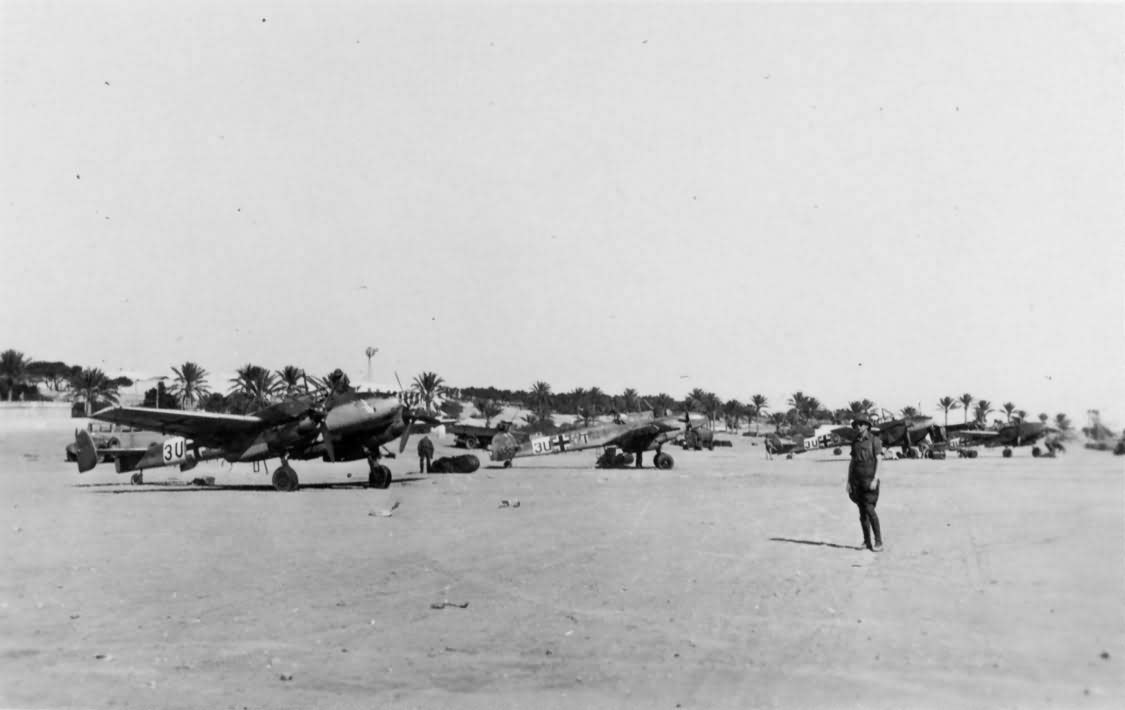
The Siege of Tobruk was a drawn out battle that lasted eight months in 1941. The Axis successfully pushed the Allies back to the Egyptian border. Tobruk was still held by the British forces, which was important because it deprived the Axis of a supply port close to the Egypt-Libya border. Tobruk was surrounded by the Axis forces and it was difficult for the British to get supplies into Tobruk to assist the remaining forces in the area. Targets in and around Tobruk were assaulted daily by the Luftwaffe and Afrika Korps.
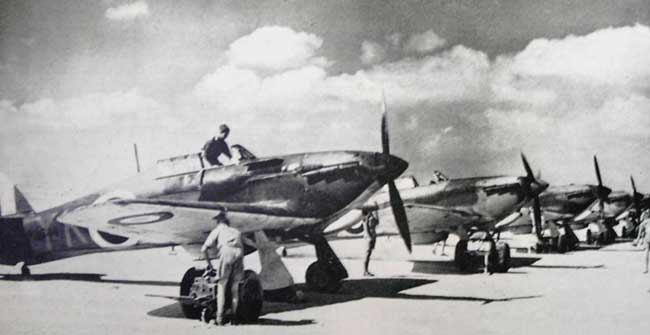
The only air defense at Tobruk was No. 73 Squadron, which at the start of the battle had 22 Hurricanes fit for duty. As the battle wore on, their losses piled up due to the fact that they were surrounded at Tobruk. By the end of the August, they were down to 12 operational aircraft.
This setup is centered around Operation Battleaxe, which took place from June 15th until June 17th. It aims to represent the dive-bomber attacks that the Luftwaffe made on Tobruk and the surrounding area, while highlighting the small unit of No. 73 Squadron Hurricanes that were stationed at Tobruk.
Allies: 48% / Axis 52%
Order of Battle:
|
Royal Air Force |
Luftwaffe |
||
|
Hurricane Mk 1 |
MIN 24 |
Bf 109E-4 |
MIN 24 |
|
P-40C |
MIN 24 |
Bf 110C-4b |
MAX 12 |
|
Ju 87D-3 |
MIN 20 |
||
Active Fields:
|
Royal Air Force |
Luftwaffe |
||
|
Hurricane Mk 1 |
A15/A72 |
Bf 109E-4 |
A23 |
|
P-40C |
A72 |
Bf 110C-4b |
A26 |
|
Ju 87D-3 |
A26 |
||
Loadout Restrictions:
- Bombs are disabled on the Bf 109E-4 and Bf 110C-4b.
- Stuka will be restricted to 1000kg centerline bomb and smaller, no wing bombs.
Notes:
- Bomber Alt Cap is 14K.
- Fighter Alt Cap is 20K.
- Up to 20 Hurricane Mk 1's are allowed to be based at A15 per frame.
- A7-A11 will be Rook fields with no flash range.
- Axis may not re-arm at A12 and A13.
- Only ground objects destroyed by Stukas will gain points for the Axis.
Scoring:
- Allied Fighters - 2
- Axis Fighters - 3
- Stuka - 2
- Hangars - 6
Recommended Skin List:
-
Hurricane Mk. I
274S/RAF by Greebo
P-40C
112S/RAF by Devil5O5
112S/RAF by FtJr
250S/RAF by Devil5O5
Bf 110C-4b
7./ZG 26 by Devil5O5
8./ZG 26 by Devil5O5
9./ZG 26 by Devil5O5
Bf 109E-4
Stab. I/JG 27 by Devil5O5
2./JG 27 by Krusty
1./JG 27 by Macloud01
II/JG 27 by Larry
7./JG 26 by Devil5O5
Ju-87D-3
6./StG 2 by Greebo
Arena Settings:
- - Terrain: egypt
- - Fuel Burn: 1.0
- - Icons: 3K Friendly/Enemy
- - Ack: .3
- - Fighter and Bomber warning range: 63360 (about 12 miles)
- - Tower range set to 63360 (for display only to match the above setting)
- - Haze/Fog: 15 miles
- - Radar: Off
- - Enemy collisions: on
- - Friendly collisions: off
- - Killshooter: off
- - Time: 0800 (8AM) Game Clock
- - Formations: Off
- - Formation Autopilot: On
- - Bomber calibration: Automatic
- - Wind: 0K-2K NO WIND
- 2K-16K: E TO W - Speed 5
- 16K-20K: SE to NW - Speed 10
- 20K+: 45MPH downdraft
Area of Operations:
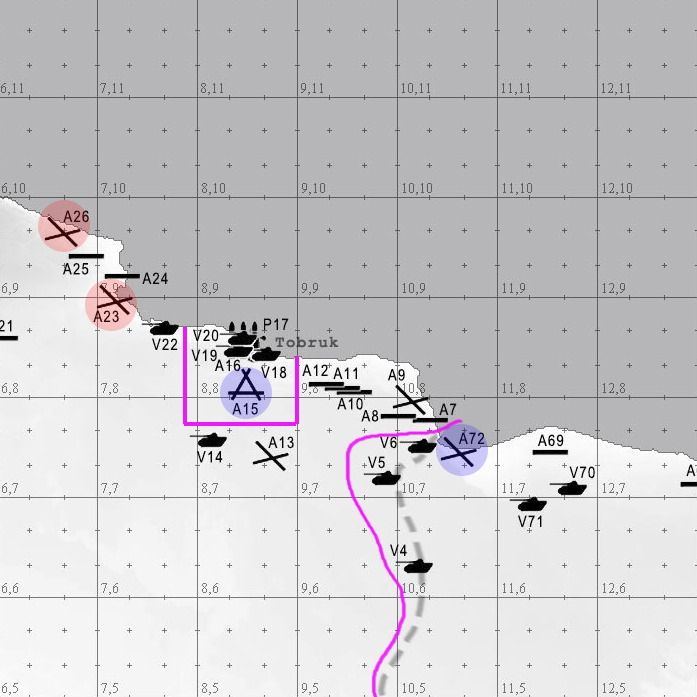
Designed by perdweeb and Devil5O5
- Details
- Written by: Spikes
- Category: Mediterranean Theatre
- Hits: 17
"Marseille had about three victories per mission on average. He could have been the top ace above Hartmann, if he had lived." -Hannes Trautloft
The fighting over the Mediterreanean during the Second World War often gets over looked compared to events that happened over the Western and Eastern Theatres of Europe. The fighting that took place over an endless sea of sand, blazing hot suns, with cold windy nights was brutal, intense, and shear terror over the sands and warm Mediterrean waters. It was often an unforgiving fight, where pilots maneuvered their planes in close quarters and engagements. Have a bandit on your six was not the only problem these pilots faced. If one was shot down they had to navigate an unforgiving terrain where miles of endless sand stretched out in all directions.
With the arrival of JG27 to the theater the allies began to suffer heavy losses. Equipped with the Bf-109, the Luftwaffe pilots favored diving out of the sun on unexpecting formations of Tomahawks, and Hurricanes. Normally targeting the tailend charlies, the Luftwaffe pilots would often down one, two, and sometimes three aircraft before climbing back into the sun. The RAF would quickly form a defensive circle known as the Lufberry Circle. In theory any enemy fighter that entered the circle had to cross into someones gunsight, therefore allowing those in the circle to keep maneuvering, while shooting down the Luftwaffe fighter. The allies had yet to encounter Hans Marseille, the soon to be "Star of Africa". Jg 27, Jg 53, and Jg 77 had great success in the theater, but so did their allied conterparts.
By the time the United States had entered the war, and entered the fighting in the MTO the RAF and the Luftwaffe had seasoned veterans commanding the squadrons, and fighting over the MTO. The US fighter pilots would have to quickly the learn the game or fall victim to the guns of the Luftwaffe. Flying P-38's, P-39's, P-40's, and Sptifires the US fighter pilots would eventually stake their claim as a force to be reckoned with.
| Ace Mission | Biography |
| Allied: Clive Caldwell (P-40C) | |
| Axis: Wolfgang Lippert (109E4) |
| Ace Mission | Biography |
| Allied: John L. Waddy (Spitfire Mk. V) | |
|
Axis: Hans Marsielle (109 F4) |
| Ace Mission | Biography |
| Allied: Levi Chase (P-40 F) | |
| Axis: Franz Schiess (BF-109G6) |
In early August, JG 53 were withdrawn from the Eastern front and, following re-equipment, deployed to the Mediterranean theatre. From bases in Sicily, Schieß operated over Malta recording 11 victories, one of which was not confirmed, including his 20th victory, a RAF Spitfire fighter shot down on 18 July 1942. At the end of November, JG 53 was operating over Tunisia. Schieß continued his success, gaining a further 13 victories, including his first four-engine bomber, a USAAF B-17 shot down near Bizerte on 29 January 1943 for his 36th victory. On 16 February 1943, Schieß was appointed Staffelkapitän of 8./JG 53. He successfully led the unit through the campaigns in Tunisia, Sicily and Italy. He recorded his 50th victory, a USAAF P-38 twin-engine fighter near Pantelleria, on 21 May. Oberleutnant Schieß was awarded the Ritterkreuz on 21 June for 55 victories. He was then sent on a lengthy leave. Returning to the front in August, Schieß shot down 12 enemy aircraft in 11 days of which seven were P-38 twin-engine fighters. Schieß failed to return from a mission on 2 September 1943. He led a scramble against a USAAF bomber formation over Mt Vesuvius. Schieß attacked the fighter escort and a dogfight developed extending over the sea to the island of Ischia. It is thought that Schieß, in Bf 109 G-6 (W.Nr. 160 022) “Black 1”, fell victim to the USAAF P-38 twin-engine fighter escort. “Nawratil” Schieß was credited with 67 victories in 657 missions. He recorded 14 victories over the Eastern front. Of his 53 victories recorded over the Western front, three were four-engine bombers, 17 were P-38 twin-engine fighters and 18 were Spitfire fighters. |
Side Split: 50/50
Frame One (Egypt Terrain)
| Allies |
Aircraft Available: Hurricane Mk. I (Min of 12) Hurricane Mk. II (Max of 24) P-40 C ( Min of 12) Boston Mk. III (Min of 12)
|
Available Fields
|
| Axis |
Aircraft Avaiable: Bf-109 E4 (Min of 12) Me-110 C-4 (Min of 12) Ju-87 D-3 (Min of 12)
|
Available Fields |
Frame Two (Egypt Terrain)
| Allies |
Aircraft Available Hurricane Mk. II (Min of 12) Spitfire Mk. V (No Min) P-40 E (Min of 12) Boston Mk. III (Min of 12) |
Airfields |
| Axis |
Aircraft Available Bf-109 F4 (No Min) Bf-110 C-4 (Min of 12) Ju-87 D-3 (Min of 12) |
Frame Three (Italy Terrain)
| Allies |
Aircraft Available: USAAF P-38 G (Max of 24) P-40 F (Min of 12) B-26 B (Min of 12) RAF Spitfire Mk. IX (Max of 24) Hurricane Mk. II |
Airfields |
| Axis |
Aircraft Available Luftwaffe Bf-109 G2 (Min of 12) FW-190 A-5 (Max of 24) BF-109 G6 (Max of 24) Ju-88 (Min of 12) Italians MC. 205 |
- Details
- Written by: Spikes
- Category: Mediterranean Theatre
- Hits: 18
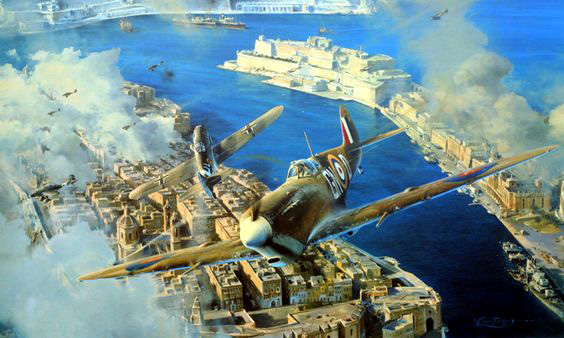
FIGHTER PILOTS PARADISE: Malta 1942
For the Allies the fortress island of Malta was ideally situated in the Mediterranean. British strike aircraft and submarines took a steady toll of Axis shipping. To counter this threat the island had been under constant air attack since 1941 by the Italians and Germans. For air defence the RAF only had a small force of obsolete Gladiator fighters which were gradually replaced with Hurricanes. By the beggining of 1942 large numbers of Luftwaffe and Regia Aeronautica units had been moved to Sicily for the air offensive. The RAF Hurricane pilots found themselves outclassed by the new Bf 109F and attrition rates were high.
To bolster the hard pressed defences the British decided to reinforce Malta with Spitfires. The plan was to fly them to the island one way from aircraft carriers. The first such reinforcements arrived March 7th 1942 during Operation SPOTTER. Some 15 Spitfires landed safely on the island having been launched from HMS EAGLE. In the months that followed another 12 such operations brought in more Spitfires.
The Axis air offensive reached a crescendo in April 1942 causing heavy damage to airfields and military installations. With the Afrika Korps supply lines still under threat a plan for an airborne and seaborne invasion of Malta (Operation HERKULES) was approved by Hitler and Mussolini that same month with a date set for July 1942.
The number of Spitfire reinforcements gradually increased and by the beginning of May 1942 Spitfire equipped No.126, 185, 249, 601 and 603 squadrons were in action. The RAF managed to keep an effective air defence through the onslaught of Axis raids. In late 1942 the British offensive at El Alemain brought an end to the Axis plan to invade Malta. Luftwaffe units were needed to support the hard pressed Afrika Korps. Malta would remain in Allied hands.
Malta was awarded the George Cross by Britains King George VI in recognition of the bravery and fortitude shown by the people of the island during the seige. RAF fighter duty on Malta was dubbed both "A fighter pilot's paradise" and "no place for beginners".
This FSO recreates the intense fighting over Malta in the spring of 1942.
Country Percentages:
Axis 55%
Allied 45%
Field Assignments:
Axis Knight
Allied Bishop
CM Rook
OOB:
Axis (Luftwaffe/Regia Aeronautica):
Bf 109F
C.202
Bf 110C
Ju 87D
Ju 88A
Allied (RAF):
Spitfire V (max 24)
Spitfire Vc (Seafire) (max 12)
Hurricane II
Special Rules and Ordnance Restrictions:
* All aircraft types must be used by a minimum of 12 *players*.
* ALL AIRCRAFT ARE TO BE LANDED AND THE PLAYERS TOWERED OUT BY
FRAME END OR WILL BE CONSIDERED SHOT DOWN AND THE CREWS KIA.
Scoring:
Aircraft Pts
-----------
Bombers = 10 pts
Fighters = 5 pts
Target Pts
----------
Gun = 1 pt
Hangar = 25 pts
Cruiser = 100 pts
Destroyer = 50 pts
All Other = 3 pts
Survival Pts
----------
Landing = 2 pts
Pilot Survival = 1 pt
Arena Settings:
- Malta terrain
- Fuel burn 1.0
- Icons friendly 3k/enemy 3k
- 0.3 Ack
- Fighter and Bomber warning range 42,000 (about 8 miles)
- Tower range set to 42,000 (for display only to match the above setting)
- Haze/fog full visibility (17 miles)
- Radar off
- Enemy collisions on
- Friendly collisions off
- Killshooter off
- Time: 15:00 ( 3PM ) Game Clock
- Formations: On
- Formation Autopilot: On
- Bomber calibration: Automatic
- Wind: 0K-16K SE TO NW - Speed 5
16K+ SE TO NW - Speed 10
Designer's Notes:
* The Seafire is a stand in for the Spitfire Vc tropical.
Design by Warloc
- Details
- Written by: Spikes
- Category: Mediterranean Theatre
- Hits: 19
Conquest at Casablanca: Operation Torch
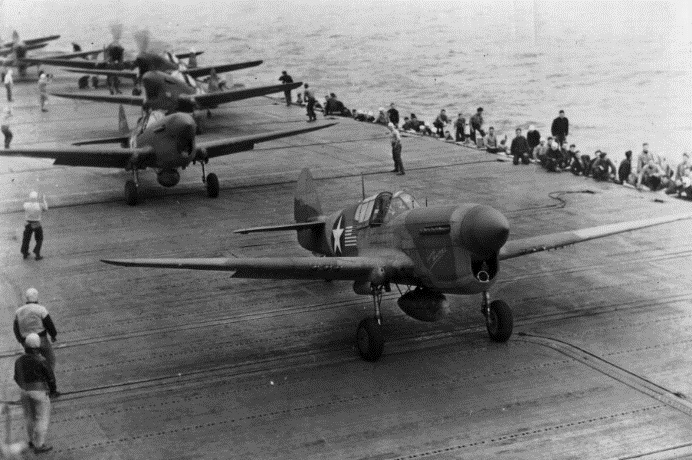
By late 1942, the tide was starting to turn in World War II as the Allies were on the offensive. Operation Torch is largely overlooked when discussing major turning points in the war, however the successful invasion had major effects on the rest of the war. The overall plan for Operation Torch was a very ambitious one. The United States and British Commonwealth would send 65,000 troops from Allied ports to attack three targets on the North African coast: Casablanca, Oran, and Algiers. The entire invasion force consisted of a large mix of airborne regiments, naval fleets, naval air groups, and even USAAF fighter squadrons.
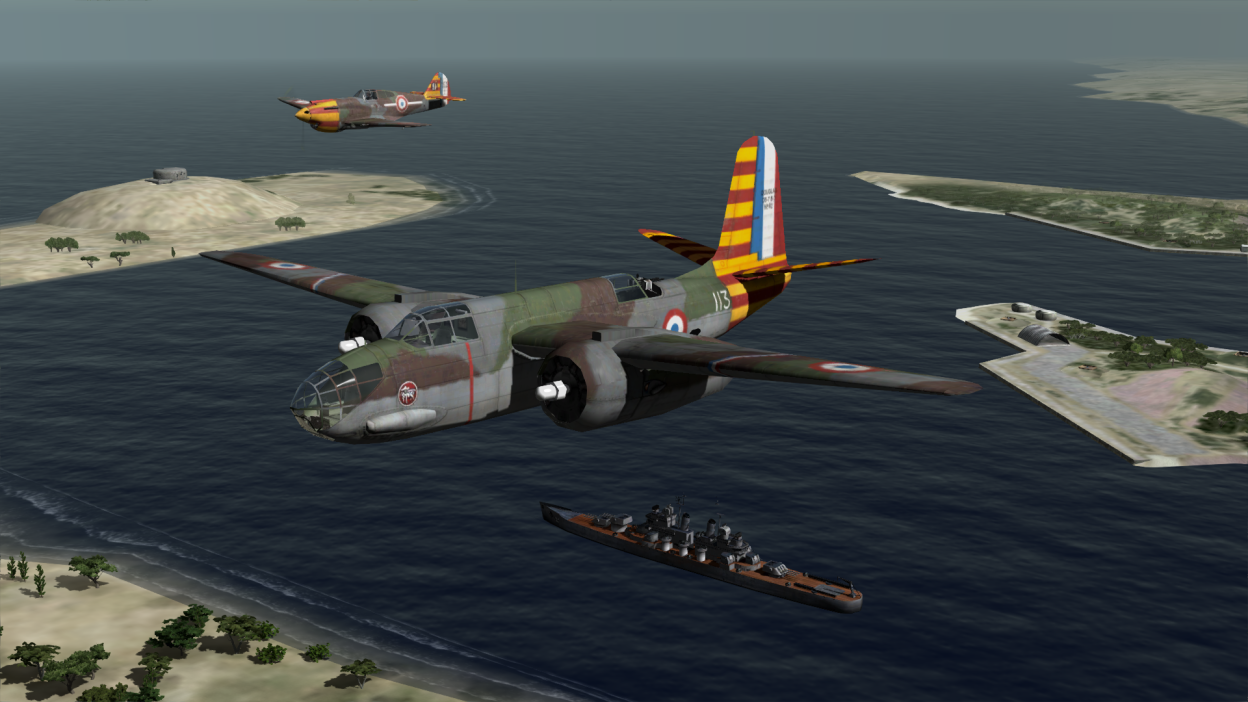
The Vichy French attempted to defend their territory in French Morocco and French Algeria, however they were vastly outnumbered and outgunned. The Vichy French had a small number of destroyers that engaged Allied ships and craft as they landed, but were decimated quickly by the overwhelming amount of Allied naval ships supporting the invasion. Their air force had Dewoitine D.520 and Curtiss Hawk-75 fighters that were inferior to the planes that the United States and British possessed at this point in the war. Fortunately for the Vichy French, they possessed the Douglas DB-7, a variant of the Boston III, which gave an edge in bombing capability.
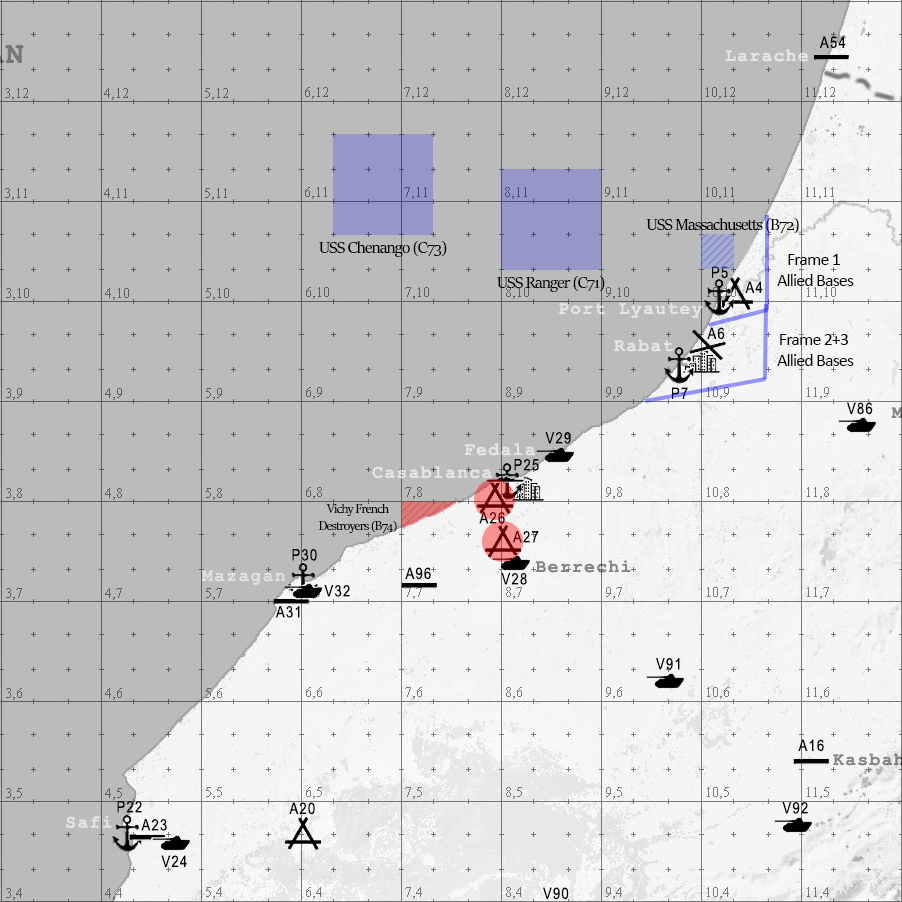
This particular FSO is aimed to re-create the battle at Casablanca. The initial assault in this area was at Port Lyautey, which fell quickly after constant bombardment from U.S. fleets, led by the battleship USS Massachusetts. The United States ferried P-40Fs across the Atlantic on the escort carrier USS Chenango. The P-40Fs launched from the carrier once Port Lyautey was captured by the Allies, and the port was used as a base of operations for them. Rabat quickly fell in succession as the assault continued at Casablanca. The Jean Bart was a French battleship that was at Casablanca at the time being refitted. It opened fire on Navy destroyers covering the landings, while the USS Massachusetts and SBDs from the carrier USS Ranger focused on crippling the ship since it proved to be a nuisance to the invasion. Due to the surprising nature of the attack and overwhelming odds, Operation Torch only lasted three days, and in the following days, the Allies quickly moved down the coast and inland.
Order of Battle:
|
US Navy & Army Air Force: |
Vichy French: |
||
|
Curtiss P-40F |
MAX 20 |
Curtiss Hawk-75 (P-40C) |
MIN 16 |
|
Grumman F4F-4 |
MIN 16 |
Dewoitine D.520 (Yak-7b) |
MIN 16 |
|
Douglas SBD-5 |
MIN 16 |
Douglas DB-7 (Boston III) |
MIN 16 |
Loadout Restrictions:
|
US Navy & Army Air Force: |
Vichy French: |
||
|
Curtiss P-40F |
No Bomb Frame 1 |
Curtiss Hawk-75 (P-40C) |
No Bomb/DT |
|
Grumman F4F-4 |
None |
Dewoitine D.520 (Yak-7b) |
No Rockets |
|
Douglas SBD-5 |
No 1600lb AP Bomb |
Douglas DB-7 (Boston III) |
No Formations |
Active Fields:
|
US Navy & Army Air Force: |
Vichy French: |
||
|
Curtiss P-40F |
C73 (Fr1) / A4 (Fr2+3) |
Curtiss Hawk-75 (P-40C) |
A26/A27 |
|
Grumman F4F-4 |
C71 |
Dewoitine D.520 (Yak-7b) |
A26/A27 |
|
Douglas SBD-5 |
C71 |
Douglas DB-7 (Boston III) |
A26/A27 |
Field Continuity:
- B72 – USS Massachusetts
- B74 – Vichy French Destroyers
- B75 – Jean Bart
- C71 – USS Ranger
- C73 – USS Chenango
Notes:
USS Chenango and USS Ranger may not leave starting sectors and will be positioned at CiC’s request.
US Navy aircraft may only take off from USS Ranger, but may rearm at USS Chenango, USS Ranger, or A4.
B74 (with BB sunk) will represent Vichy French Destroyers around Casablanca, and B72 will represent the battleship USS Massachusetts north of Port Lyautey. These fleets will not leave their designated zones.
Ordnance carrying aircraft alt cap is 15K. Non-ordnance carrying aircraft alt cap is 20K.
Skins:
The default skins for all aircraft in this setup are historically accurate skins for Operation Torch (Morocco map). Please utilize these as Greebo and Devil5O5 put in a decent amount of time providing these for us!
Scoring:
- Jean Bart – 70 pts
- CV - 40 pts
- CA – 40 pts
- FH/BH/VH – 35 pts
- DD - 15 pts
- Fighters - 2 pts
- SBD - 4 pts
- DB-7 (Boston III) – 7 pts
Object Hardness Settings:
- CV – 4000lbs
- CA/Jean Bart – 4000lbs
- DD – 1500lbs
- FH/BH/VH – 2000lbs
- Remaining - MA Standard
Arena Settings:
- - Terrain: Morocco
- - Fuel Burn: 1.0
- - Icons: 3K Friendly/Enemy
- - Ack: .3
- - Fighter and Bomber warning range: 63360 (about 12 miles)
- - Tower range set to 63360 (for display only to match the above setting)
- - Haze/Fog: 15 miles
- - Radar: Off
- - Enemy collisions: on
- - Friendly collisions: off
- - Killshooter: off
- - Time: 0800 (8AM) Game Clock
- - Formations: Off
- - Formation Autopilot: On
- - Bomber calibration: Automatic
- - Wind: 0K-2K NO WIND
- 2K-16K: SW TO NE - Speed 5
- 16K-20K: S TO N - Speed 10
-
Special Thanks:
Ghostdancer of the Terrain Team for creating the beautiful Morocco terrain in a matter of days.
Perdweeb and Devil5O5 for providing information on historical representation and assisting with accuracy concerns.
Devil5O5 and Greebo for providing us with some gorgeous skins for both historical planes and substitute aircraft.
Area of Operations: